The Demands of Flat and Low Slope Roofs
Flat roofs live a harder life than steep ones. They hold water longer, take harsher sun, and see more foot traffic from technicians. Without gravity pulling water away, ponding can linger and test the weak spots of any system. Day after day, the surface bakes, cools, then bakes again, setting up cycles of expansion and contraction that pry at seams and stress the membrane. Many flat roofs also host HVAC units and vents, which means more penetrations and more opportunities for damage. Any roofing system placed here must be resilient, watertight, and ready for repeated use.
What Sets IB PVC Membrane Roofing Apart
IB PVC roofing is a single ply membrane built from polyvinyl chloride that is reinforced with a high strength polyester scrim. The scrim behaves like an internal backbone, stabilizing the sheet against tearing and stretching. During installation, sheets are hot air welded into a continuous skin. Those welds do not rely on tapes or adhesives. The result is a monolithic surface that acts like a shield against weather and wear. The chemistry of PVC resists UV radiation, ozone, and many harsh contaminants, which helps the roof keep its integrity year after year.
Waterproofing That Stays Watertight
Water is relentless. It probes seams, laps against edges, and slips into openings the size of a hair. IB PVC membranes are inherently waterproof, and their heat welded seams become the strongest part of the system. When a skilled installer fuses two sheets, the material blends into one piece, creating a barrier that stands up to standing water. Unlike absorbent layers that can wick moisture, PVC does not draw water into its body. That characteristic helps prevent hidden migration that could turn a small issue into a leak far from the source.
Durability and Service Life
Durability is where IB PVC earns its reputation. While some flat roof materials show age in a decade or two, IB PVC commonly delivers service lives of 25 years or more with proper installation and care. The reinforced scrim controls movement and helps resist punctures from tools, footwear, and dropped fasteners. The membrane does not become brittle under sunlight, and it maintains flexibility across seasons. On buildings where rooftop visits are routine, that toughness pays back in fewer disruptions and fewer emergency calls. It is a roof built to work, not just to pass a first inspection.
Cool Roof Performance and Energy Savings
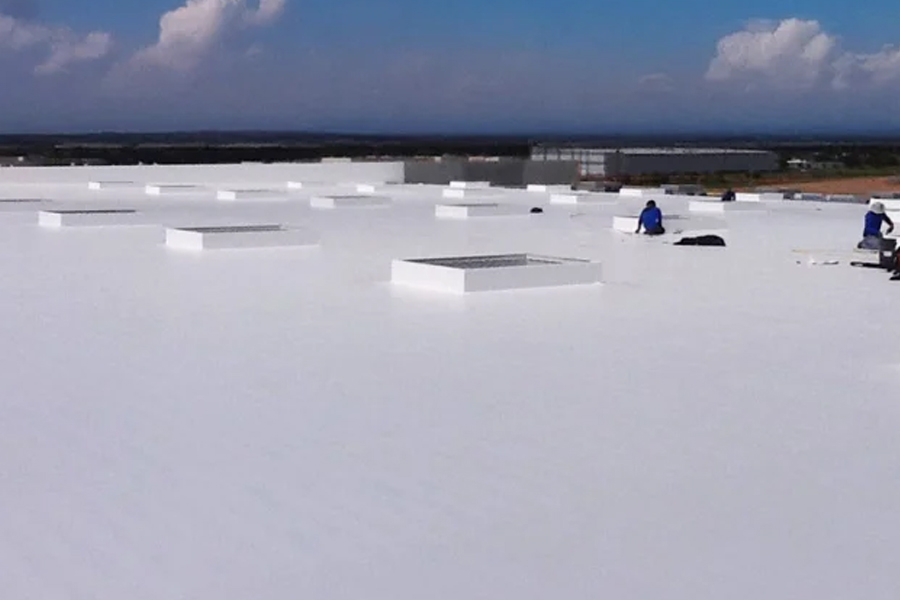
Heat gain on a flat roof can be intense. White IB PVC membranes reflect a high percentage of solar energy and release heat efficiently. This cool roof behavior helps lower roof surface temperatures, which eases the load on air conditioning and can reduce peak energy demand. It also reduces thermal cycling stress on the roof itself. By keeping the surface cooler, the membrane experiences less expansion and contraction in hot periods, which helps preserve seam integrity and extends service life. Over time, the combination of energy savings and reduced mechanical strain can be significant for both small and large buildings.
Chemical, Grease, and Fire Resistance
Many commercial roofs must handle more than rain and sun. Restaurants discharge grease. Laboratories and manufacturing facilities vent chemicals. IB PVC is well suited to these environments. The membrane resists oils, many acids, and pollutants that can degrade other materials. In practical terms, that means better protection around exhaust fans, grease traps, and rooftop equipment. IB PVC systems are available with strong fire performance, with assemblies achieving high fire ratings when installed to specification. That added resilience contributes to safety and helps maintain performance when conditions are less than ideal.
Maintenance That Stays Simple
A roof that resists damage is a roof that asks less of its owner. IB PVC systems are designed for low maintenance. Routine work typically includes clearing debris, verifying clean drains, and inspecting flashings and penetrations. Because seams are welded, there are no aged adhesives to peel or tapes to replace. If repairs are needed, they can often be accomplished by re welding a patch to the membrane, forming a long lasting bond without complicated tear offs. That serviceability is a practical advantage for facilities teams who need reliable fixes that hold.
A More Sustainable Choice
Longevity is the quiet environmental benefit. A roof that lasts uses fewer materials over decades, which reduces waste and the frequency of replacement. IB PVC membranes can be recycled at end of life, and their cool roof performance helps trim energy use on hot days. On dense urban sites, reflective roofs also help temper the heat that builds over hard surfaces. Combine those factors and you get a system that supports sustainability goals while delivering day to day performance.
Installation Options for New Roofs and Retrofits
No two buildings are alike. IB PVC roofing accommodates that reality with multiple installation methods. Mechanically attached systems secure the membrane with fasteners through the deck or structural substrate. Fully adhered systems use adhesives to bond the membrane to the insulation or cover board, creating a smooth, clean look. Ballasted options can work for specific structures and design goals. For reroof projects, IB PVC can often be installed over an existing roof if conditions and codes allow, reducing tear off, noise, and disruption. Installers value the speed and reliability of hot air welding, which can shorten schedules and help deliver consistent quality.
Lifetime Value and Cost Control
Upfront price is only part of the story. IB PVC often costs more at installation than entry level alternatives, but its total cost over time tends to be lower. The long service life reduces the frequency of replacement. Energy savings from reflective surfaces can offset utility costs. Maintenance needs are modest and repairs are straightforward. When owners add in fewer leaks, less downtime, and robust warranty options, the value becomes clear. It is a classic case of investing once to avoid paying twice.
FAQ
What is IB PVC roofing made of?
IB PVC roofing is a single ply membrane formulated from polyvinyl chloride and reinforced with a high strength polyester scrim. The scrim provides dimensional stability and tear resistance, while the PVC compound resists UV, weathering, and many chemicals.
How are seams on an IB PVC roof joined?
Seams are joined using hot air welding. Installers heat the overlap until the material reaches a molten state, then apply pressure to fuse the sheets into a single continuous surface. Properly welded seams become exceptionally strong and highly watertight.
How long does an IB PVC roof typically last?
With correct design, quality installation, and routine inspections, IB PVC roofs commonly deliver 25 years or more of service. Actual life depends on climate, foot traffic, maintenance, and the specific assembly choices made for the project.
Is IB PVC suitable for roofs with ponding water?
Yes. IB PVC membranes are inherently waterproof and resist wicking. Their welded seams create a continuous barrier that performs well even in areas where water can stand. Good drainage design is still important to promote roof health and reduce structural loading.
Can IB PVC be installed over an existing roof?
Often, yes. If the existing roof is suitable and local codes permit, IB PVC can be installed as an overlay, which can reduce tear off, noise, and disposal. A professional evaluation will determine whether the substrate is compatible and whether a mechanically attached or fully adhered approach is preferred.
How does IB PVC compare to EPDM and TPO?
Compared to EPDM rubber, IB PVC offers heat welded seams rather than taped ones and stronger resistance to oils and grease. Compared to TPO, IB PVC has a long track record and robust chemical resistance. Actual performance depends on membrane formulation, thickness, and installation quality for each product type.
What maintenance does an IB PVC roof need?
Maintenance is straightforward. Keep drains clear, remove debris, inspect flashings, and check around penetrations and rooftop equipment. Schedule regular professional inspections to catch minor issues early. When repairs are needed, patches can be hot air welded for a durable fix.
Are there color and thickness options?
Yes. IB PVC membranes are available in reflective white and other colors to meet aesthetic or performance goals. Multiple thicknesses are offered, with thicker membranes providing added durability and puncture resistance for high traffic or demanding environments.
Is IB PVC roofing energy efficient?
Reflective IB PVC membranes act like a mirror to the sun, reducing roof surface temperatures and helping HVAC systems work more efficiently. Buildings can experience lower cooling demand in warm seasons, which can translate into energy savings over time.
Does IB PVC offer good fire performance?
IB PVC roofing assemblies are available with strong fire resistance. When installed according to tested assemblies, these systems can meet high fire rating requirements, contributing to building safety while maintaining durability and waterproofing performance.