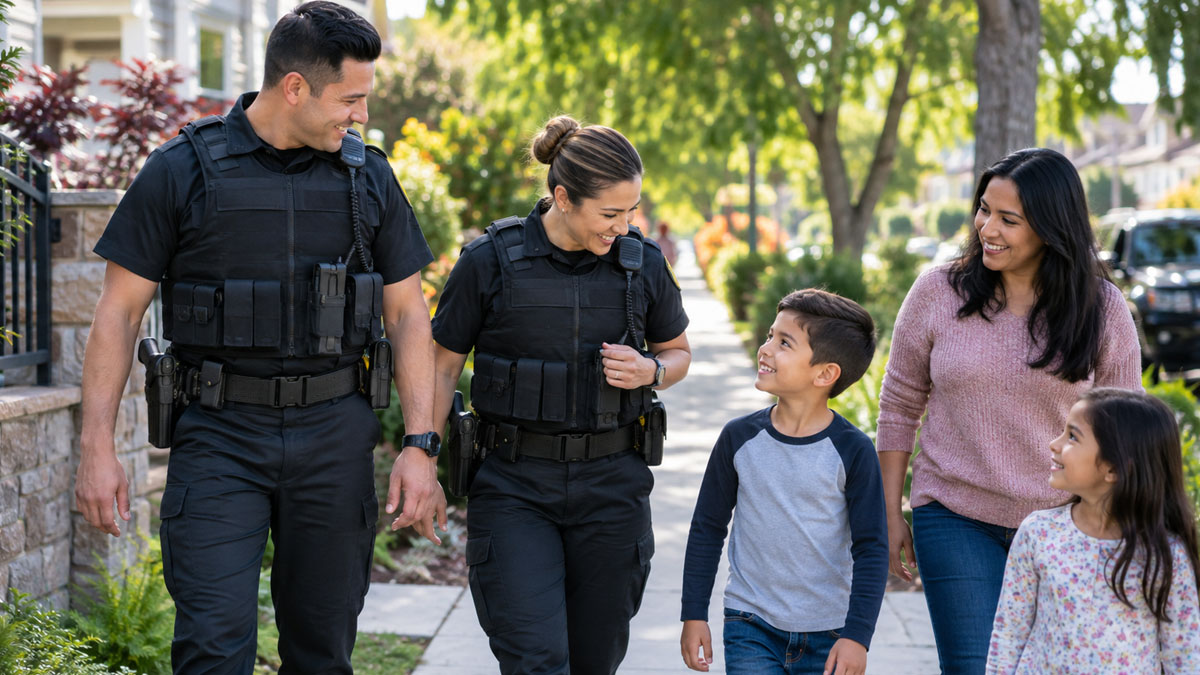
A private police force provides law enforcement services within defined properties and jurisdictions. Officers conduct patrols, respond to incidents, investigate offenses, and protect specific facilities under authorized agreements. Their responsibilities extend beyond routine security because officers receive police training and operate within established legal authority. Here is how private police services enhance public safety in communities:
Extend Property Patrols
Mobile patrols provide a recurring police presence at contracted residential and commercial properties. A private police force conducts scheduled or random checks; these checks allow officers to identify suspicious activity before it develops into a more serious incident. When trespassing or property-related concerns arise, patrol vehicles support officers in responding to and documenting those incidents within their assigned jurisdictions. Officers use marked patrol vehicles based on assignment needs, as they help provide visible deterrence.
Respond To Incidents
Alarm response gives businesses access to officers when an alarm activates at a protected facility. Officers respond to the location, inspect the property, and determine whether the alarm resulted from unauthorized entry or another security concern. If officers encounter suspicious activity or a potential violation during a patrol or other assigned duty, they investigate the circumstances and take appropriate action.
Officers also respond to violations that occur within their assigned jurisdiction. When a violation occurs, officers investigate the incident and take action within the scope of their legal authority. If an incident begins within the agency’s jurisdiction and continues beyond the immediate property, officers may continue the pursuit as permitted by applicable law and agency procedures.
Investigate Local Offenses
Investigative services focus on developing criminal cases that occur at protected properties or within assigned jurisdictions. Experienced investigators examine offenses such as larceny, embezzlement, and controlled-substance violations by reviewing evidence, interviewing relevant individuals, and documenting the circumstances of each case. This work allows investigators to develop information that supports charging decisions or other legal action.
Investigators also coordinate with other law enforcement personnel and preserve case information for use in subsequent proceedings. When an investigation results in an arrest, their involvement may continue as the case moves through the legal process. They also provide investigative records or testimony when required.
The agency assigns investigators to handle criminal cases that require detailed follow-up after an offense is reported. Investigators review available evidence, interview witnesses and involved individuals, establish the sequence of events, and identify information that may establish who committed the offense. They also prepare investigative reports and maintain case records that document the evidence and investigative steps taken. When the case proceeds to prosecution, investigators provide additional records or testimony to support the legal proceedings.
Strengthen Safety With a Private Police Force
Community safety begins with preparation before an incident occurs, especially at properties that have specific security needs. Emergency response plans help organizations prepare employees, establish clear procedures, and respond effectively when an emergency occurs. Fire-watch assignments provide additional security when a property requires continuous monitoring; ongoing officer training helps personnel maintain the skills needed for their assigned duties. Contact a qualified private police force provider to discuss patrol, emergency response, and facility protection services for your community.