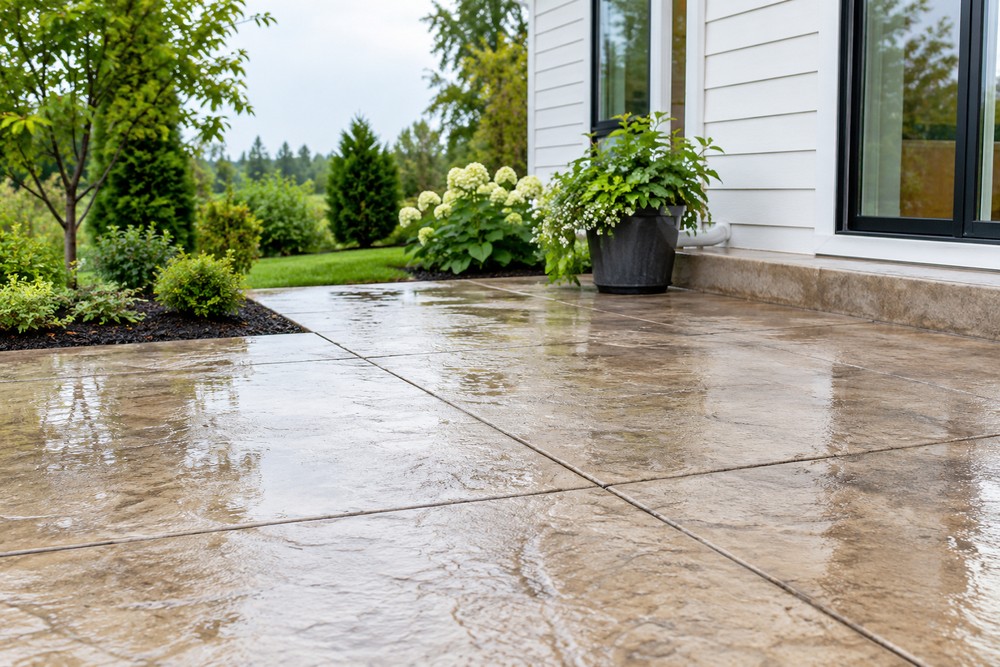
Decorative concrete needs more than an attractive color or stamped pattern to perform well outdoors. A durable patio, driveway, walkway, or pool deck begins with decisions about drainage, base preparation, mix design, curing, and ongoing care. Property owners planning a weather-ready surface can consult experienced material suppliers, such as Metropolitan Materials, to match the system to the conditions at the specific site.
Whether a project faces intense summer sun, frequent rain, freeze-thaw conditions, or deicing products in winter, the goal is the same: limit water intrusion, avoid premature wear, and support the slab from below. Decorative finishes can add character, but they work best when the concrete beneath them is sound and appropriately protected.
Weather Threats That Affect Decorative Concrete
Outdoor concrete is exposed to cycles that can gradually affect both its appearance and its surface condition. In cold climates, water that enters pores or small cracks can freeze and expand. Repeated freeze-thaw cycles can contribute to scaling, cracking, and loss of surface material, especially where drainage is poor or the slab is exposed to deicing salts.
Heat presents a different challenge. Hot, dry, or windy conditions can speed moisture loss from fresh concrete, making timely finishing and curing especially important. Strong sunlight may also make color changes more noticeable over time. Heavy rain, meanwhile, can create standing water, wash soil from edges, and place stress on joints if runoff has nowhere to go.
How Site Planning Supports Long-Term Performance
A decorative finish cannot compensate for a poorly planned site. Before work begins, consider where water will move after a storm, whether the slab will receive direct afternoon sun, and how the space will actually be used. A driveway has different loading needs than a footpath, while a pool deck needs thoughtful traction and drainage planning.
Key Planning Questions
- Where will roof runoff and stormwater travel after reaching the slab?
- Will cars, snow equipment, grills, planters, or frequent foot traffic use the surface?
- Does the soil hold moisture, settle, or shift during seasonal changes?
- Could tree roots, leaf debris, or nearby irrigation affect the slab?
- Will walls, fences, or landscaping keep parts of the surface shaded and slow to dry?
Plan for positive drainage so water moves away from the structure and does not remain along slab edges. A stable, properly prepared base and correctly located joints also help manage normal concrete movement.
Why Surface Preparation Comes First
For an existing slab, preparation is the foundation of staining, sealing, overlays, and other decorative work. Inspect the concrete for active cracks, spalling, scaling, soft spots, loose material, and signs that water is moving beneath the slab. Oil, paint, curing residue, dirt, and old failing coatings can interfere with adhesion or create uneven color.
Clean and repair the slab using methods compatible with the selected finish. Serious damage may require more than a cosmetic patch, and a spreading crack may indicate movement that should be evaluated before installing a new surface. Testing a small, inconspicuous area can reveal how the concrete responds to color, sealer, or overlay materials.
Choosing A Concrete Mix For The Local Climate
There is no single concrete mix that is best for every decorative project. The appropriate mix depends on local exposure, expected traffic, slab thickness, drainage, aggregate quality, and project specifications. Excess water added during placement can weaken the surface and increase shrinkage, so water content should be controlled rather than adjusted casually at the site.
In regions with freezing weather, air-entrained concrete is commonly specified for exterior flatwork because its internal air-void system helps accommodate the pressure from freezing water. Reinforcement and control joints do not prevent all cracking, but they help manage where movement-related cracks are most likely to occur. Local code requirements and the project design should guide final decisions.
Selecting Color And Texture With Weather In Mind
Appearance and maintenance are closely connected. Light colors can feel visually cooler in sunny areas and may make dust less noticeable. In contrast, darker colors can provide contrast but may show fading, mineral deposits, or tracked-in debris more readily. Deeply stamped textures can improve visual interest, yet they also create recesses where dirt, leaves, and moisture may collect.
Options within decorative concrete include stamped finishes, stains, dyes, overlays, exposed aggregate, and polished surfaces. Integral color is distributed throughout the concrete, whereas surface-applied color and coatings depend heavily on proper preparation and application. Choose a texture that suits the intended traffic, especially where wet shoes, rain, or pool water may reduce traction.
The Role Of Curing And Sealing
Curing gives newly placed concrete the time and moisture conditions needed to develop strength. It should follow the concrete system’s requirements, with traffic kept off the surface for the appropriate period. Rushing this phase can affect the finished surface before it enters regular use.
After the concrete or decorative system has reached the required condition, a compatible sealer can help reduce water absorption, staining, salt exposure, and wear. Sealer is not a structural repair product, and it cannot correct a weak base, poor drainage, or unstable slab. Apply it at the recommended coverage rate, allow proper drying time, and avoid heavy coats that may dry unevenly or become slippery.
A Simple Maintenance Plan
Routine care is usually less costly than neglect. Sweep away abrasive grit and organic debris, clean oil and fertilizer spills promptly, and use mild cleaners when possible. Keep nearby gutters, drains, and joints clear so water does not remain against the surface.
- Inspect the slab after winter, major storms, and periods of heavy use.
- Watch for new cracks, surface flaking, joint failure, and persistent standing water.
- Use snow-removal tools that are less likely to strike decorative edges.
- Check deicing products before use, particularly on newer concrete.
- Schedule resealing according to visible wear, climate, and product guidance.
Common Mistakes That Shorten Surface Life
- Applying a decorative finish over weak, contaminated, or wet concrete.
- Adding excess water during concrete placement.
- Ignoring joint layout, soil movement, or drainage problems.
- Sealing before the substrate is ready or applying the sealer too heavily.
- Using aggressive deicing chemicals without checking their compatibility.
- Expecting stains, coatings, or overlays to solve structural damage.
A Practical Project Checklist
- Identify the site’s primary weather risks and traffic demands.
- Inspect the base, existing slab, joints, drainage paths, and edges.
- Select color, texture, and finish materials suited to the exposure.
- Confirm the mix, curing method, and installation timing.
- Test decorative materials in a small area before full application.
- Choose a compatible sealer and record the products used.
- Set a recurring cleaning, inspection, and resealing routine.
For examples of evolving finishes, restoration projects, and decorative applications, reviewing decorative concrete industry news can help homeowners and project planners compare approaches without overlooking the basics of installation and maintenance.
Final Takeaway
Decorative concrete handles demanding weather when it is treated as a complete system rather than a surface treatment alone. Good drainage, a stable base, an appropriate mix, careful curing, compatible sealing, and consistent maintenance all work together. The finish creates the visual impact, but the preparation beneath it is what helps the surface remain attractive and useful through 2026 and beyond.