Key Takeaways
- Construction completion and turnover readiness are different milestones.
- Cleanup works best when it is scheduled in phases alongside final trade work.
- High surfaces, glass, floors, restrooms, cabinets, and entrances require close inspection.
- Dust control and documented walkthroughs can reduce preventable delays.
- Clear responsibilities help teams resolve cleaning issues before final sign-off.
Construction may be complete, but a commercial space is not ready for handover until it is clean, safe to enter, and checked from ceiling to floor. A disciplined turnover process helps general contractors, property managers, and business owners identify debris, dust, unfinished details, and visible marks before an inspector, tenant, employee, or customer sees the space.
For projects that need a specialized vendor, Big League Clean offers post-construction cleaning services built around rough cleaning, final detailing, and pre-inspection touch-ups. Its scope includes floor care, glass, fixtures, fine-dust removal, and cleanup for newly built or renovated commercial facilities, making it a practical example of the type of experienced provider a project team may evaluate in markets including Denver, Colorado, and San Diego, California.
Why Turnover Cleanliness Matters
A completed build can still contain drywall dust, packaging, protective film, adhesive residue, paint splatter, grout haze, and discarded materials. A quick sweep may improve the appearance of a site, but it does not address window tracks, cabinet interiors, air diffusers, floor edges, or other places where residue collects. A detailed turnover clean supports a professional first impression and makes it easier to distinguish a cleaning issue from a construction defect or incomplete punch-list item.
Start Before the Final Day
Cleanup should be part of the closeout schedule, not an afterthought assigned to the final night. Confirm the inspection, handover, or opening date, then identify which trades still need access. Mark finished rooms that can be cleaned and protected, while keeping active work zones separate. Before the crew arrives, verify that water, power, lighting, elevators, dumpsters, and safe access routes are available. The project team should also assign responsibility for debris hauling, protective coverings, and any finish damage discovered during cleaning.
Use a Phased Cleanup Plan
Rough Cleanup
Rough cleanup takes place while final construction is still underway. Remove bulky scrap, loose packaging, and obvious debris from work areas, walkways, stairs, and staging zones. This first pass reduces the amount of dust and clutter that can interfere with finish work.
Final Detail Cleaning
Final detailing begins after the major trades are substantially complete. Work from high areas downward, cleaning ceilings, vents, ledges, fixtures, walls, doors, cabinets, glass, and floors in sequence. Address stickers, tape, haze, and other residues using methods appropriate for the material being cleaned.
Touch-Up Cleaning
Late deliveries, punch-list work, inspections, and move-in activity can leave new fingerprints, footprints, and dust. Schedule a final touch-up as close to handover as practical, with special attention to entrances, glass, restrooms, lobby areas, and other high-visibility surfaces.
Check Every Room and Surface
Use the same inspection order in every zone so important details are not missed. Start above eye level with ceiling tiles, exposed beams, light fixtures, sprinklers, vents, diffusers, cabinet tops, door frames, and partition ledges. Then inspect walls, switch covers, handles, push plates, closets, drawers, and the interiors of cabinets.
Glass needs its own check. Look at windows, storefronts, mirrors, partitions, frames, sills, and tracks from more than one angle and under normal building lighting. On floors, inspect corners, transitions, stairs, elevator thresholds, and baseboard edges for grit, haze, adhesive, dust, and footprints. Match the cleaning method to the surface, whether it is tile, carpet, concrete, wood, vinyl, or another finished material.
In restrooms, kitchens, break rooms, janitor closets, corridors, and shared areas, inspect fixtures, counters, sinks, appliances, drains, dispensers, partitions, and doors. These spaces are often highly visible and heavily used on the first day of occupancy.
Control Dust and Indoor Pollutants
Dust control is a safety and quality concern, especially when work continues beside finished areas. The EPA explains that many materials and products can release volatile organic compounds into indoor air, including paints, adhesives, building materials, and cleaning products. Keep construction dust contained, protect supply and return openings where appropriate, and avoid spreading fine particles through careless dry sweeping.
Unknown chemicals, sharp materials, and damaged products should be separated for proper handling. Tasks that create respirable crystalline silica require particular care because OSHA construction guidance on silica exposure identifies controls such as dust suppression, ventilation, and suitable respiratory protection for affected work.
Choose the Right Cleaning Partner
Before hiring a cleanup team, ask whether it can work around trade schedules, inspections, and active punch-list items. The written scope should identify rooms, surface types, debris removal, glass, floor care, touch-up work, access needs, and any restricted areas. Confirm who supplies equipment, who protects finished surfaces, and how additional work or damage reports will be handled.
Complete the Final Walkthrough
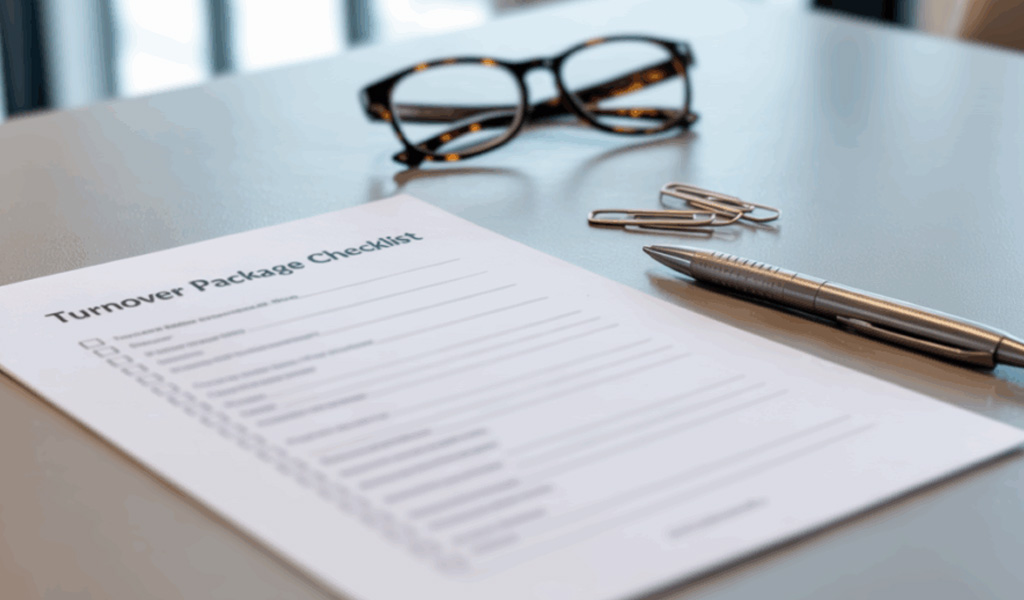
- Inspect the building by zone rather than from the doorway.
- Check glass, high surfaces, floor edges, cabinets, and areas behind doors.
- Use photos to document open items and assign each item to a responsible person.
- Separate cleaning corrections from trade defects or incomplete work.
- Schedule final touch-ups before the owner, tenant, or inspector returns.
- Collect approval from the person authorized to sign off on turnover.
Common Turnover Mistakes
- Waiting until the last night to begin cleanup.
- Cleaning floors before overhead dust and wall residue are removed.
- Forgetting door tops, vents, tracks, cabinet interiors, and mechanical spaces.
- Assuming one cleaning pass will be enough after late trade work.
- Using tools or products that can damage new finishes.
- Signing off without a written checklist or photo record.
Conclusion
A smooth commercial handover depends on more than completed construction. A phased cleanup plan, careful dust control, systematic surface checks, and a documented final walkthrough give every party a clearer definition of ready. When those steps are built into the closeout process, the space is better prepared for inspection, occupancy, and its first day of business.