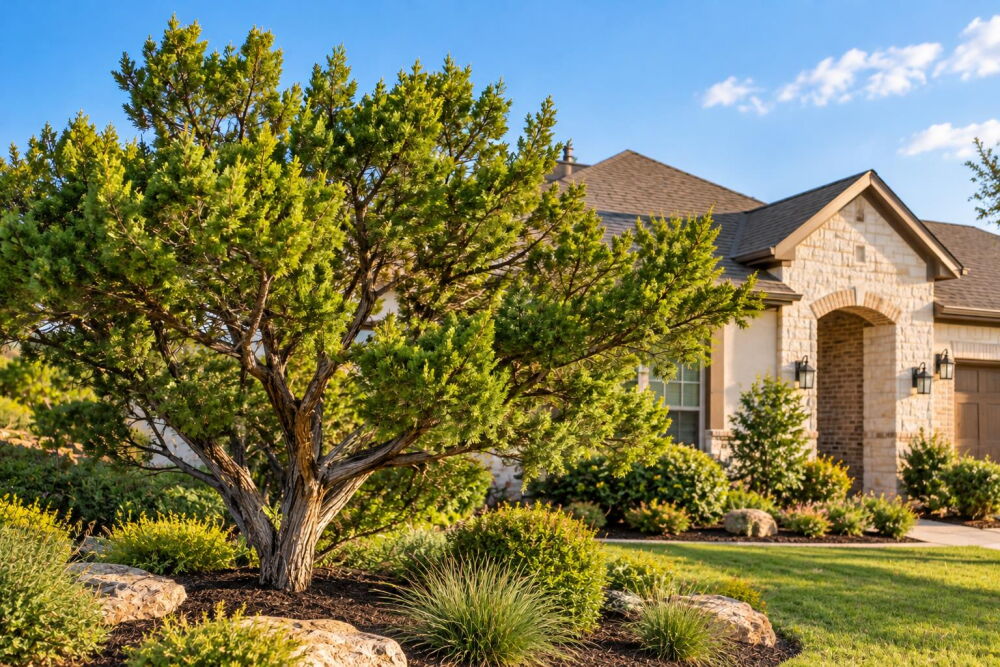
Texas is home to an incredible variety of trees, from towering pecans and sprawling live oaks to bald cypress and mesquite. Among these native species is the juniper tree, an evergreen that has become a familiar part of many Texas landscapes.
Often called “cedar” by Texans, junipers are well adapted to the state’s diverse climate and growing conditions. They can be found across portions of Central and West Texas, where their ability to withstand challenging conditions makes them an important part of the local landscape.
What Is a Juniper Tree?
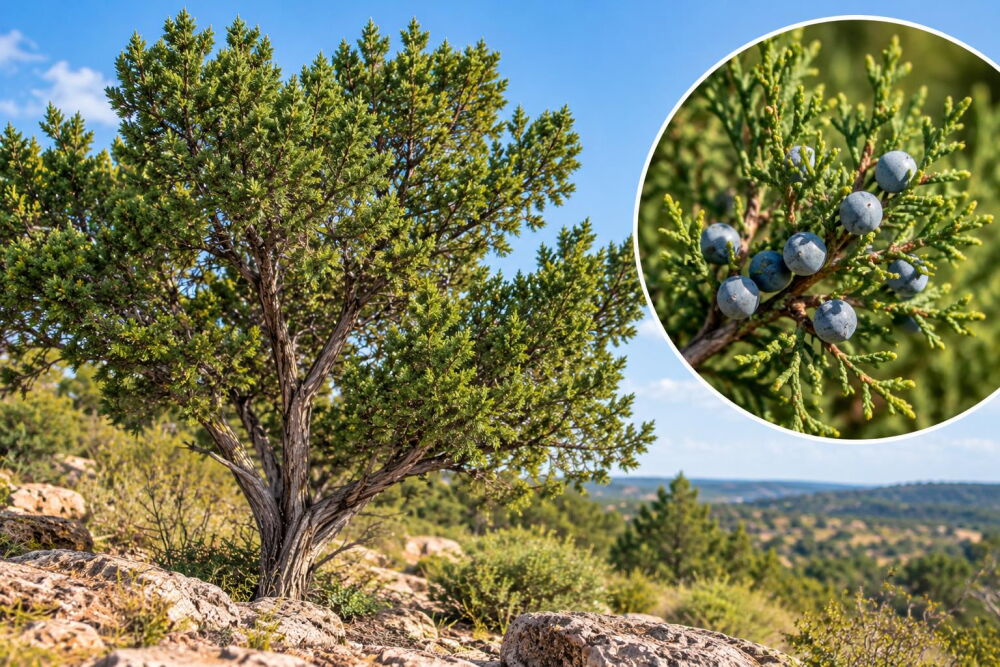
Junipers are evergreen trees and shrubs belonging to the genus Juniperus. Several species grow naturally in Texas, with Ashe juniper (Juniperus ashei) being particularly common in Central Texas.
Ashe junipers are generally small- to medium-sized evergreen trees with scale-like foliage and small, bluish cones on female trees. They are especially well suited to dry, rocky environments and can thrive in areas where other tree species may struggle.
Ashe juniper is native to Texas and plays an important role in several of the state’s natural ecosystems.
Why Are Junipers Well Suited to Texas?
Texas weather can be unpredictable. Hot summers, periods of drought, heavy rainfall, winter freezes, and changing soil conditions can all create challenges for trees.
Junipers are particularly well adapted to these conditions.
As Torres Tree Service explains:
“Juniper trees are highly adaptable, surviving under various weather conditions, and provide habitats and food for various animals, including birds and mammals.”
Their adaptability is one reason junipers have become such a recognizable part of the Texas landscape. They can tolerate relatively dry conditions and are commonly found in rocky areas and other environments where water may be limited.
Their evergreen foliage also means they provide greenery throughout the year rather than losing all of their leaves during the winter.
Juniper Trees Provide Wildlife Benefits
Native trees play an important role in supporting local ecosystems. Junipers are no exception.
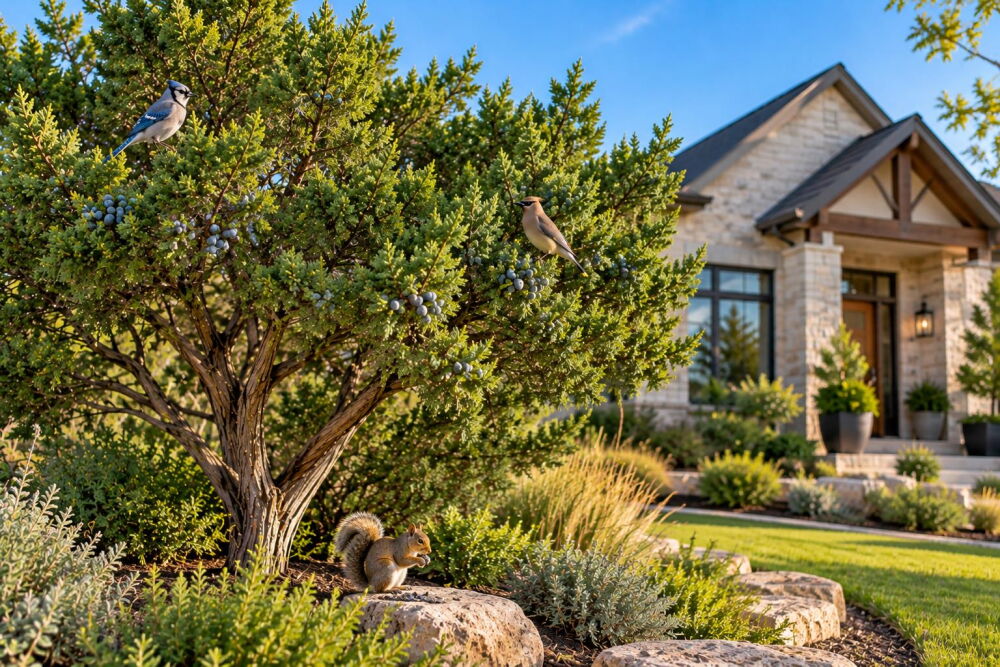
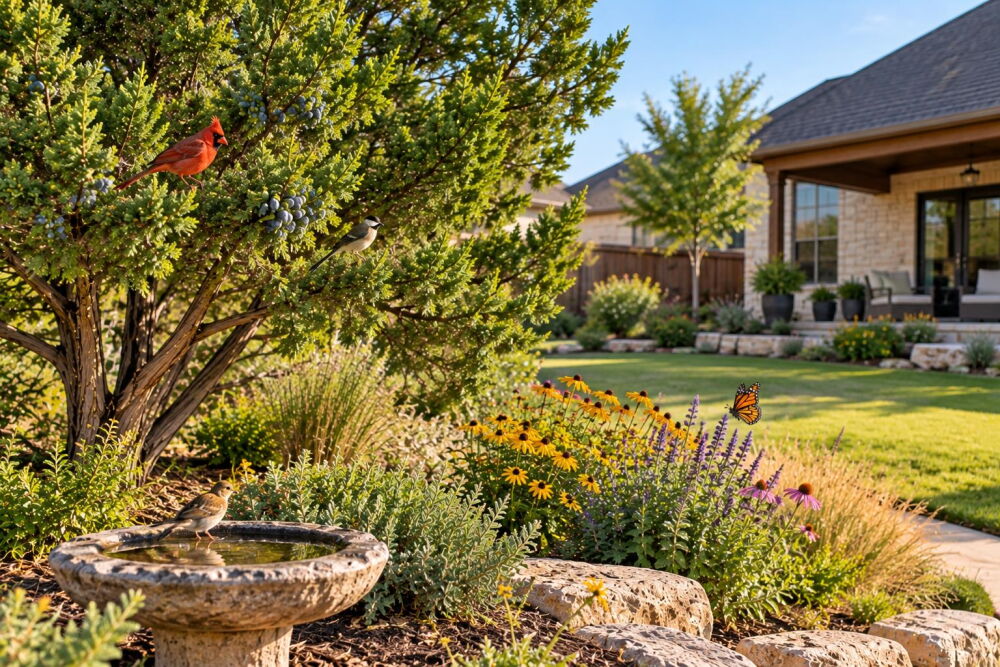
Their dense branches can provide shelter and nesting habitat for birds and other wildlife. The berries and other plant material associated with junipers can also provide food for wildlife.
This is one of the advantages of maintaining native vegetation in a landscape. Native species have evolved alongside the wildlife found in their region, creating relationships that can benefit both plants and animals.
Native tree species can provide food and shelter for local wildlife while also being well adapted to the conditions of their particular region.
For homeowners interested in creating a more wildlife-friendly yard, incorporating appropriate native plants and trees can be one way to make the landscape more beneficial to local species.
Junipers Are More Than Just “Cedar”
Many Texans know junipers by another name: cedar. This is particularly common when people talk about “cedar trees” or “cedar fever.”
The term can sometimes be confusing because true cedars belong to a different group of trees. In Texas, the trees commonly referred to as mountain cedar are often Ashe junipers.
Junipers are also well known for producing pollen during the winter months. Male juniper trees release pollen, which can become airborne and contribute to seasonal allergy problems commonly referred to as cedar fever.
However, their reputation for producing pollen doesn’t diminish their ecological importance. Like other native trees, junipers have an established role in Texas ecosystems and provide habitat and resources for wildlife.
Should You Plant a Juniper?
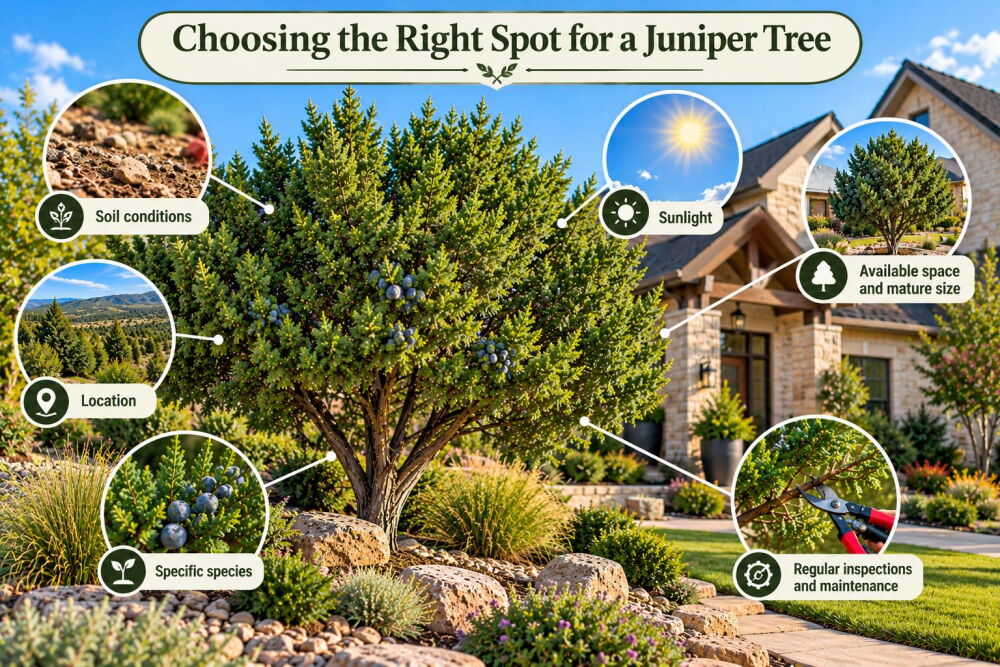
Whether a juniper is a good choice for a particular property depends on the location, available space, soil conditions, sunlight, and the specific species being considered.
Choosing a tree based on the conditions of the planting site is important. A tree that naturally thrives in a particular Texas region may require less intervention than a species that isn’t well suited to the local environment.
Homeowners should also consider the mature size of the tree and how its roots, branches, and eventual canopy will interact with buildings, power lines, driveways, sidewalks, and other landscape features.
For an existing juniper or another mature tree, regular inspections and appropriate maintenance can also help identify problems before they become more serious.
Exploring Other Native Trees in Texas
Junipers are just one example of the many native trees that can be found throughout Texas. Depending on the region, homeowners may also encounter live oaks, pecans, bald cypress, red oaks, mesquite, and other species that have adapted to the state’s varied growing conditions.
If you’re interested in learning more about the trees that naturally grow in the Lone Star State, take a look at this guide to native trees in Texas. It covers several native Texas tree species along with information about their characteristics, benefits, and planting considerations.
Understanding the trees that naturally belong in your region can make it easier to make informed decisions about planting, maintaining, and caring for the trees around your property.