What Off-the-Rack Really Implies
Walk into a bright store, reach for a suit, and you are greeted by a promise of ease. Off-the-rack garments are built for averages, stitched around a chart that imagines a body rather than meeting an actual one. The jacket, the trousers, the shoulder line, the sleeve length, all engineered to skim across a broad demographic curve. Real bodies have asymmetries. One shoulder sits lower, a posture shifts across the day, a chest expands with breath and work. The standardized model smooths those realities until the fit becomes a compromise.
To make mass production function, companies choose fabrics for price and volume and opt for quick construction techniques. What looks crisp in a fitting room can start to falter after a season of movement, climate changes, and cleaning cycles. The hidden story is not written on the tag. It reveals itself in how the garment ages.
Alterations That Nickel-and-Dime You
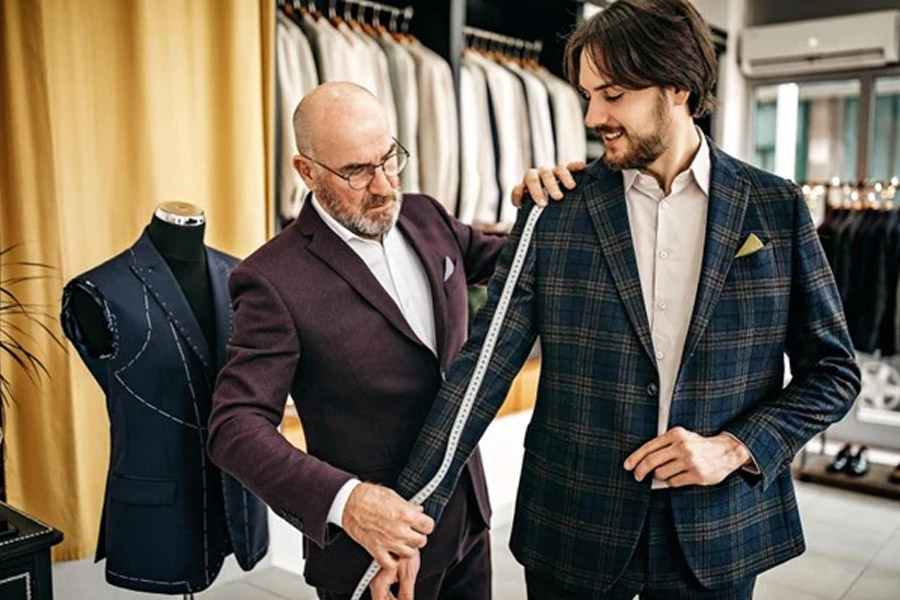
Many buyers soften the compromise with a hopeful plan. Buy the suit, then take it to a tailor. Hem the trousers. Trim the sleeves. Nudge the waist. Pinch the side seams. These adjustments can sharpen the silhouette, but they cannot rewrite the structure. Shoulder width, armhole height, jacket balance, lapel roll, these are the skeleton of the suit. If the skeleton is wrong, the body can never stand properly.
Each small fix carries a fee. Each iteration burns time. Over the years, alteration receipts pile up like pebbles in a jar until you realize the jar is heavy. Worse, you keep paying to improve a garment that will never feel fully natural. That constant near miss becomes both a financial and a psychological tax.
Fit as Daily Performance
Fit is not a mirror trick. Fit is performance. A jacket that bites across the back changes how you reach for a handshake. Trousers that sag at the seat alter how you sit and how you rise. Twisted sleeves push your posture out of alignment. When the fabric fights your movement, your body learns to accommodate and your confidence takes the bill.
A decent suit should disappear when worn. Like a second skin, it should support rather than resist. Even with tailoring, off-the-rack construction rarely feels comfortable. The difference is slight at first, then clear as your day progresses and you notice the minor frictions you cannot ignore.
Fabric Choices and Wear Life
The cloth itself hides another cost. Many off-the-rack suits lean on blends or lower grade wools that look polished under store lighting but tire quickly under real wear. Shining at elbows and seat, pilling at friction points, losing shape after cleaning, thinning along pocket mouths and seam paths. Each sign appears faster than you expect.
Custom and made-to-measure programs choose fabric with your reality in mind. Climate, frequency of wear, travel demands, and the way you move all inform the cloth selection. The right fabric will breathe, recover, and resist abrasion. It stretches the lifespan of the suit, and with it, stretches your investment.
Inside the Jacket Construction
The most important differences often sit under the surface. Off-the-rack suits commonly rely on fused interlinings, adhesive layers that keep the front panels in place. Heat and solvents act on those glues. Over time, bubbling, stiffness, and separation can turn a once neat jacket into a wrinkled facade that cannot be smoothed.
Custom clothing made of canvas is high-quality. The jacket is sewn with canvas to adapt to the wearer. It learns your rhythm like a good instrument. Age improves draping, chest shape, and suit movement. That kind of clothes aging is rare. It boosts return and appearance.
The Wardrobe Rotation Trap
Professionals often solve inconsistency with quantity. Buy four or five off-the-rack suits and rotate through them. In practice, one or two will feel least bad, so they become the default. Those favorites wear out first. The rest sit neglected in the closet like quiet reminders that money was spent without reward.
With bespoke or well executed made-to-measure, you build a rotation that makes sense. Each suit fits the same body in a consistent way. You reach for any of them without hesitation. Wear is spread evenly, and you buy fewer pieces that last longer. The calendar of replacement slows.
Style That Endures Beyond Trends
Mass-market suits chase the season. Lapel width drifts. Jacket length jumps. Gorge height slides up or down. Fashion cycles push purchases. What looked sharp six months ago can feel dated before the lining breaks in.
Custom work fits you first, then refines a cut anchored in classic proportion. The suit aligns with your frame rather than a marketing cycle. That kind of restraint keeps a garment relevant and eliminates the urge to update for trend alone. Longevity becomes a design choice.
The ROI of Confidence
Confidence has a measurable effect. It shapes voice, cadence, posture, and risk tolerance. Clothing is a tool. When the tool supports you, you speak cleaner, you move with intent, you negotiate with clarity. A suit that fits perfectly signals discipline without theatrics. You do not need to announce quality. It is visible in the line of the shoulder and the calm of the drape.
Clients often assume discomfort is normal until they experience ease. That shift is powerful. Over a career, it compounds. Small wins accrue. Opportunities are approached rather than avoided. If you measure value by outcome rather than sticker, confidence becomes one of the strongest returns.
Long-Term Cost of Ownership
Comparisons often stall at the upfront price. The total cost of ownership tells a fuller story. Off-the-rack typically means more frequent alterations, faster wear, inconsistent fit across pieces, trend driven styling, and a higher replacement rate. Custom or made-to-measure means proper fit from the outset, durable construction, cloth selected for use, and a silhouette that resists fashion churn.
Over five to ten years, the math tends to favor quality. One well built suit that works hard is less expensive than two or three that underperform. You spend less time in tailoring shops, less energy deciding, and less money replacing compromised garments.
The Psychology of Almost Right
There is a quiet toll in a closet full of almosts. You open the door, scan shoulders and lapels, and hesitate. Decision fatigue sets in. You know one jacket pulls and another drapes poorly. You compromise before morning coffee. That friction costs you attention you could spend elsewhere.
A wardrobe built around pieces that are right removes that drag. The suit becomes a reliable instrument. You know how it plays. You put it on without thought and direct your focus toward the work that matters. Relief is not dramatic. It is steady. It changes the texture of your day.
FAQ
Is bespoke the only path beyond off-the-rack?
No. Made-to-measure programs can deliver excellent results when pattern adjustments are guided by your measurements and posture. The key is starting from your body, not a generic size, then cutting and constructing accordingly.
How long can a well made suit realistically last?
With proper care, thoughtful rotation, and quality construction, a suit can serve for a decade or more. Lower quality off-the-rack pieces often show notable degradation at half that timeline due to fabric fatigue and fused components.
Can a skilled tailor make any off-the-rack suit fit like bespoke?
Tailoring improves the silhouette and comfort, but it cannot alter structural fundamentals such as shoulder width, armhole height, and interior construction. If those elements are off, the result can be better but rarely truly right.
Are bespoke suits practical for everyday professional wear?
Yes. Many professionals choose bespoke for daily use precisely because the fit, durability, and comfort support long hours and frequent travel. The upfront investment spreads across years of reliable performance.
What is the most common mistake buyers make when choosing suits?
Focusing on the initial price and ignoring total cost of ownership. Alteration fees, replacement cycles, and lost confidence add up. A cheaper tag can become expensive once you count everything that follows.
How do I choose fabric that will last in my environment?
Start with your climate, schedule, and friction points. Seek breathable, durable weaves with resilient recovery. In custom settings, describe how you move and how often you wear suits. Let those realities guide cloth selection rather than showroom gloss.