The human body is a fortress, yet it is breached in the most intimate moments. When you share physical space with someone, microscopic ecosystems collide in the dark. Often, an invader slips past your biological defences without sounding a single alarm. You wake up days later, feeling a creeping sense of doubt, wondering what invisible things might be multiplying beneath your skin.
This quiet paranoia drives people to search for immediate answers, hoping a quick laboratory visit will clear their conscience. If you are navigating this anxiety and looking to book an std screening in Singapore appointment, you must first understand the deceptive timeline of microscopic evidence. You cannot simply force a pathogen to reveal its tracks the morning after an encounter.
The Trap Of The Next Morning
Most patients make a profound, costly mistake driven by sheer panic. They rush to a laboratory hours after a risky encounter, demand a blood draw, and walk away relieved when the results return negative two days later.
This immediate relief is a dangerous illusion. You have merely paid a clinic to prove you were healthy the week before the encounter. When a pathogen enters your system, it hides in the soft tissues, quietly replicating until it reaches detectable levels. A test taken twelve hours after exposure is scientifically blind to the new invader.
The Mathematics Of The Window Period
Medical investigators call this hiding phase the window period. It is the mandatory stretch of time between the moment of transmission and the moment a laboratory instrument can finally detect the wreckage left behind.
During this biological window, you can be highly infectious to others while your own immune system has not yet manufactured the specific antibodies the test is hunting for. You must map out this timeline precisely to avoid a false sense of security.
- Gonorrhoea requires roughly five days to multiply sufficiently for a reliable swab.
- Chlamydia needs at least a full week to trigger a positive culture.
- Syphilis can vanish into your bloodstream for up to ninety days before a standard antibody screen catches it.
The Rule For Drawing Blood
You need a strict heuristic to navigate this terrifying waiting game. Do not let midnight anxiety dictate your medical schedule. If you have experienced a high-risk exposure, you must apply the rule of twenty-eight days.
You can take a preliminary urine test after one week to clear the simple bacterial infections. But you must circle a date on your calendar exactly twenty-eight days after the encounter. That specific day is when modern fourth-generation blood screens can reliably detect the p24 antigen, a protein fragment tied directly to HIV.
Avoiding The Generic Screen
When you finally reach the correct date, you face a non-obvious trade-off at the clinic counter. Most generic health guides suggest asking for a standard sexual health check. The real answer is that a basic public clinic screen usually only looks for chlamydia and gonorrhoea because they are the most common and easily cured.
If you ask for the basic test, you trade comprehensive knowledge for a slightly cheaper bill. A basic urine sample will never tell you if you carry syphilis, herpes, or hepatitis. Those specific pathogens live in the blood and the skin, not the urine. To uncover the full truth, you must explicitly demand a comprehensive blood and urine panel.
Searching For The Wreckage
We tend to view our bodies as static vessels, but they are active battlegrounds. When you finally take a comprehensive blood test, the laboratory is rarely looking for the disease itself. They are looking for the weapons your body forged.
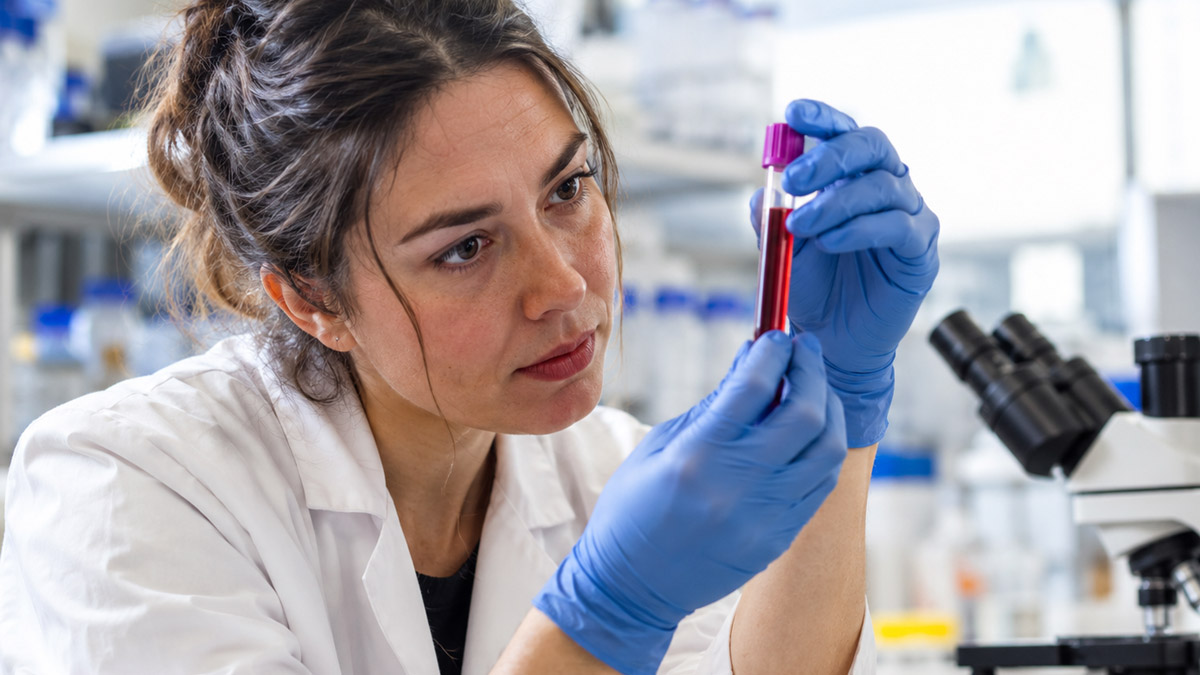
Standard blood screens search for antibodies. If the technician finds these microscopic proteins, they know the enemy has breached the gates. The blood never forgets a war. It serves as an uncompromising ledger of everywhere you have been and everything you have fought.
Waiting for the biological window to close is an uncomfortable exercise in vulnerability. We want instant answers, but sitting with uncertainty is the only way to uncover the truth. You cannot outsmart the slow replication cycle of a virus. By understanding the strict timeline of your own biology and demanding the right tests, you stop fighting the clock. You offer your blood to the vial, let the science work, and finally step out of the shadows of doubt.