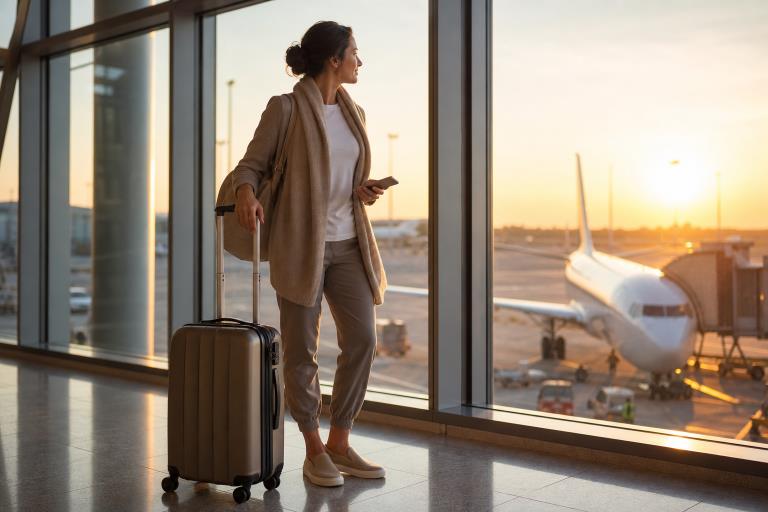
Key Takeaways
- Choose clothing that makes sitting, walking, and stretching easy.
- Wear light layers that adapt to airport terminals, chilly cabins, and your destination.
- Prioritize breathable, flexible, wrinkle-resistant fabrics.
- Select supportive shoes that are already broken in.
- Keep a clean change of clothes and basic comfort items in your carry-on.
- Build an outfit that works beyond the flight itself.
A long flight is not just time spent in one seat. It can include a rushed trip through the airport, a security line, a cold cabin, a connection, and a full first day after landing. The best outfit balances comfort with enough polish to help you feel put together when you arrive.
Start with versatile pieces that can handle more than one setting. Comfortable men’s travel pants by UNIONBAY, for example, can provide a practical middle ground between overly casual lounge clothes and stiff pants that become uncomfortable after several hours in transit.
Why Flight Clothing Deserves More Thought
An outfit that feels fine for a quick coffee run may feel entirely different after six or 10 hours of sitting. Tight waistbands, scratchy seams, rigid fabrics, and heavy shoes can turn small irritations into a long travel-day problem. Clothing should support the trip, not create one more thing to manage.
Think of your travel outfit as part of your packing strategy. It should leave room for movement, make temperature changes manageable, and work with your arrival plans. That matters whether you are heading straight to a hotel, meeting colleagues, or starting a day of sightseeing.
Start With the Trip Plan
Before choosing an outfit, consider the full itinerary rather than the flight alone. Check the weather at both ends of the trip, your flight length, expected layover time, and what you need to do after landing.
- Short domestic flight:A comfortable shirt, flexible pants, and walkable shoes may be all you need.
- Overnight international flight:Add softer layers, warm socks, and an easy-access toiletry kit.
- City break:Wear shoes and bottoms that can handle airport distances and several miles of walking.
- Business trip:Choose clean, structured basics that can be refreshed quickly before a meeting.
- Mixed-weather itinerary:Focus on layers rather than wearing one heavy item all day.
Build a Simple Layering System
Several light layers are usually more useful than one bulky sweatshirt or coat. They let you respond to changes in cabin temperature without overfilling your personal item.
- Base layer:Choose a soft T-shirt, knit top, or breathable button-front shirt that feels good directly against the skin.
- Middle layer:Add a lightweight sweater, cardigan, zip layer, or overshirt for warmth.
- Outer layer:Bring a packable jacket that works in a windy terminal or during a cool arrival.
- Optional accessory:A scarf or wrap can add warmth, offer a little privacy, and take up very little space.
Choose layers that look intentional together, since you may need to remove and carry one while boarding. Neutral colors also make it easier to combine your flight outfit with the rest of your luggage.
Pick Fabrics That Work Hard
Fabric can make a larger difference than the style name on the label. Breathable materials help you stay comfortable in crowded terminals and warm cabins, while a small amount of stretch helps when you are seated, reaching for a bag, or walking to a gate.
Look for clothes that resist wrinkles and dry reasonably quickly. Those qualities are especially useful when your checked bag is delayed or your schedule changes. Test any new travel piece at home first by sitting in it for a while, bending, walking, and checking whether the waistband or seams become distracting.
Choose the Right Bottoms
The best travel bottoms have a comfortable waistband, a practical amount of stretch, and enough structure to wear after arrival. Relaxed trousers, travel joggers, chinos, and soft technical pants can all work, depending on your destination and personal style.
Avoid anything very tight, stiff, or covered in bulky hardware. Darker neutral shades are often easier to manage in transit because they hide minor spills and coordinate with several tops. If jeans are your usual choice, select a pair you already know remains comfortable through a long day.
Wear Shoes for the Whole Travel Day
Your shoes need to work for security lines, terminal walks, gate changes, baggage claim, and whatever comes next. Supportive sneakers, loafers, or other broken-in slip-on styles are often a reliable choice. Never make travel day the first outing for new shoes.
Keep a spare pair of socks in your carry-on, especially for overnight flights. For travelers with personal risk factors, compression stockings may be worth discussing with a clinician. The CDC notes that people traveling long distances should move their legs often and that some higher-risk travelers may benefit from graduated compression stockings. Travelers who have additional blood-clot risk factors should seek individualized medical advice before departure.
Pack a Small Backup Kit
A few well-chosen carry-on items can make delays, missed connections, or lost luggage far less stressful. Keep the kit compact and easy to reach.
- One clean shirt.
- Fresh underwear and socks.
- A lightweight layer.
- Essential medication and a small hygiene kit.
- A reusable water bottle to fill after screening.
- A small bag for worn clothing.
Security rules can vary by airport and item, so check current checkpoint guidance before packing liquids and personal items. Keep passports, medication, chargers, and documents in an outer pocket or pouch instead of burying them under clothing.
Plan Outfits Around More Than One Use
The most efficient travel wardrobe uses pieces that work at the airport, in a hotel, at a café, and for a casual dinner. A simple three-day plan might include two bottoms, three tops, one polished layer, and one dependable pair of shoes. Choose colors that mix easily, then use an overshirt or lightweight jacket to make the same basics feel more complete.
Common Mistakes to Avoid
- Wearing untested clothes or brand-new shoes.
- Relying on one heavy layer instead of lighter options.
- Packing only delicate fabrics that wrinkle or need special care.
- Forgetting that the destination climate may differ from home.
- Putting every useful backup item in checked luggage.
- Choosing appearance over mobility and all-day comfort.
A Quick Pre-Flight Clothing Check
- Check the forecast for departure and arrival.
- Try sitting, walking, and bending in the complete outfit.
- Confirm your shoes feel good after a longer walk.
- Put on a clean shirt, socks, and a layer, and pack them in your carry-on.
- Remove unnecessary accessories before leaving for the airport.
- Keep travel documents and medication immediately accessible.
Conclusion
The best long-flight outfit is simple, adaptable, and comfortable from departure through arrival. Breathable layers, flexible bottoms, supportive shoes, and a small backup kit can make a demanding travel day feel much easier. Pack fewer pieces that work well together, and you will be better prepared for the airport, the flight, and the first hours of your trip.