Key Takeaways
- Many water heater problems involve replaceable components rather than a failed tank.
- A leak from the tank body generally calls for replacement, while a leaking valve or fitting may be repairable.
- Age, repair history, efficiency, and safety all matter when comparing options.
- Lehi homeowners should consider winter demand, household size, and available utility connections before changing system types.
- Gas odors, electrical damage, venting concerns, and pressure-relief problems require prompt professional attention.
A water heater often fails at the most inconvenient time, such as during a cold morning in Lehi when several people need showers before work or school. Before assuming a replacement is necessary, homeowners can look at the source of the problem, the unit’s age, and its repair history. Professional water heater repair in Lehi Utah can help determine whether a worn part can be replaced or whether the tank itself has reached the end of its serviceable life.
The right answer is not always the cheapest immediate option. A modest repair can be sensible for a newer, otherwise reliable unit. On the other hand, continued spending on an old heater with corrosion, declining performance, or a tank leak can lead to additional costs and a greater risk of water damage.
Warning Signs That Need Attention
A heater can still produce hot water while developing a problem. For example, rumbling or popping may occur when sediment collects at the bottom of a tank, but the same appliance may continue operating for a while. That is why one symptom alone does not provide a complete diagnosis.
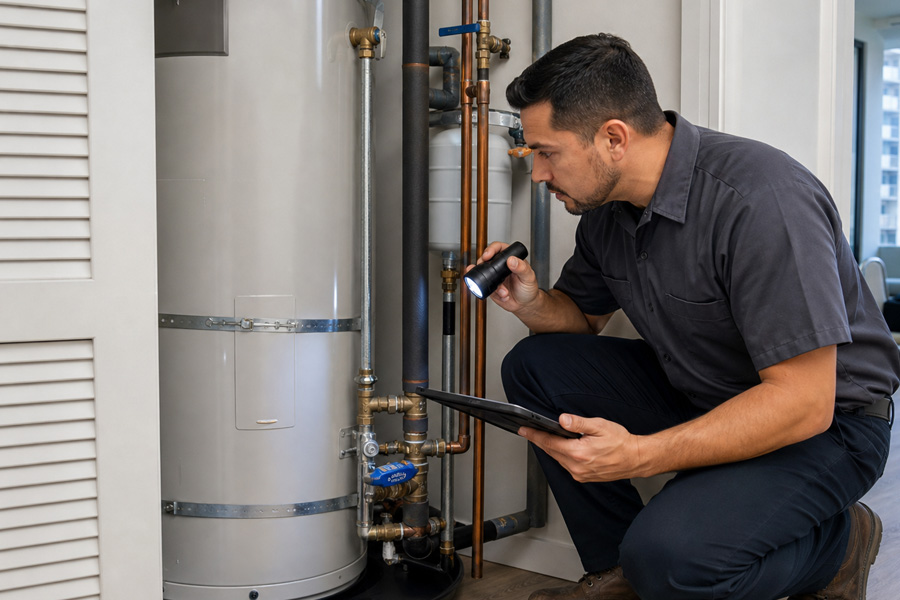
Schedule an inspection if you notice water pooling near the unit, rusty water from hot taps, metallic odors, reduced hot-water capacity, inconsistent temperature, unusual noises, or recurring pilot-light and control problems. Check whether moisture comes from a pipe connection, the temperature-and-pressure relief valve, a drain valve, or the tank shell. The location matters.
When Repair May Make Sense
Repair is often reasonable when the tank remains structurally sound and a specific serviceable part has failed. Common examples include a faulty thermostat, a failed electric heating element, a worn ignition or thermocouple component, a loose connection, a damaged valve, or a dirty burner assembly.
Good Candidates for Repair
- The heater is relatively new and has performed reliably.
- The problem is isolated to one identifiable component.
- There is no corrosion or leakage from the tank body.
- The repair restores safe, dependable operation at a sensible cost.
- The heater still meets the household’s normal hot-water demand.
Routine maintenance may also address some performance concerns. Sediment management, where appropriate for the unit and performed according to the manufacturer’s instructions, can help address noise or slower recovery. A technician can also verify whether the issue comes from the heater itself or from a plumbing, electrical, gas-supply, or fixture-related problem.
When Replacement Is Usually Safer
Replacement is usually the better long-term choice when the tank itself is leaking. A failed internal tank cannot generally be restored with a simple part swap. Rust spreading across the shell, severe corrosion around the base, flood damage, or multiple major failures in a short period are also strong reasons to compare replacement estimates.
A heater may also be a replacement candidate when it no longer provides enough hot water for the household. Growing families, added bathrooms, and simultaneous use of showers, laundry, and dishwashing can expose capacity limits. In Lehi’s colder months, incoming water can be colder, making an undersized system feel even less adequate during periods of heavy use.
How Age and Cost Affect the Choice
Age should guide the decision, not automatically make it. Find the installation paperwork or manufacturer label, then consider how often the unit has needed service and whether it has visible deterioration. An older heater with a first-time, minor component failure may still be worth repairing. An older heater with repeat repairs and reduced performance may not be.
Compare the Complete Cost
- Ask for a written explanation of the failed component or condition.
- Get the repair price, including labor and parts.
- Request a separate replacement estimate.
- Compare warranty coverage, installation work, removal, and possible permit or code-related changes.
- Consider expected energy use and likely future maintenance.
A lower repair invoice is not automatically the better value if another substantial repair is likely soon. The goal is dependable hot water and safe operation, not simply delaying a decision.
Tank, Tankless, and Heat Pump Options
Conventional tank heaters store heated water and are familiar to many homeowners. Tankless systems heat water on demand, but proper sizing depends on the number of fixtures likely to run simultaneously and the required temperature rise. The Department of Energy notes that tankless sizing should account for practical maximum flow and local water temperature, which makes local installation planning important.
Heat pump water heaters use electricity differently from standard electric-resistance models and may be worth evaluating where space, airflow, electrical capacity, and household needs are suitable. Before changing equipment types, review location, venting or drainage needs, utility costs, and the home’s peak hot-water demand.
Safety Checks Homeowners Should Not Skip
Water heaters involve hot water, pressure, gas, combustion, and electricity. Never cap or block a temperature-and-pressure relief valve. Do not attempt electrical work with power active, and do not relight a gas appliance if you smell gas. Keep combustible storage away from fuel-burning equipment, and have questionable venting or gas controls evaluated by a qualified professional.
For local household precautions, the Utah State Fire Marshal advises homeowners to keep clearance around the water heater and maintain accessible shutoffs. If a relief valve repeatedly discharges, wiring is damaged, or water is leaking near electrical components, treat the issue as urgent.
A Simple Decision Process
- Inspect for leaks, rust, strange noises, and control issues.
- Identify whether the problem comes from the tank, a connection, a control, or another part of the plumbing system.
- Check the unit’s age and repair history.
- Compare written repair and replacement estimates.
- Choose the option that provides the safer, more reliable long-term result.
Maintenance After the Decision
Whether the heater is repaired or replaced, regular attention can help catch problems early. Check periodically for moisture, corrosion, loose connections, and changes in water temperature or recovery time. Keep the surrounding area clear, follow the manufacturer’s maintenance schedule, and save records of service visits and replacement parts. A leak-detection device may also be useful where water damage could spread quickly.
Final Thoughts
A repair can be practical when a sound water heater has a limited component failure. Replacement becomes more compelling when the tank leaks, corrosion is advanced, repairs keep accumulating, or the system cannot meet the home’s needs. A careful diagnosis and a complete cost comparison help Lehi homeowners make a confident decision before a small inconvenience becomes a major disruption.