A small cut, a jammed finger or a sore wrist can seem like a minor inconvenience at work. You might shake it off, finish your shift and expect the pain to disappear overnight. But when your hands are involved in almost every task, even a seemingly minor injury can affect your ability to work safely and comfortably.
The tricky part is knowing when an injury needs more than rest. If pain, swelling or restricted movement persists after a workplace accident, understanding the options for hand injury in Singapore can help you recognise what needs attention and why an early assessment may matter. The right response depends on the injury, the task that caused it and how well your hand functions afterwards.
Know What Your Hands Are Telling You
Not every hand injury looks serious at first. A finger caught between two objects might produce swelling without an obvious wound, while a sudden pull when lifting a heavy box can injure a tendon or ligament. Pain alone does not always reveal how much damage has occurred.
Pay attention to what changes after the incident. Can you fully straighten your fingers? Does gripping a mug hurt? Is one finger unusually swollen, numb or bent out of shape? These practical checks can help you describe the problem clearly to a healthcare professional, although they cannot rule out a fracture or deeper injury.
Seek urgent medical attention for severe bleeding, an obvious deformity, a deep wound, loss of sensation or a finger that becomes pale, blue or cold. A hand that suddenly cannot move normally after an accident also deserves prompt assessment rather than a few days of waiting.
Match Prevention to the Task
General advice to be careful around machinery is useful, but prevention works better when it addresses the exact movement or hazard involved. Someone using a cutting tool faces different risks from a warehouse worker moving heavy containers or an office employee spending hours typing.
Start by identifying the moment when an injury is most likely to happen. Is your hand exposed to a sharp edge? Are you twisting your wrist under load? Do you have to reach around a moving part? Changing the setup, tool or sequence of work can often reduce the risk more effectively than relying on concentration alone.
Useful precautions include:
- Use the correct tool instead of forcing a tool designed for another job.
- Keep guards in place and follow equipment safety procedures.
- Store heavy items at a manageable height to reduce awkward lifting.
- Adjust repetitive tasks and take appropriate breaks when possible.
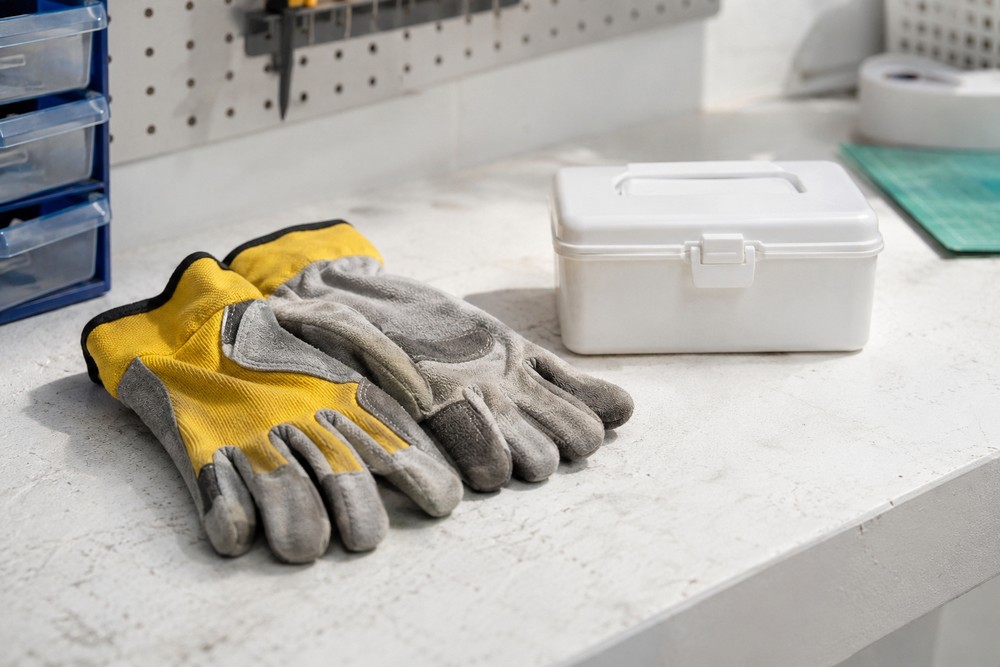
- Wear task-appropriate protective equipment, ensuring it does not introduce another hazard.
The important trade-off is that protective equipment alone cannot make an unsafe process safe. Gloves, for example, may reduce certain cuts or abrasions, but unsuitable gloves near rotating machinery can create an entanglement risk. Match protection to the hazard and workplace safety guidance.
Avoid the Rest and Return Trap
One costly mistake is treating reduced pain as proof that an injury has healed. Pain may settle before strength, flexibility or coordination returns. Going straight back to heavy gripping or repetitive lifting can aggravate an injury that was beginning to recover.
Imagine a worker who strains a finger while moving stock. Two days later, the swelling has eased, so the worker resumes lifting boxes for a full shift. By the afternoon, gripping becomes painful again. The problem is not simply that the worker returned to work; it is that the workload increased before the hand could tolerate it.
A better approach is to follow medical advice and return to demanding tasks in stages where appropriate. Temporary changes, such as lighter duties or fewer repetitive movements, may help maintain productivity without placing unnecessary strain on the injured area. Do not force movement or strength tests through significant pain.
Choose Treatment Based on Damage
Different injuries need different responses. A minor bruise may improve with protection and relative rest, while a fracture, tendon injury or damaged ligament may require specific treatment. Applying the same remedy to every painful hand can delay appropriate care.
For a recent minor injury, remove rings before swelling increases if they come off easily, protect the hand and apply a cold pack wrapped in a cloth for short intervals. Avoid placing ice directly on the skin. Do not attempt to straighten a visibly deformed finger or force a joint back into place.
A clinician may examine movement, sensation, circulation and grip, and recommend imaging when a fracture or other structural injury is suspected. Depending on the findings, treatment might involve wound care, splinting, rehabilitation or surgery. The aim is not simply to reduce pain but to preserve useful hand function.
Make Recovery Part of Safety
An injury report should do more than record what happened. It should help identify why the incident occurred and what needs to change. If several workers experience wrist pain during the same task, for example, the workload, tool design or work height may need reviewing rather than treating each case as an unrelated problem.
Keep a clear record of when the injury happened, which movement caused it, what symptoms followed and whether they are improving. This information can help a healthcare professional assess the problem and help the workplace identify patterns. Persistent pain, recurring swelling, weakness or restricted movement should not be dismissed simply because the original incident seemed minor.
For more information about orthopaedic assessment and treatment options, you can also visit Spire Orthopaedic Centre.
Protecting your hands is about more than avoiding accidents. It means recognising warning signs, adapting risky tasks and giving an injury enough attention to recover properly. When you respond early and return to work thoughtfully, you give yourself a better chance of maintaining the strength, movement and confidence that everyday tasks demand.