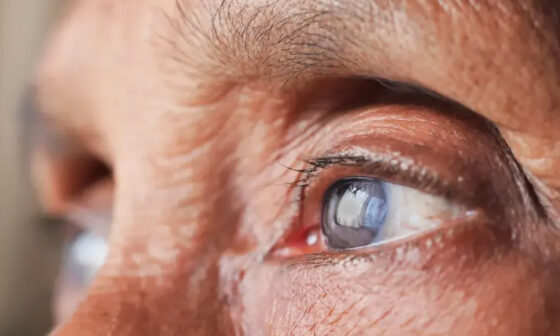
Picture a woman reading on the train home. A few grey specks drift across the page, like a swarm of tiny flies. Then, at the edge of her vision, there is a flicker of light, as if someone outside the window took a photo. Nothing hurts. She blinks, rubs her eye and decides to wait and see. That decision, more than the specks themselves, is what can turn a small problem into a big one.
We are trained to judge danger by pain. A toothache sends us to the dentist. A twisted ankle sends us to the clinic. But the retina, the thin layer at the back of the eye that turns light into pictures, cannot feel pain. So when it tears, the alarm comes as flashes and floaters, not hurt. Knowing what those signals mean, and how quick and simple retinal tear treatment can be when it starts early, is often the difference between a short visit and a long recovery.
Your Eye Has No Pain Alarm
Inside the eye is a clear gel called the vitreous. When you are young, it is firm, like jelly fresh from the fridge. With age it slowly turns watery and shrinks. One day it peels away from the retina. Doctors call this a posterior vitreous detachment, and for most people it is harmless. It is simply part of getting older.
Sometimes, though, the gel is stuck more firmly in one spot. As it pulls away, it tugs, and that tug can rip a small hole in the retina. The flashes you see are the retina being pulled. The sudden swarm of new floaters can be clumps of gel, or a little blood released by the tear. None of it hurts, which is exactly why people talk themselves out of acting.
Old Floaters Versus New Ones
Here is the twist. Floaters on their own are rarely the problem. Many adults have a few they have seen for years. What matters is change.
A useful rule is to compare today with last week. Get your eyes checked the same day if you notice:
- a sudden shower of new floaters, especially many at once
- flashes of light at the edge of your vision
- a shadow or grey curtain creeping in from one side
- vision that suddenly turns blurry in one eye
A single familiar speck you have lived with for years is a different story. That one can wait for your next routine check.
The Costly Habit of Waiting
The most common mistake is not panic. It is patience. People book the next free slot in a week, or hope it settles over the weekend. The reasoning feels sensible. It does not hurt, I can still see, so how bad can it be?
The trouble is that fluid inside the eye can seep through a tear and lift the retina off the back wall, like wallpaper peeling away from damp plaster. That is a retinal detachment. A tear is a small hole. A detachment is a much bigger repair job, often needing surgery in an operating theatre rather than a short treatment in a clinic room.
Why Good Eyesight Can Fool You
Here is another surprise. You can read the bottom line of the eye chart and still have a tear. Tears usually start in the far edges of the retina, away from the centre you use to read and recognise faces.
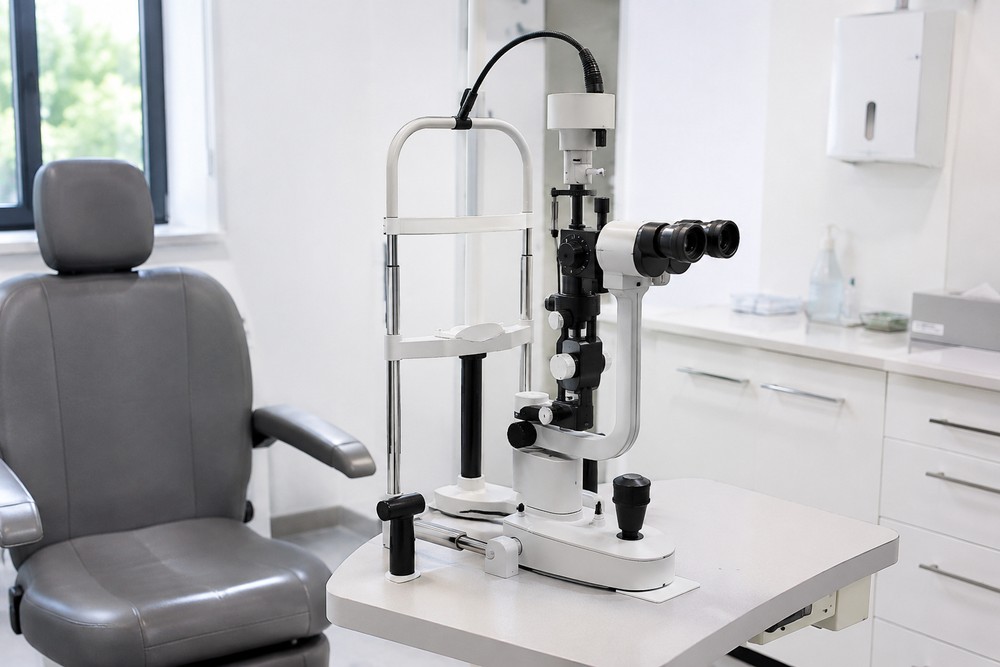
That is why a quick vision test is not enough. To see the edges, the doctor needs to widen your pupils with eye drops and look in with a bright light. Your vision will be blurry and sensitive to light for a few hours afterwards, so bring sunglasses and do not plan to drive yourself home.
What Early Treatment Usually Looks Like
When a tear is found before the retina lifts off, the fix is often surprisingly small. The most common approach is laser. The doctor aims tiny pulses of light around the edge of the tear. Over the next couple of weeks, these form small scars that weld the retina down, like stitches without thread. A freezing treatment that works in a similar way is another option.
It is usually done in the clinic, and most people go home the same day. You may be asked to avoid heavy lifting or hard exercise for a short while afterwards. Ask your doctor exactly what applies to you.
One Visit Is Not Always the End
Even a clear first check is not always the final word. The gel can keep pulling for several weeks, and a new tear can form after the first visit. That is why doctors often book a second look a few weeks later.
Treat that follow-up as part of the care, not an extra. And if new flashes, a fresh shower of floaters or a shadow appear before then, do not wait for the date on the card. Go back.
The lesson of the flickering light is that the eye does not shout. It whispers, through specks and flashes, and it asks you to notice change rather than pain. If you learn to treat those whispers as a reason to get checked that day, a tear stays a small problem with a small fix. That is a good trade for one afternoon of blurry, dilated eyes.