Navigating city traffic on two wheels exposes you to risks that passenger car drivers simply never think about. You ride to work to save on fuel, beat the gridlock, and enjoy the journey. But the physical vulnerability of commuting by motorcycle is an undeniable daily reality.
Your margin for error on city streets is dangerously thin. The stakes are remarkably high, as according to the National Highway Traffic Safety Administration (NHTSA), the fatality rate for motorcyclists is nearly 28 times higher than for passenger car occupants per 100 million vehicle miles traveled.
While your individual rider skill is essential for staying upright, you cannot entirely control unseen environmental road hazards or the poor decisions of the drivers around you. Surviving the daily commute requires shifting your mindset from basic operation to advanced, proactive defense.
Distracted and Negligent Drivers
When you ride to work every day, you quickly realize that your biggest threat is rarely a mechanical failure or a mistake on your part. External threats are often the primary danger to daily commuters. A lack of attention from the people sharing the road with you causes a massive percentage of collisions.
The Hurt Report, a comprehensive motorcycle safety study, clearly backs up this daily commuter experience. The study found that in 66% of motorcycle accidents involving another vehicle, the other driver violated the motorcyclist’s right of way.
While defensive riding is your best tool against unseen road hazards, you cannot always predict the actions of distracted or reckless drivers. When a driver’s negligence results in a catastrophic injury or a tragic loss of life, the burden of proving what actually happened shouldn’t fall on a person in recovery or a grieving household. Whether managing complex medical care for a survivor or filing a claim on behalf of a loved one who was killed, a motorcycle accident lawyer handles the technical investigations and legal filings to give a family the space they need to grieve. This ensures that while you focus on physical recovery or supporting your relatives, the true financial and human cost of the collision is being properly addressed in the legal system.
Navigating the Most Common “Hidden” Commuter Dangers
Road hazards look vastly different from the saddle of a motorcycle compared to the driver’s seat of an SUV. A small piece of tire tread or a shallow dip in the pavement is barely an annoyance to a car. To a daily motorcycle commuter, those same obstacles can cause a catastrophic loss of control.
To stay safe, you must actively monitor specific environmental and human-made hazards that disguise themselves in your daily route.
The Intersection Trap: Left-Turning Vehicles
Intersections are statistically the most dangerous part of your commute. Drivers of larger vehicles frequently fail to accurately judge the speed and distance of an approaching motorcycle. Because your bike has a narrow profile, a hurried driver scanning for cars might look right past you.
The data surrounding intersection crashes is staggering.
In 2023, 46% of fatal two-vehicle crashes involving a motorcycle occurred when the other vehicle was turning left while the motorcycle was going straight, passing, or overtaking.
You must approach every single intersection prepared to evade. Rolling off the throttle and covering your front brake lever buys you precious fractions of a second to react when a driver inevitably pulls out in front of you.
Blind Spots and Rush Hour Congestion
The reality of commuting is the persistent feeling of being completely invisible to passenger cars and commercial vehicles. Large trucks have massive blind spots, but even standard sedans have heavily obstructed rear views.
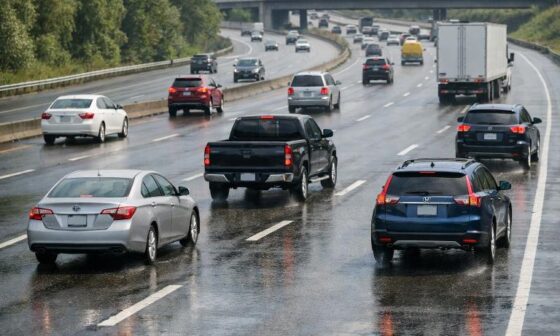
This danger multiplies exponentially during typical commuting hours. Rush hour traffic between 7 a.m. and 9 a.m., and 4 p.m. to 7 p.m., significantly increases crash risks due to congested intersections and hurried, distracted commuters. People are drinking coffee, checking their phones, and rushing to clock in.
To safely navigate and escape a larger vehicle’s blind spot, you must pass decisively. Never linger next to a car’s rear quarter panel. If you cannot see the driver’s face in their side mirror, they absolutely cannot see you. Drop a gear, accelerate smoothly out of the blind spot, and re-establish a safe following distance.
Deceptive Road Conditions: Oil Slicks, Gravel, and Potholes
Physical road hazards pose a unique and disproportionate threat to two-wheeled vehicles. When a car hits a pothole, the driver might suffer a blown tire or a bent rim. When a motorcycle hits that same pothole, the sudden disruption to the bike’s suspension can instantly throw the rider over the handlebars.
City streets are plagued with deceptive conditions. Oil slicks naturally accumulate in the center of traffic lanes, particularly near stoplights and toll booths where cars idle. These slicks become incredibly slick immediately after a fresh rain.
Loose gravel is equally dangerous, often spilling from construction trucks onto the edges of intersections. Taking a corner at normal speeds over loose gravel washes out the front tire before you even have a chance to correct your balance.
What to Do Immediately Following an Accident
Even the most cautious, defensively minded riders can fall victim to an unseen hazard or a deeply negligent driver. If you are hit during your commute, the steps you take in the immediate aftermath heavily impact both your physical health and your future legal rights.
- Prioritize Immediate Safety: If you are physically able, move yourself and your motorcycle out of active traffic to prevent a secondary collision.
- Call Emergency Services: Dial 911 immediately. You need police on the scene to document the crash officially and direct traffic around the hazard.
- Document the Scene: Use your phone to take extensive photos before vehicles are moved. Capture the damage to your bike, the position of the car that hit you, and any environmental factors like obscured signs or oil slicks.
- Seek Medical Attention: Do not brush off seemingly minor injuries at the scene.
Adrenaline naturally floods your system after a crash, masking the pain of severe trauma. Never admit fault to the other driver or tell police you feel “fine.” The physical impacts of a motorcycle crash, such as traumatic brain injuries, internal bleeding, or delayed-onset soft tissue pain, are severe. They require immediate medical evaluation to ensure your injuries are properly documented from day one.
How a Biker-Friendly Advocate Protects Your Future
Navigating the aftermath of a motorcycle crash involves incredibly complex battles with insurance companies. Adjusters often hold an implicit bias against motorcyclists, attempting to pin the blame on you to deny payment for your medical care and lost wages.
This is why an aggressive, root-cause investigative approach is the ultimate solution for an injured rider seeking justice. A specialized law firm knows how to push back against corporate stonewalling. They use cutting-edge accident reconstruction technology to investigate every single aspect of your crash. They want to discover not only what happened on that stretch of road, but exactly why it happened.
Conclusion
Your daily commute does not have to be a gamble. Constant awareness, rigorous preparation, and a commitment to defensive riding are your best daily defenses against city traffic. Identifying hazards early absolutely saves lives.
However, your personal riding skill cannot fix another driver’s severe negligence. When someone else’s distraction turns your morning ride into a life-altering event, the burden should not fall entirely on your shoulders.
If an accident does occur, you do not have to face the resulting physical and financial devastation alone. Armed with the right knowledge and a dedicated legal advocate by your side, you can hold dangerous drivers accountable and reclaim your future.