A Parent’s Guide to Helping Their Teen Boy Find His Signature Scent
That seventh-grade body spray is probably still rattling under the bathroom sink. Or maybe cologne has never crossed his radar at all. Either way, this goes deeper than hygiene. Helping your son find a scent he actually connects with is a genuine sensory experience — one that builds real confidence, opens a door to self-expression, and quietly locks in grooming habits he’ll carry long after he’s out the door. Scent clings to memory like almost nothing else. The impression he leaves walking into a room, how people recall him weeks later — a well-chosen fragrance shapes both of those things. Start him early, and it becomes something that actually sticks.
Understanding Why Scent Matters for Teens
Fragrance works quietly. Below the radar. For a teenager already wading through the mess of identity and social pressure, landing on a personal scent can hit harder than anyone expects. When something clicks — when it feels unmistakably like *him* — it signals taste, intentionality, a low-key self-awareness that has nothing to do with vanity. Olfactory psychology research ties scent tightly to memory and emotion. That’s not abstract. It means the right fragrance can genuinely steady him in high-stakes moments: job interviews, first dates, school events. Worth taking seriously.
Starting the Conversation
Don’t announce he needs a new scent. Guaranteed shrug. Instead, ask what smells he actually notices — fresh laundry, ocean air, coffee in the morning. Keep it offhand. Low stakes. His answers reveal what pulls him in without making it feel like a lesson he never signed up for. Throw your own story in — why you wear what you wear. Model the idea that scent is personal, not assigned. When the decision feels genuinely his, he’ll actually engage with it.
Exploring Fragrance Categories and Types
Not all fragrances are the same animal. Concentration varies wildly, and so does longevity. Eau de cologne sits at roughly 3 to 5 percent — you’ll get maybe 2 hours on skin. Light, forgiving, good for beginners. Eau de toilette runs 5 to 15 percent and holds 3 to 8 hours; solid middle ground. Eau de parfum? That’s 15 to 20 percent, sometimes clinging for 8 hours or more. For a teen just starting out, cologne or toilette is the smarter call. Less overwhelming. More room to experiment without over-committing. Beyond concentration, fragrances fall into families: fresh citrus, warm woods, spicy blends, clean musk. Knowing that framework means he’s making actual choices — not just grabbing whatever bottle has the flashiest label on the shelf.
Making the Shopping Experience Educational
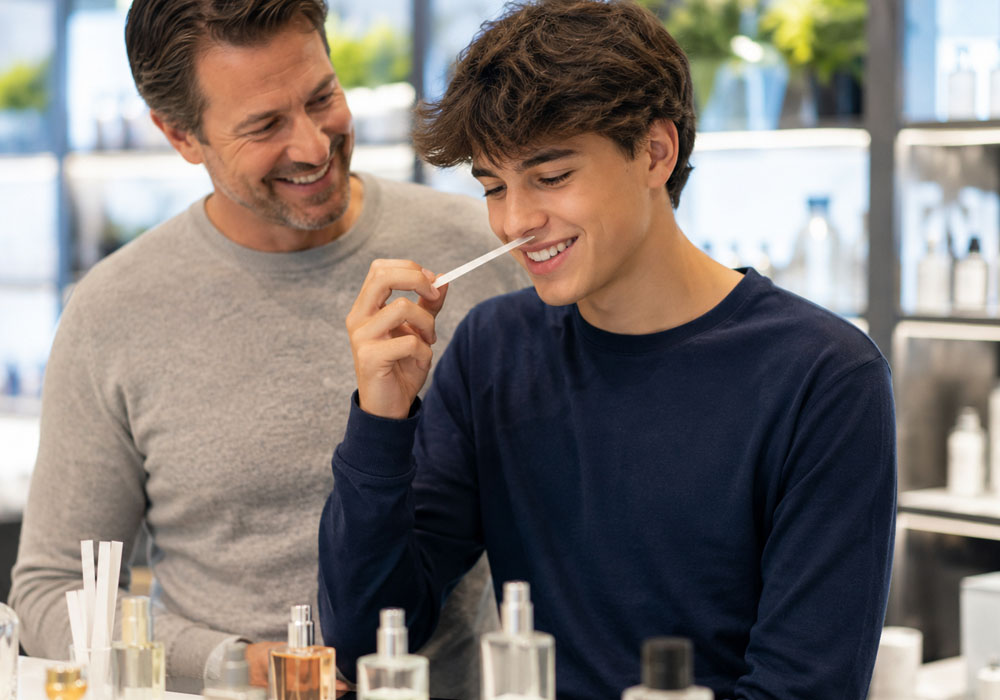
Take him somewhere with actual staff. A department store, a specialty shop — somewhere with people who know the product. Before he starts spraying everything in sight, explain the three-to-five rule: that’s roughly how many scents a nose can meaningfully process before it quits on you. Most counters carry sample vials. Grab them. Wearing a fragrance through a full day tells you far more than a 30-second sniff ever will. Have him test on his wrists or inner elbows — pulse points warm the skin, revealing how a scent actually develops over hours. And here’s the thing worth driving home: body chemistry is individual. What smells incredible on his friend might go completely sideways on him. Families who do their homework before hitting a store often browse curated guides covering the best cologne on the market for men to compare reputable brands and narrow the field before committing. That personal-chemistry angle tends to land well with teens — it reinforces that whatever he chooses is genuinely, specifically his.
Testing and Narrowing Down Choices
Found a few contenders? Good. Now slow down. Fragrances move through distinct layers — top notes, middle notes, base notes — and each stage tells a different story. Top notes hit first. Usually light, often citrusy, gone in 5 to 15 minutes. Middle notes surface next, carrying the real character of the scent for 2 to 4 hours. Base notes are what linger — on skin, on fabric — sometimes 6 to 24 hours after the first spray. Have him wear each sample on different days. Pay attention to how he feels wearing it, not just how it opens. Does it shift something in how he carries himself? Does it match his personality, his daily life? Jotting down quick impressions — or just talking it through — pushes him past gut reactions toward something more deliberate. That’s the whole point.
Conclusion
Finding a signature scent is genuinely practical. But it’s also more than that. Walk him through the basics, open the conversation without pressure, steer him toward a real process — and you’re teaching him that self-presentation is worth caring about. The fragrance won’t define him. It will, though, become part of how he moves through the world. Fresh and sporty, warm and sophisticated, bold and distinctive — whatever he lands on, the confidence that comes from owning that choice travels with him long past his teens. And somewhere inside that simple act of exploration is something else: proof that you showed up for his independence, for the identity he’s still in the middle of figuring out.