Your bite, known medically as your occlusion, refers to how your upper and lower teeth meet when your jaw closes. A proper bite distributes chewing force evenly across all teeth. When teeth align improperly, the uneven pressure causes tooth damage, muscle pain, and structural jaw issues. Modern dentistry provides several reliable ways to correct bite alignment and restore comfort.
Common Types of Bite Misalignment
Bite issues manifest in several primary forms, each presenting distinct physical challenges.
Overbite Issues
An overbite occurs when the upper front teeth overlap significantly past the lower front teeth. While a tiny overlap is normal, an excessive overbite causes lower teeth to dig into the upper gum tissue, leading to localized inflammation.
Excessive overbites also cause accelerated wear on front tooth edges, making teeth appear short and jagged over time.
Underbite Challenges
An underbite happens when the lower jaw protrudes forward, causing the lower front teeth to sit outside the upper teeth when the mouth closes.
This misalignment puts excessive pressure on the temporomandibular joint (TMJ), making chewing difficult and often altering facial profiles.
Crossbite Patterns
A crossbite occurs when one or more upper teeth bite inside the lower teeth. This can happen at the front of the mouth or along the sides.
Crossbites force the jaw to shift sideways to chew comfortably. This uneven movement leads to asymmetrical facial strain, uneven enamel wear, and chronic joint pain.
Clear Aligner Therapy for Misaligned Bites
Clear aligners offer a subtle, removable method for correcting mild to moderate bite alignment problems without traditional metal brackets.
How Aligners Shift Teeth
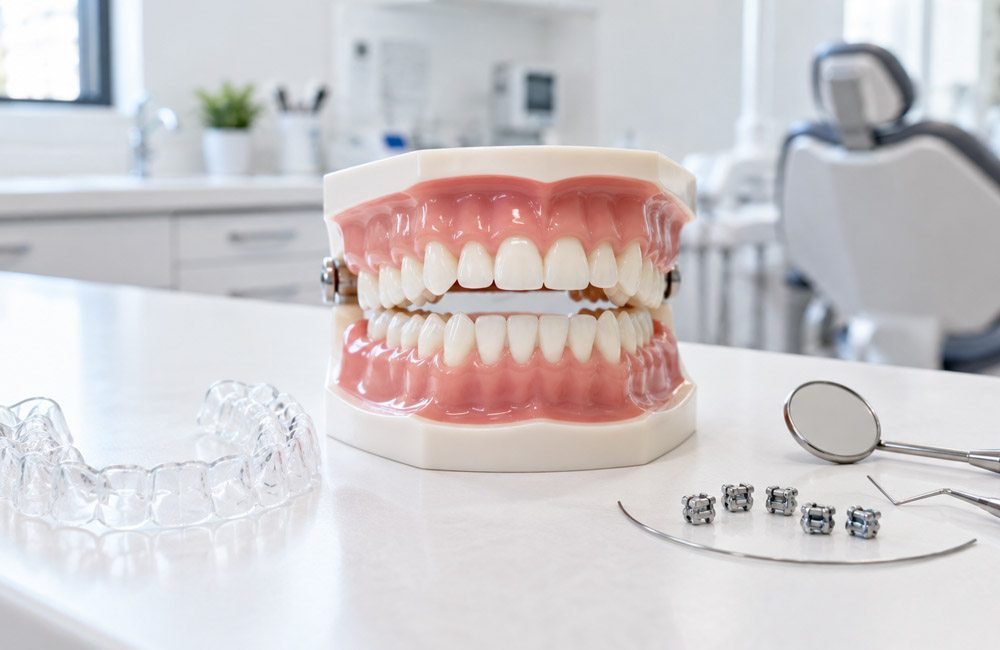
Aligner systems use custom plastic trays created from digital scans of your teeth. Each set of aligners applies small, controlled forces to specific teeth, nudging them into better positions over two-week increments.
Aligners effectively correct mild crossbites, overcrowding, and minor overbites while remaining virtually invisible during daily interactions.
Maintenance and Compliance Guidelines
- Wear aligners for 20 to 22 hours every day for consistent results.
- Remove trays only when eating, drinking anything other than cold water, and performing daily oral hygiene routines.
- Clean aligners daily using warm water and non-abrasive soap to keep them clear and odor-free.
Traditional Orthodontic Brackets
For severe bite misalignments, traditional fixed braces remain one of the most powerful tools available.
Structural Realignment Capabilities
Traditional braces use metal or ceramic brackets bonded to each tooth, connected by a flexible archwire. The archwire applies continuous pressure to guide teeth and rotate roots into proper orientation.
Orthodontists use rubber bands attached to specific brackets to shift the relationship between the upper and lower jaws, correcting severe underbites and deep overbites effectively.
Surgical Orthodontics for Jaw Skeletal Issues
When bite problems stem from misaligned jawbones rather than poorly positioned teeth, surgical intervention may be required alongside traditional orthodontics.
Corrective Jaw Surgery (Orthognathic Surgery)
Corrective jaw surgery aligns misplaced jawbones. An oral surgeon reshapes or repositions the upper jaw, lower jaw, or both to ensure teeth meet properly.
This comprehensive approach solves severe breathing difficulties, chronic joint pain, and chewing limitations that orthodontics alone cannot correct.
Restorative Approaches for Severe Bite Collapse
In cases where teeth are severely worn down, broken, or missing, orthodontics alone may not be enough to rebuild a functional bite.
Rebuilding Bite Height with Prosthetics
When teeth lose their height due to chronic grinding or widespread decay, the lower face collapses slightly, straining jaw muscles. Dentists use custom crowns, bridges, or full-arch restorations to rebuild natural tooth contours and restore original bite height.
For individuals with severe tooth loss and collapsed bites, solutions like Columbia full-arch dental implants replace entire upper or lower rows of teeth on fixed posts. This structural rebuild aligns your bite, balances chewing pressure, and revives facial structure.