As autumn gives way to winter, horse owners need to think beyond blankets and heated water buckets. A sudden hard freeze can quickly change pasture conditions, bringing cold rain, strong winds, frozen ground, and uncomfortable temperatures. Horses are generally well equipped to handle cold weather. Still, access to appropriate shelter can make turnout safer and more comfortable.
Preparing before the first hard freeze gives owners time to evaluate the pasture, inspect existing cover, and adjust for herd size, wind direction, footing, and water access.
Start With the Herd, Not the Shelter
The number of horses using a shelter should influence its size and layout. A space that works for one or two horses may become crowded when several animals try to escape a driving rain or cold wind at the same time.
Herd dynamics matter, too. A dominant horse may prevent another horse from entering or force it into an exposed corner. When assessing an existing shelter, watch the horses during normal turnout and consider whether every animal can access the protected area comfortably.
A useful evaluation should consider:
- How many horses will use the shelter?
- Can all horses enter and leave without crowding?
- Is there enough room for horses to stand comfortably?
- Could one horse block the entrance?
- Does the shelter protect against the weather conditions common in the area?
The goal is not simply to provide a roof. The shelter should offer usable protection for every horse that may need it.
Pay Attention to the Prevailing Wind
Wind can make an otherwise mild winter day feel considerably colder. A shelter open toward the prevailing winter winds may provide less protection than expected.
Before placing or modifying a shelter, observe how wind typically moves across the property. Seasonal weather patterns, surrounding buildings, fences, hills, and trees can all influence airflow.
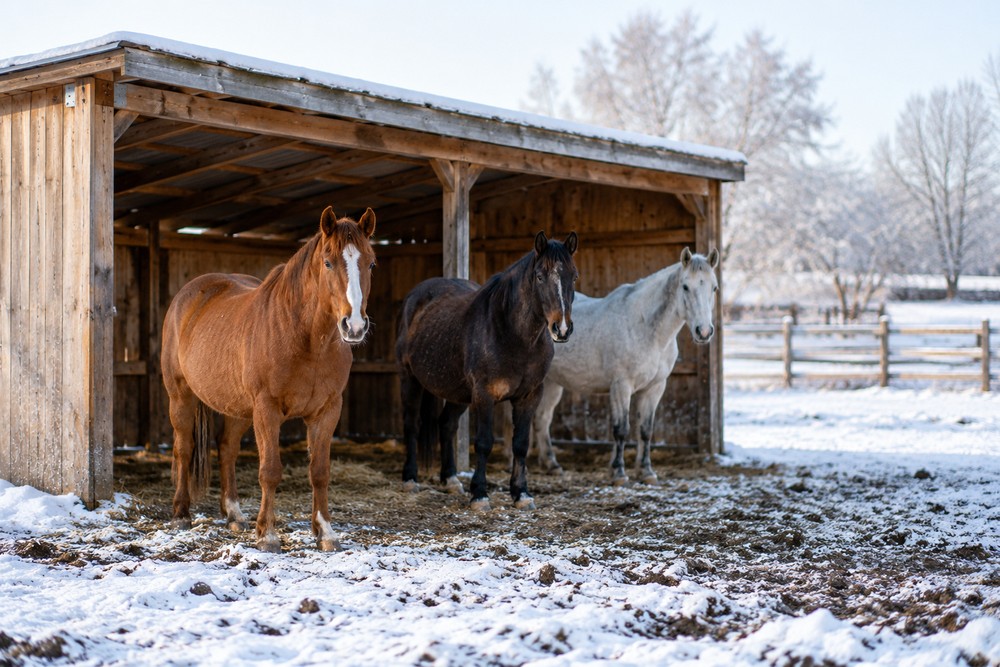
A three-sided structure can be particularly useful because it creates a protected zone while allowing horses to enter and leave freely. For properties with open turnout areas and little natural protection, horse turnout sheds can provide a practical alternative to relying entirely on scattered tree cover.
Trees can certainly provide shade and some protection, but they may not block wind-driven rain effectively. A properly positioned three-sided shelter can provide a more consistent barrier against both wind and precipitation.
Check the Footing Before Winter Arrives
Frozen or saturated ground can create problems around shelter entrances. Mud may become deep during wet weather and then freeze into uneven, hard surfaces. Horses moving through these areas repeatedly can slip, trip, and strain unnecessarily.
Inspect the ground around the shelter before temperatures drop. Look for low spots where water collects and heavily trafficked areas.
Depending on the property and local conditions, improvements may include:
- Improving drainage around the entrance
- Adding suitable footing material
- Creating a firm approach to the shelter
- Removing standing water
- Addressing uneven or damaged areas before they freeze
The entrance deserves particular attention because horses may spend more time moving in and out of the shelter during bad weather.
Keep Shelter and Water Conveniently Connected
Water placement is another important part of pasture layout. Horses should have easy access to clean water without crossing unnecessarily muddy or hazardous ground.
At the same time, placing water directly inside a shelter can create its own problems. Spilled water can contribute to wet footing, especially in a confined area.
Instead, consider the relationship between the shelter, water source, feeding areas, and normal travel routes. Horses naturally move between these resources throughout the day so that poor placement can turn a small drainage issue into a heavily trafficked muddy zone.
During winter preparation, inspect the entire route rather than looking at the shelter in isolation.
When Natural Cover Is Not Enough
Natural windbreaks have value, particularly when mature trees are already positioned in a useful location. However, their effectiveness depends on density, orientation, and weather conditions.
A line of trees may reduce some wind but provide limited protection during cold rain. Bare winter branches also provide much less coverage than in warmer months.
For open pastures without adequate natural cover, a three-sided shelter can provide a dedicated area where horses can escape direct wind and precipitation. Placement matters as much as the structure itself. A shelter tucked into the right part of the pasture can work more effectively than one placed wherever space happens to be available.
Owners should also avoid positioning a shelter where runoff will flow directly into the entrance.
Consider How You Use Your Barn
Pasture shelter is only one part of winter horse management. The right type of structure also depends on how frequently horses are brought indoors.
Some owners primarily use their barns for overnight housing, grooming, feeding, or veterinary care. Others spend substantial time indoors for riding, training, tack storage, and daily horse care.
That distinction can help determine whether a simple pasture shelter is sufficient or whether a more substantial enclosed structure makes sense.
For buyers researching prefab barns in Tennessee, for example, comparing complete barn configurations with simpler three-sided shelters can help clarify which features are actually needed. A full barn may offer enclosed stalls, storage, workspace, and other functions. At the same time, a basic shelter may suit horses that spend most of their time on pasture.
The key question is how you’ll use the structure throughout the year, not simply choosing the largest available option.
Inspect Before the Weather Turns
Do a pre-winter inspection while conditions are still manageable. Waiting until the first severe weather can make repairs harder and leave fewer options for addressing problems.
Walk around the structure and check:
Roof and Exterior
Look for damaged roofing, loose materials, gaps, or areas where rain could enter. Pay particular attention to connections and edges that may be exposed to strong winds.
Posts and Structural Components
Inspect posts, supports, and connections for movement, rot, damage, or other signs of deterioration. Address any questionable structural issues before horses rely on the shelter.
Entrance and Footing
Check for mud, standing water, deep ruts, and uneven surfaces. The area immediately outside the shelter should remain reasonably firm during wet and freezing conditions.
Interior Space
Remove unnecessary equipment, debris, and sharp objects. Horses should have a clean area where they can stand without encountering avoidable hazards.
Common Winter Preparation Mistakes
Several simple oversights can reduce the usefulness of pasture shelter.
Ignoring herd behavior: A shelter may appear large enough on paper but still be difficult for lower-ranking horses to access.
Facing the opening into strong winter winds: Poor orientation can allow wind and rain to enter directly.
Waiting until the ground freezes: Repairs and drainage improvements are easier before winter conditions become severe.
Placing water too close to the entrance: Spills and traffic can create persistent mud.
Relying entirely on trees: Natural cover may not provide adequate protection during prolonged wind and rain.
Choosing a structure without considering daily use: A simple turnout shelter and a full barn serve different purposes.
A Practical Pre-Freeze Checklist
Before the first hard freeze, walk the property with the following questions in mind:
- Is there enough usable shelter for the entire herd?
- Can every horse enter and exit safely?
- Does the shelter block the most common winter winds?
- Is the footing around the entrance firm and well-drained?
- Can horses reach water without crossing problem areas?
- Are the roof, posts, and connections in good condition?
- Is natural cover actually sufficient during wind and rain?
- Does the current structure match how you manage the horses?
Preparing pasture shelter before winter is less about creating a perfect setup and more about identifying predictable problems before cold weather exposes them. A well-positioned shelter, sound footing, accessible water, and regular inspections can make winter turnout easier to manage while giving horses a reliable place to escape unpleasant weather.