On a busy Australian job site, you’re rarely standing still. One minute you’re climbing in and out of the ute, the next you’re crouching to check a footing, walking across a slab or heading up stairs to the next level. Over a full shift, that adds up to thousands of steps, bends and turns, and your boots play a big part in how easily you get through them.
That’s one reason elastic sided work boots have stayed so popular with Australian tradies. Beyond their classic look, a well-made pair is built to keep you moving freely without giving up protection. Here’s how.
1. On and Off in Seconds
Mobility isn’t only about how you move on site. It’s also about how quickly you can get going. Elastic-sided boots slip on with a pull tab and slip off just as fast, with no laces to tie, re-tie or double-knot.
That matters more than it sounds. Workers who move between the site office, client homes, vehicles and different work zones often have to take boots off several times a day. Saving a minute or two each time adds up across a week, and you’re never caught kneeling in the dirt to fix a lace that’s come undone.
2. No Laces to Catch or Trip On
Loose laces are a small but constant hazard on busy sites. They can snag on rebar, pallets, ladder rungs or machinery, and a lace that comes undone mid-task is an easy way to trip.
Elastic sides remove that risk entirely. With nothing hanging loose, you can step over materials, climb ladders and move through cluttered areas with more confidence, which means fewer interruptions and less chance of a fall.
3. Flexible Sides That Move With You
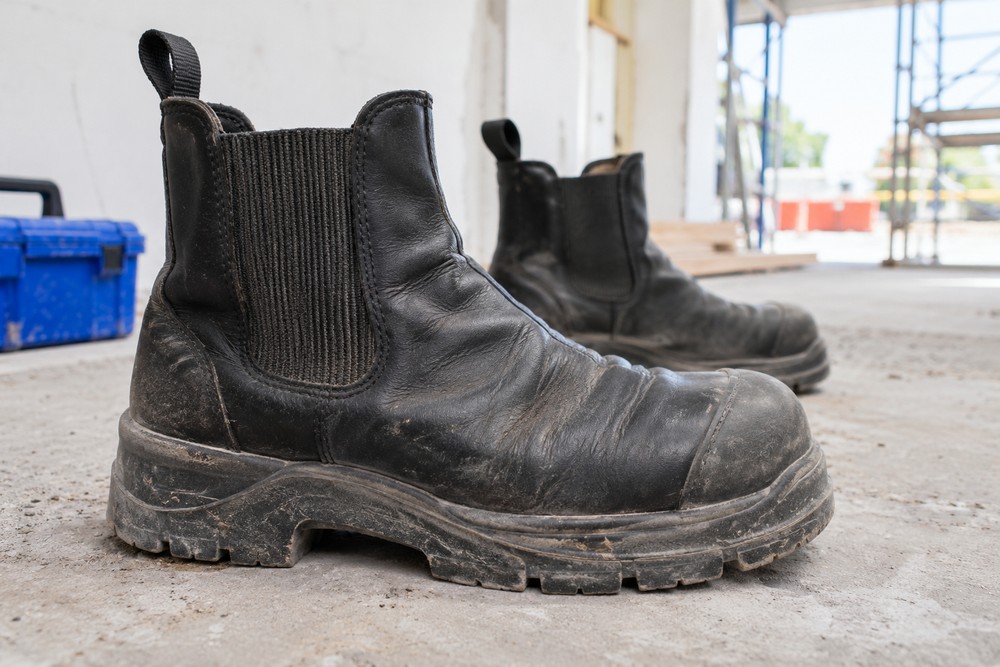
The elastic gussets on each side of the boot aren’t just there for convenience. They stretch and flex as your ankle bends, so the boot moves with you when you crouch, kneel, squat or climb.
This flexibility is especially useful for jobs that involve a lot of getting up and down, such as plumbing, electrical fit-outs, landscaping and maintenance work. A boot that bends with your foot reduces pressure across the ankle and instep, making repeated movement more comfortable throughout the day.
4. Lighter Options for Less Fatigue
Every extra gram on your feet is lifted thousands of times a day. Elastic-sided boots tend to be lighter than tall lace-up styles, and many are available with composite toe caps instead of steel.
Composite toe caps are metal-free and lighter than steel, while still offering certified toe protection. They also don’t conduct heat or cold, which helps on hot summer slabs or cold early-morning starts. For workers who walk long distances across large sites or move between multiple sites in a day, a lighter boot can noticeably reduce leg fatigue by knock-off time.
5. Grip and Stability on Changing Surfaces
Moving freely is only useful if your footing is secure. Quality elastic sided work boots use slip-resistant outsoles designed to handle dust, mud, oil and wet surfaces.
Look for outsoles that match your conditions:
- TPU soles: lightweight, durable and slip-resistant, typically heat-resistant to around 130°C.
- Nitrile rubber soles: excellent grip and heat resistance up to around 300°C, ideal for hot surfaces, welding areas and road work.
- Oil and fat resistant soles: useful in workshops, food processing and warehouses where spills are common.
6. Comfort Features That Keep You Moving
Mobility depends on comfort as much as design. Sore feet slow you down, especially in the final hours of a long shift. Many modern elastic-sided safety boots include:
- Cushioned, shock-absorbing midsoles that reduce impact on hard ground
- Supportive footbeds that help with arch support and reduce foot fatigue
- Breathable linings that keep feet cooler and drier
- Water-resistant leathers that keep feet dry when moving through wet ground
Some styles also include a scuff cap over the toe, which protects the boot when you kneel or drag your feet on rough surfaces, so it keeps looking and performing well for longer.
7. Getting the Fit Right
Because elastic-sided boots can’t be tightened like lace-ups, fit is key to good mobility. A boot that’s too loose lets your heel slip, which causes blisters and reduces stability. One that’s too tight restricts movement and circulation.
Feet swell over a shift, so shop for boots in the afternoon and bring the socks you actually work in. The boot should feel snug around the heel and instep, with room to wiggle your toes. Women should look for women’s-specific fits, which are designed around a narrower heel and different foot shape for better support.
Where to Find Elastic Sided Work Boots
If you’re looking for footwear that keeps up with a busy site, it pays to shop with a specialist workwear supplier. Industrial Workwear & Safety, based in Toongabbie, NSW, stocks a range of elastic sided work boots from trusted brands including Steel Blue, Redback, Oliver and Puma. Their range covers steel cap and composite toe styles, heat-resistant outsoles, scuff cap options and women’s fits, with delivery available Australia-wide.
The Bottom Line
Elastic-sided safety boots support mobility in practical ways: they’re quick to put on, have no laces to snag, flex with your movements and are often lighter than taller lace-ups. Pair those benefits with the right outsole, good cushioning and a proper fit, and you’ll stay safe, comfortable and moving freely right through to knock-off.