Key Takeaways
- Assess both locations early, including access routes, utilities, equipment requirements, and destination readiness.
- Create a detailed inventory with asset IDs, handling instructions, ownership, and post-move checks.
- Separate temperature-sensitive samples, regulated materials, specialized equipment, routine supplies, and disposal items.
- Use a phased schedule to protect research continuity and reduce unnecessary downtime.
- Plan cold-chain transport, temperature monitoring, and chain-of-custody documentation for sensitive materials.
- Prepare equipment in accordance with the manufacturer’s requirements and coordinate qualified technicians as needed.
- Complete receiving inspections, calibration, safety checks, and documented sign-off before resuming laboratory work.
A laboratory relocation is not an ordinary office move. It can involve active experiments, temperature-sensitive samples, specialized instruments, chemicals, digital records, and workspaces that depend on carefully coordinated utilities. The central goal is not simply to move assets from one address to another, but to protect the people, materials, equipment, and timelines that keep research moving.
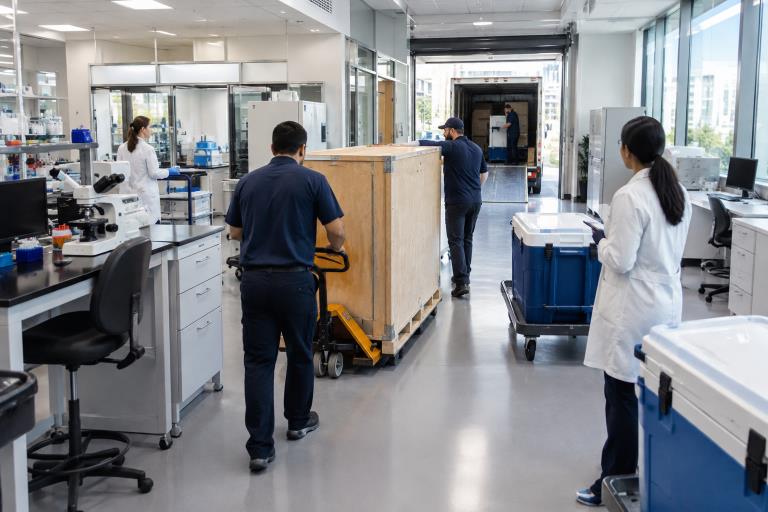
Some teams bring in a specialist for the transport itself. GenVault Transport Services, for example, handles laboratory relocations for temperature-sensitive biological materials, chemicals, freezers, and high-value equipment, with cold-chain planning and chain-of-custody documentation for moves within a facility, across town, or nationwide in the United States. Whoever handles the transport, the planning steps below stay largely the same.
Why Laboratory Moves Need a Different Plan
A lab move can interrupt work long before the truck arrives. Equipment may need to be shut down, samples may require uninterrupted storage, and the destination may need power, ventilation, network access, gas, water, or exhaust connections before installation can begin. A missed detail can delay restart activities even when every item arrives safely. Consider a team moving into a renovated floor while maintaining a time-sensitive study in its current space. Rather than closing the entire operation at once, the team can move nonessential supplies first, prepare the new laboratory, and transfer critical materials only after backup storage and receiving procedures are ready. Practical lessons from complex laboratory relocation projects consistently emphasize early coordination, detailed inventories, and communication among end users, facilities staff, and vendors.
Start With a Full Move Assessment
Begin with a walkthrough of both locations. Review each laboratory room, storage area, corridor, loading point, elevator, doorway, and access route. This assessment should identify physical constraints before move day, rather than discovering them when an instrument is already disconnected.
- Measure equipment, doorways, elevator interiors, and delivery paths.
- Record electrical, plumbing, gas, ventilation, exhaust, and network needs.
- Identify loading-dock rules, security procedures, delivery windows, and parking limits.
- Confirm the destination has the space and building support each asset requires.
- Note weather exposure risks for outdoor transfers and loading activities.
Build a Detailed Inventory
A complete inventory provides a shared record for planning, packing, transport, receiving, and sign-off. It also clarifies ownership, which matters when multiple departments, principal investigators, or projects share a laboratory.
Inventory Fields to Include
- Asset name, identification number, owner, current location, and destination location.
- Dimensions, estimated weight, and access requirements for removal and delivery.
- Utility needs, calibration status, service history, and required vendor involvement.
- Packing instructions, handling notes, photographs, and labels for removable components.
- Post-move inspection results, restart requirements, and final acceptance fields.
Do not rely on memory or old equipment lists. Field verification is especially important for equipment with protruding handles, attached accessories, unusual cable routing, or clearance needs that may not appear in a product specification.
Separate Materials by Risk and Storage Need
Not every item should follow the same route, schedule, or packing method. Divide materials into categories so the team can assign appropriate owners, documentation, and contingency plans.
- Temperature-sensitive materials: Samples, reagents, tissues, cell lines, and other materials that require approved storage conditions.
- Regulated materials: Chemicals, biological substances, controlled materials, and other items subject to handling or transport requirements.
- High-value equipment: Instruments that may require manufacturer instructions, specialized lifting, crating, reconnection, or qualification.
- Routine laboratory items: Benchtop tools, glassware, consumables, office supplies, and non-sensitive materials.
- Items for disposal or decommissioning: Expired chemicals, broken equipment, outdated files, and materials that should not occupy space in the new lab.
Create a Schedule That Protects Research Continuity
A phased move usually provides more control than a single large shutdown. Move noncritical materials first, prepare the destination, then schedule sensitive transfers around experiments, clinical obligations, reporting deadlines, and vendor availability. Assign a decision-maker who can pause the move if a safety, temperature, access, or readiness issue arises.
Suggested Planning Phases
- Assessment, inventory, and destination-readiness review.
- Packaging, labeling, and equipment preparation.
- Disconnection and transfer of noncritical assets.
- Transport of priority materials and specialized equipment.
- Installation, reconnection, testing, and documented sign-off.
Plan the Cold Chain Before Moving Sensitive Samples
For sensitive materials, the required temperature range and handling methods should be derived from the material’s approved procedures, storage requirements, and container specifications. Decide whether materials will remain in powered equipment or move in validated containers. Confirm backup freezers, refrigerators, dry ice, liquid nitrogen, or alternate storage capacity as appropriate for the materials involved.
- Record condition and temperature information before release, during transfer when applicable, and at receipt.
- Maintain chain-of-custody records for sensitive, valuable, or regulated materials.
- Define escalation steps for a temperature excursion, delayed delivery, or equipment failure.
- Ensure receiving staff know who may accept and place materials into approved storage.
Prepare Equipment for Safe Transport
Review manufacturer instructions and service requirements before disconnecting specialized instruments. Some systems may need draining, purging, securing, or professional deinstallation. Photograph connection points, label cables and removable parts, protect doors and moving components, and use equipment suited to the asset’s size and center of gravity. Transport is only one part of equipment protection. The move plan should also address vibration, shock, tilt, moisture, temperature exposure, and the conditions required for reinstallation. A comprehensive guide to lab relocation planning highlights the value of staged planning, staff communication, and early preparation.
Coordinate Compliance, Safety, and Documentation
Bring laboratory leadership, environmental health and safety personnel, facilities teams, quality staff, information technology, and transport providers into planning early. Review applicable requirements for materials, packaging, labels, permits, site access, and records. Keep shipping papers, inspection forms, equipment documents, and emergency contacts in one controlled location.
Prepare the Destination Before Delivery
The destination should be ready before critical items leave the current site. Verify utilities, HVAC, security, floor plans, loading access, and receiving staff. Confirm that cold-storage equipment can reach its approved operating condition before samples arrive, and schedule qualified vendor support for instruments that require professional installation or calibration.
Use a Clear Receiving and Restart Process
- Inspect packages and equipment for visible damage.
- Match every item to the inventory and destination location.
- Review condition and temperature records for sensitive materials.
- Reconnect utilities, accessories, and network connections as required.
- Complete safety checks, performance testing, calibration, or qualification when needed.
- Update asset records and obtain approval from the responsible department or owner.
Final Checklist for a Smooth Laboratory Move
- Complete and verify the inventory.
- Approve the phased schedule and risk register.
- Confirm destination readiness and backup storage.
- Brief staff, vendors, and receiving personnel.
- Document packing, transport, chain of custody, and inspections.
- Hold a post-move review to capture lessons for the next relocation.
A successful laboratory move depends on disciplined preparation, clear ownership, and a documented restart process. By treating relocation as a research continuity project, laboratories can protect critical work, reduce avoidable downtime, and help staff begin productive work in the new space with confidence.