What Choosing a Power Source Really Means
Electric blinds seem simple at first glance. A motor lifts and lowers fabric at the touch of a button. Yet the way that motor gets its power reshapes everything from installation to maintenance to the look and feel of your space. There are two routes. Battery power hides inside the blind, untethered by cables. Mains power connects to your electrical supply, offering steady performance. Both can be excellent. Each asks different things of you and your home.
Electric Blind Power Options in Plain Terms
Battery motors use rechargeable cells tucked inside the blind cassette. Communication is wireless, so there are no control cables and no sockets to chase. Fit the blind, pair the remote or hub, and you are done.
Mains motors draw on fixed electrical power. They may plug into a nearby outlet or be hardwired by an electrician. Controls are typically wireless or low voltage, but a power cable must reach the motor.
It sounds straightforward. The lived experience is where they diverge.
Why Battery Power Appeals
Battery blinds are the quick win. Installation is simple and tidy. If you can hang a shelf, you can mount these blinds. No electrician. No chased walls. No repainting after the dust settles. For most windows, you can go from box to working blind in under an hour.
They shine in rental homes. You avoid alterations, protect your deposit, and take the blinds with you when you move. In finished rooms, battery motors keep the crisp lines around the window uninterrupted. No trunking. No visible power leads. Just fabric, frame, and light.
They work in tight spots. Consider garden offices, loft rooms, and expansions where wiring requires lifting floors or breaking plaster. Add easy smart control for a smooth upgrading. Mainstream smart platforms make voice control, timers, morning rituals, and room-by-room sceneries simple.
Where Battery Blinds Can Disappoint
Batteries run out. It is not frequent, but it is inevitable. Most users see six to twelve months between charges, depending on blind size and how often they operate them. Heavy fabrics and wide spans draw more power and shorten intervals.
Changing batteries is not complicated, but it is a chore. Ladder up, cassette down, battery swap, cassette back, repeat for every window. One blind is a small job. Eight blinds become a Saturday. Batteries also cost money over time. Not a fortune, but a steady drip.
Large openings expose the limit of battery systems. Wide patio doors, bifold spans, and dense blackout fabrics work, but they draw hard on a battery. Expect more frequent charging and a motor that works closer to its ceiling.
The Case for Mains Power
Mains-powered blinds behave like a reliable appliance. Press the button and the blind moves, day in, day out. There is no battery to watch, no charge rate to consider, no inconvenient pause when guests arrive and the sun streams in.
Large blinds prefer mains power. Constant supply allows motor move smoothly without effort. The long-term answer for heavy materials and broad windows. Over time, mains power is cheaper. Initial installation is more expensive, but recurring costs are low. No battery swaps. No power-related upkeep.
If you plan whole-home automation, mains systems integrate cleanly with advanced controls. They are better suited to centralised wiring panels and building management systems that expect fixed connections.
The Reality of Mains Installation
There is a reason some people hesitate. Mains installation usually needs a qualified electrician. That adds cost and introduces schedules you do not fully control. Power cables must reach the motor. You can hide them with surface trunking, but it rarely looks elegant. The neatest finish means chasing cables into walls and making good with plaster and paint.
Renters face a different issue. Most landlords avoid electrical alterations. Even if allowed, the investment remains with the property when you leave. You also have to consider socket locations. A beautiful window far from power is either a wiring challenge or an exercise in compromise.
Mains blinds do stop in a power cut. It is rare, but it is real. Battery blinds do not share that vulnerability.
Cost and Performance in Practice
Installation costs vary by product and property. A typical battery blind, installed DIY, often lands between 250 and 400 pounds. A mains blind, fitted professionally, usually falls between 350 and 600 pounds per window, plus an electrician fee in the range of 150 to 300 pounds for call-out and wiring.
Running costs tell a different story. Battery replacements and periodic servicing add up over time. Over ten years, many households spend 400 to 700 pounds per blind on batteries and upkeep. A mains system, once installed, may sit closer to 350 to 600 pounds over the same period, mainly due to negligible electricity use and minimal maintenance. That near parity is the headline. Battery lowers the entry cost. Mains lowers the long horizon.
Choosing for Your Home
Renting tips the scales strongly toward battery blinds. You get immediate benefit with no permanent changes and no money left behind at move-out.
In finished rooms where new wiring would mean a disruptive redecoration, battery is the least invasive path. In garden rooms and extensions far from the consumer unit, battery power spares you trenching and cabling.
New builds and major renovations suit mains power. With walls open and trades on site, adding blind circuits is straightforward and neat. Large spans and heavy fabrics should be mains by default to protect performance and longevity.
Hybrid setups work well. Use mains on ground-floor feature windows and bifold doors. Use battery upstairs or where wall finishes are sacrosanct.
Smart Home Integration
Both power types play nicely with modern smart platforms. Battery blinds usually connect via radio frequency to remotes or hubs and integrate with voice assistants. Mains blinds can do the same, and wired options can support professional-grade systems that prefer fixed lines.
Voice control, schedules, and automation based on light or temperature are largely software features. The motor does not care how it is powered when it responds to a command. Energy monitoring leans toward mains setups, as some systems report consumption through your electrical network.
Installation Details You Might Miss
Window frames can help or hinder. Some newer frames include channels designed for cable routing, making mains installations cleaner. High ceilings are another surprise. Battery changes at three meters are not the same task as at standard height. Consider your tolerance for ladders and recurring jobs.
Multiple blinds can share power supplies and control circuits on mains, reducing visible infrastructure. Battery blinds work independently, which simplifies installation but can require more setup for perfect synchronization.
If you are undecided, think about future proofing. It can be wise to run hidden cables now and start with battery motors. Converting to mains later becomes a simpler motor swap when power is already in place.
Maintenance and Longevity
Mains motors usually run for many years with minimal upkeep. Clean the fabric and check brackets. That is about it. Battery systems need periodic recharging or cell replacement, plus the same basic cleaning.
Motor lifespan is comparable across power types when motors are properly specified. Battery systems may see more frequent replacements where heavy loads and voltage swings create extra strain.
Professional servicing costs are similar. Mechanical wear and tear tends to be the culprit if a blind fails, not the power source itself.
Environmental Factors
Battery production and disposal create impacts. Lithium batteries require responsible recycling. Over a decade, a home with many battery blinds will cycle through multiple sets.
Mains blinds draw tiny amounts of electricity. Modern motors have very low standby consumption and modest draw during movement. If your home uses renewable electricity, this can be an environmental advantage.
Neither option is a poor environmental choice at household scale. Battery blinds demand better disposal habits. Mains blinds reward efficient homes.
Real Scenarios
A renter in a city flat wants blackout rollers in a bedroom. Battery blinds are ideal. They install quickly, need no permission, and travel to the next home easily.
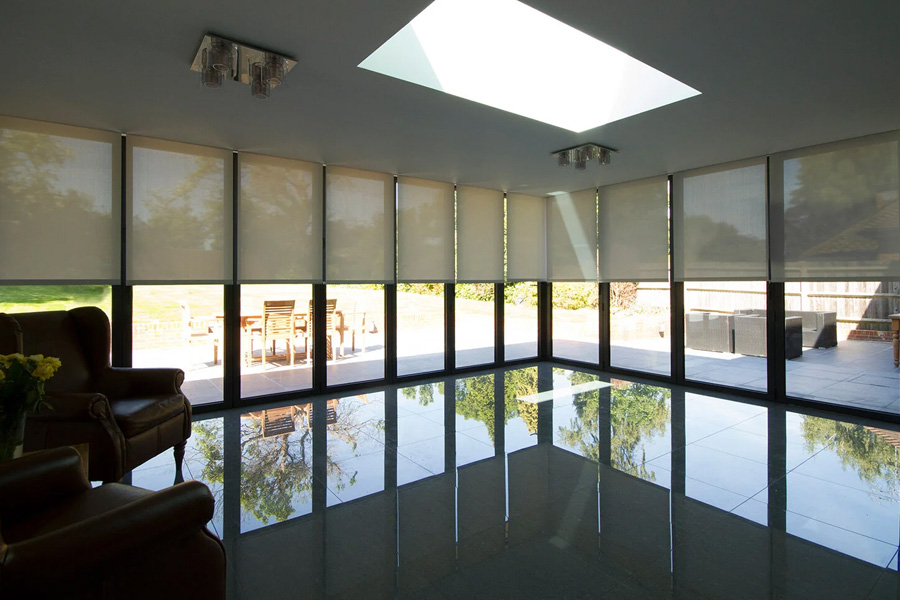
A family finishes a kitchen extension with four meter bifold doors. The weight and width benefit from mains power. With the electrician already onsite, added wiring is efficient and discreet.
A renovation blends modern and original rooms. Where walls are open, mains blinds slot in neatly. In preserved spaces with finished plaster and heritage trim, battery blinds keep the look intact.
A garden office sits twenty meters from the house. Battery blinds avoid trenching and perform reliably with an annual charge folded into seasonal maintenance.
Decision Framework
Ask whether you rent or own. That single question often points straight to battery for renters and opens both options for owners.
Consider your timeline. If you expect to stay ten years or more, mains power can pay back in convenience and cost. If your horizon is five years or less, battery frees you from permanent work.
Look honestly at window size and fabric weight. Large spans and dense textiles prefer mains motors. Standard rollers in bedrooms and studies are prime candidates for battery.
Decide how you feel about maintenance. Some people do not mind an annual round of charging. Others want a set-and-forget solution.
Fold total cost into your thinking. Include installation, batteries, electrician fees, and your time. The cheapest path today is not always the lowest cost over a decade.
Think about future flexibility. Hidden cables installed now keep doors open later. Upgrading from battery to mains becomes a simple pivot when the infrastructure exists.
FAQ
How long do batteries last in electric blinds?
Most households see six to twelve months between charges. Daily open and close cycles skew closer to a year on typical bedroom or study windows. Heavy fabrics and wide spans use more power and shorten intervals. Battery quality also matters, with premium cells maintaining charge longer.
Can I convert battery blinds to mains power later?
Yes. Conversion usually means swapping the motor for a mains unit and connecting the preinstalled power cable. If no cable exists, you will need electrical work to route power to the cassette. If you think conversion is likely, run hidden wiring during initial installation and use battery motors at first.
Do electric blinds work during power cuts?
Battery blinds continue working during an outage because they are self powered. Mains blinds pause until electricity is restored. Some premium mains systems include backup batteries, but this is a specific upgrade and not standard.
Which option is better for very large or heavy blinds?
Mains power is the safer choice for big spans and dense fabrics. Continuous power lets the motor operate smoothly without strain and protects battery life issues. Battery systems can work on larger blinds, but they tend to need more frequent charging and careful motor selection.