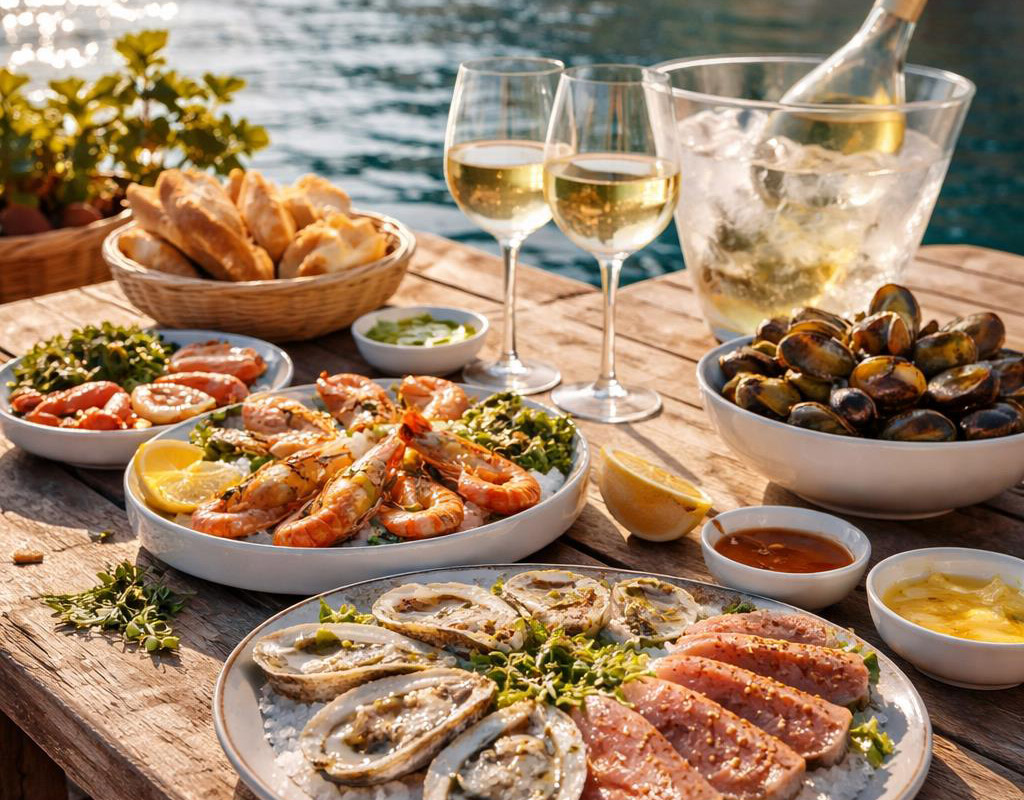
Coastal destinations have a rhythm all their own. Morning fish markets give way to long seaside lunches, and by evening, harbors glow under soft light as tables fill with freshly grilled seafood and chilled glasses of wine. In these places, dining is not rushed — it is savored, observed, and remembered.
For the discerning traveler, understanding the relationship between seafood and wine transforms a meal into a cultural experience. Across Mediterranean ports, Nordic fjords, and Pacific shores, local traditions reveal how thoughtful wine selection enhances the character of the day’s catch, allowing texture, freshness, and regional nuance to unfold naturally.
Coastal Travel and Culinary Identity
In many seaside destinations, the relationship between the ocean and the vineyard defines regional character. Fishing villages wake early to bring in the day’s catch, while nearby hills nurture grapes shaped by maritime air. This proximity fosters a natural dialogue between seafood and wine that travelers can experience firsthand in local tavernas, waterfront bistros, and boutique resorts.
Exploring how locals pair wine with seafood offers insight into centuries of culinary evolution. Rather than relying on rigid rules, regional traditions emphasize balance—light dishes matched with crisp wines, richer preparations complemented by fuller-bodied selections. Observing these customs allows travelers to deepen their appreciation of the place.
Understanding Regional Nuance
Mediterranean coastal towns often favor bright, mineral-driven white wines alongside grilled fish drizzled with olive oil and lemon. In northern coastal regions, cream-based sauces and buttery shellfish may align with wines offering greater texture and roundness. Pacific coastal destinations frequently highlight aromatic varieties that complement delicate sashimi or lightly seared seafood.
For travelers, recognizing these regional nuances enhances confidence at the table. Instead of defaulting to familiar choices, embracing local pairings transforms dining into cultural participation. Each selection becomes a small act of exploration.
Preparation as a Reflection of Place
The way seafood is prepared often reflects climate, tradition, and available ingredients. Char-grilled octopus in a sun-drenched port town calls for wines with freshness and acidity to cut through smoky notes. Steamed mussels in a cooler maritime region may be best enjoyed with wines that echo saline and herbal characteristics. Premium cold-water fish such as arctic char rremium (Ishavsrøye) are also prized in many northern coastal kitchens for their clean flavor and delicate texture, making them ideal for refined preparations that pair beautifully with crisp, mineral-driven white wines.
Understanding preparation methods helps travelers navigate menus with greater intention. When you learn how to pair wine with seafood in the context of local cooking techniques, the experience feels authentic rather than formulaic. The goal is not perfection, but harmony rooted in regional identity.
Texture, Climate, and Travel Seasons
Travel timing influences flavor preferences. In summer coastal destinations, lighter dishes and chilled wines feel refreshing under warm skies. Citrus-forward whites and mineral expressions enhance grilled prawns or delicate white fish enjoyed al fresco. During cooler seasons, heartier seafood stews or roasted preparations may call for wines with more body and subtle oak influence.
Texture becomes especially important while traveling. Creamy lobster dishes demand wines with sufficient acidity to maintain balance, while raw oysters benefit from wines that emphasize clarity and minerality. Considering season and texture together allows travelers to make thoughtful, context-driven choices.
Creating Memorable Dining Moments Abroad
Travel is shaped by sensory memory. The sound of waves, the scent of salt air, and the taste of expertly prepared seafood linger long after a trip concludes. Wine enhances these memories by adding dimension and structure to each meal.
When dining in coastal destinations, observe how locals approach service. Notice serving temperatures, glassware, and pacing. A well-chilled wine served alongside freshly grilled fish in a harbor-side restaurant feels effortless, yet the harmony is deliberate. Attention to these subtleties elevates the experience from pleasant to unforgettable. For those exploring the vibrant culinary landscape of Miami, a visit to the best seafood restaurant in Miami perfectly illustrates this mastery, where the sophisticated pairing of fresh stone crab and curated wines creates a definitive coastal dining moment.
Practical Guidance for the Modern Traveler
Begin with the seafood itself. Identify whether the dish is delicate or robust, raw or richly sauced. Let preparation guide your choice. Wines with lively acidity often complement lighter dishes, while fuller-bodied options support denser textures. Do not hesitate to ask local servers for recommendations; their insights often reflect regional tradition.
Balance remains the central principle. Avoid overpowering subtle marine flavors with overly bold wines. Instead, seek selections that refresh the palate and enhance natural sweetness. With practice, travelers develop an intuitive understanding that transcends memorized rules.
Travel as a Culinary Education
Every coastal journey offers an opportunity to refine taste and awareness. Visiting fish markets, vineyard estates, and seaside restaurants reveals the interconnectedness of land and sea. Observing how ingredients are sourced and how wines are crafted deepens appreciation for both.
Ultimately, thoughtful seafood and wine experiences reflect a broader philosophy of travel—one grounded in curiosity, respect for local culture, and sensory engagement. By approaching each meal as a learning opportunity, travelers transform dining into a meaningful component of exploration.
Conclusion: The Journey Continues at the Table
Coastal travel invites us to slow down and savor. Seafood, shaped by tides and tradition, tells the story of place. Wine, influenced by soil and climate, adds its own narrative. Together, they create moments that define a journey.
By embracing regional wisdom, considering preparation and texture, and remaining attentive to balance, travelers cultivate richer experiences wherever the shoreline leads. In doing so, the table becomes not just a place to eat, but a gateway to deeper cultural understanding.