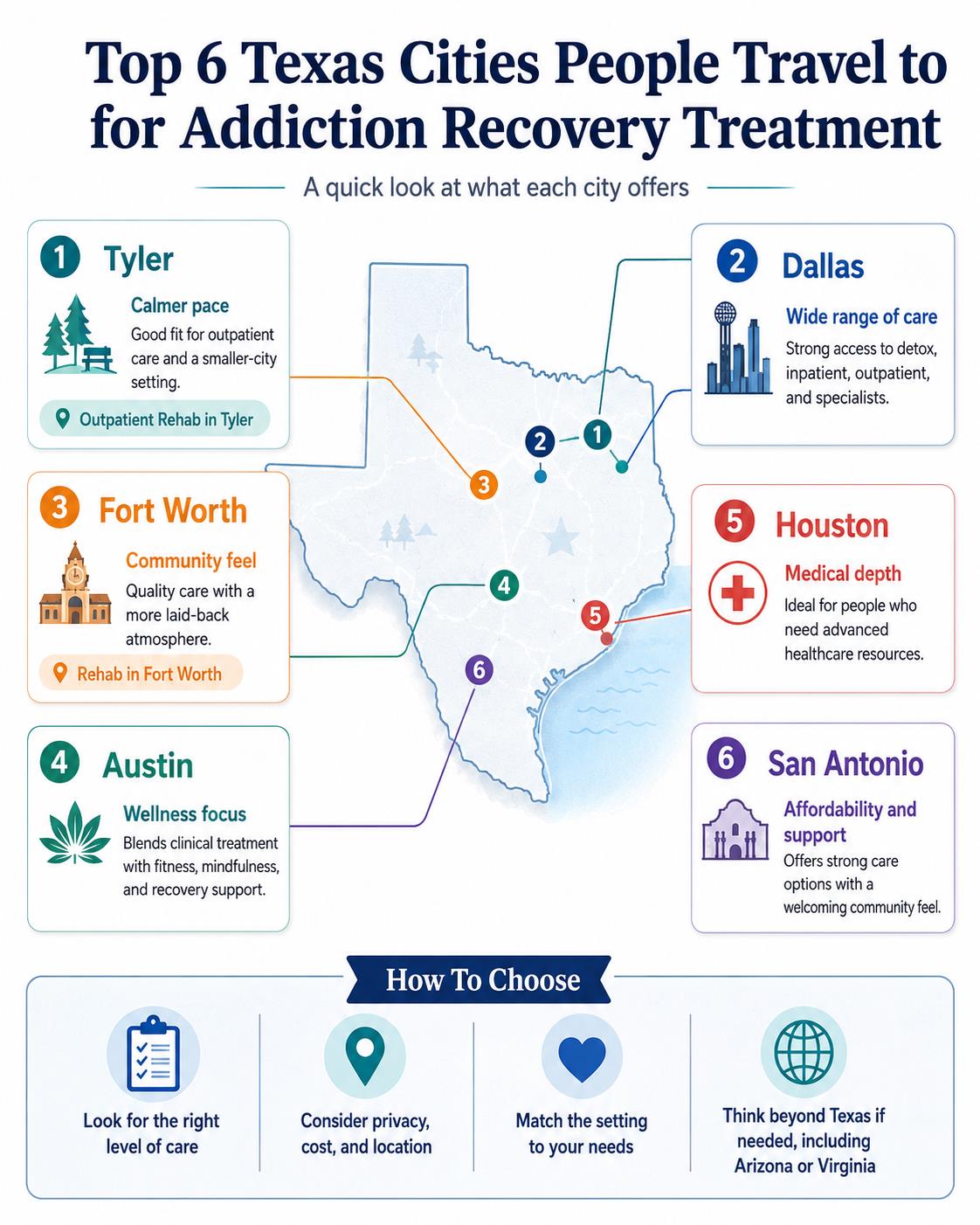
Traveling for treatment is more common than many people realize. Some people want distance from old routines, while others are looking for specialized programs, stronger privacy, or a setting that feels less stressful than home. Texas has become a major destination for addiction treatment because it offers everything from large hospital systems in urban areas to smaller recovery communities with a slower pace and lower cost of living.
Different cities appeal to different needs. Some people want access to medical specialists and multiple treatment levels in one area. Others want outdoor space, quieter surroundings, or programs that feel more personal. The right environment can make a major difference during recovery, especially during the first few months when people are rebuilding structure and stability in their lives.
Tyler
East Texas has developed a strong reputation for healthcare access, and Tyler continues to attract people who want treatment in a smaller city environment. The pace tends to feel calmer than Dallas or Houston, which matters for people who are stepping away from chaotic situations or high-pressure lifestyles. Tyler also offers access to medical care, counseling services, and long-term recovery support without the overwhelming feeling that sometimes comes with larger metro areas.
Many people looking into outpatient rehab in Tyler appreciate the balance between structure and flexibility. Outpatient care allows people to attend therapy, group sessions, and treatment programming while still maintaining parts of their normal responsibilities. That can include parenting, work obligations, or rebuilding relationships at home. Tyler also appeals to people who want recovery support without feeling anonymous in a giant city where everything moves at full speed.
Dallas
Dallas remains one of the largest addiction treatment hubs in the South. The city offers nearly every level of care imaginable, including detox services, inpatient treatment, outpatient programming, dual-diagnosis support, and long-term sober living options. That variety matters because recovery is rarely one-size-fits-all. Some people need intensive medical support, while others need flexible programs that work around professional schedules or family responsibilities.
Another reason people travel to Dallas is access to specialists. Larger metro areas often attract experienced therapists, psychiatrists, and trauma-focused clinicians who work with complex cases. Dallas also has a strong recovery community with meetings, peer support, and alumni networks that help people stay connected after treatment ends. For many people, the ability to continue building support after formal treatment becomes just as important as treatment itself.
Fort Worth
Fort Worth has a different personality than Dallas, even though the cities sit close together. Many people describe Fort Worth as more laid back, more community-focused, and easier to navigate emotionally. That atmosphere can help people who feel overwhelmed entering treatment for the first time. Recovery already requires vulnerability, and some people respond better in environments that feel grounded rather than fast-moving.
People searching for rehab in Fort Worth often mention wanting quality treatment without the intensity of a larger city environment. Fort Worth offers strong medical resources and treatment options while still maintaining a more approachable pace. The city also has a growing recovery network that includes family support programs, therapy services, and sober activities that encourage long-term stability instead of short-term change.
Austin
Austin attracts people who want a wellness-focused approach to recovery. The city has long been associated with fitness culture, mental health awareness, and alternative therapies that can complement traditional addiction treatment. While evidence-based care remains the foundation of effective treatment, many people appreciate having access to yoga, meditation, outdoor recreation, nutrition counseling, and creative therapies during recovery.
The city also appeals to younger adults and professionals who may feel disconnected from traditional treatment environments. Austin’s culture can make recovery feel less isolating for people who are afraid treatment will completely separate them from their identity or lifestyle. At the same time, Austin still offers serious clinical care, including programs for trauma, anxiety, depression, and co-occurring mental health concerns that often exist alongside substance use struggles.
Houston
Houston’s size creates opportunities that smaller cities simply cannot always provide. The city has massive healthcare infrastructure, highly specialized treatment programs, and access to medical professionals who deal with complicated cases every day. People managing chronic health conditions alongside addiction treatment often travel to Houston specifically because of that level of medical support.
Houston also offers a wide range of treatment settings. Some programs focus heavily on medical stabilization, while others emphasize counseling, relapse prevention, or long-term recovery planning. That flexibility helps people find care that matches their actual situation instead of forcing them into a rigid model. Large cities can sometimes feel impersonal, but Houston’s diversity allows people to find programs that align with their background, comfort level, and goals.
San Antonio
San Antonio continues to grow as a treatment destination because it combines affordability with strong healthcare access. Compared to some other major cities, the cost of living can feel more manageable for people planning longer-term recovery stays or sober living arrangements. Financial stress can quickly derail recovery efforts, so affordability matters more than people sometimes admit.
The city also has a strong sense of culture and community that appeals to many families. Recovery rarely affects just one person, and family involvement often becomes part of the healing process. Some people specifically choose San Antonio because they want treatment in a place that feels welcoming instead of clinical or cold. Others appreciate the combination of urban resources and slower-paced neighborhoods that create breathing room during treatment.
Choosing where to seek treatment is personal, and there is no universal “best” city for recovery. Some people need advanced medical care, while others need privacy, structure, affordability, or a calmer environment away from familiar triggers. What matters most is finding a program that supports long-term healing and real stability. Whether someone is deciding between Dallas, Tyler, Austin, or thinking over addiction treatment in Arizona, Virginia or somewhere else, the goal should stay the same, finding care that gives recovery a genuine chance to last.