Key Takeaways
- Lasting results begin with a clean, solid, properly prepared concrete slab.
- Epoxy, polyurea, and polyaspartic products can each play useful roles in a coating system.
- Chesapeake humidity, rain, vehicle traffic, and garage use can all affect coating performance.
- Moisture testing, crack repair, and a suitable surface profile are essential before coating begins.
- Traction, cure time, and routine cleaning help protect both the finish and the people using it.
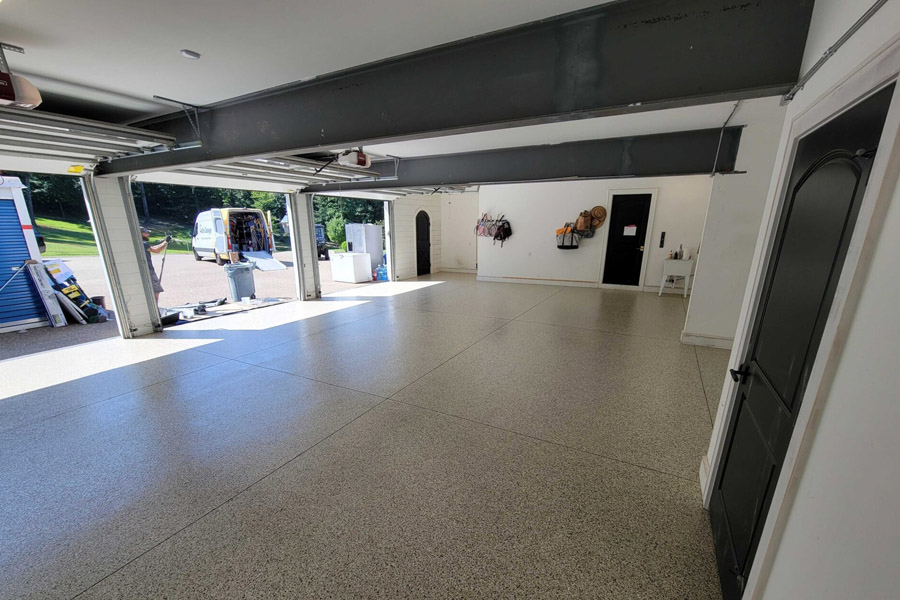
A garage floor coating should do more than improve the appearance of a concrete slab. In Chesapeake, Virginia, it may need to stand up to humid summer weather, wet shoes after a storm, road grit, bicycle tires, lawn equipment, and the daily movement of vehicles in and out of the garage.
Choosing a garage floor coating in Chesapeake, VA starts with understanding that durability is not determined by color flakes or gloss alone. The concrete underneath, the preparation method, the selected coating layers, and the time allowed for curing all influence how the finished floor performs over the years.
Why Garage Floor Coatings Fail
Peeling, bubbling, hot-tire marks, and dull patches often begin below the visible surface. A floor can look excellent immediately after installation, but fail early when coating is applied over dust, oil, moisture, weak concrete, or an inadequately prepared slab.
Homeowners comparing garage floor contractors near me should compare preparation procedures as carefully as price. A detailed process can reveal whether an installer plans to address the conditions that cause premature bond failure.
- Oil, grease, wax, paint, or dust left on the slab
- Cracks, spalling, or loose concrete that was not repaired
- Insufficient grinding or mechanical surface profiling
- Moisture moving through the slab after the coating is applied
- Improper mixing ratios or rushed recoat times
- Parking vehicles on the floor before the system fully cures
Comparing Epoxy, Polyurea, And Polyaspartic
The best choice is usually a complete coating system, not a single product name. Different materials offer different benefits, and the right combination depends on sunlight exposure, desired return-to-service time, garage traffic, moisture conditions, and budget.
Epoxy
Epoxy is commonly valued for its hard finish, strong adhesion, and resistance to many household chemicals. It can provide a dependable base layer, although some epoxy products are more vulnerable to ultraviolet light than other finishes.
Photorealistic candid documentary-style photo of a garage floor coating professional inspecting and preparing a concrete garage slab, with a grinder and work tools nearby, natural light entering through the open garage door, realistic dust and minor surface imperfections, no posed people.
Polyurea
Polyurea systems cure quickly and can offer flexibility with strong adhesion. Their short working window means installation conditions and installer technique matter greatly, particularly when temperatures or humidity are changing.
Polyaspartic
Polyaspartic coatings are often used as protective topcoats because they can resist sunlight, chemicals, and tire transfer while allowing a relatively quick return to use. Even a high-performing topcoat cannot compensate for poor concrete preparation below it.
Why Concrete Preparation Matters
Concrete preparation gives the coating a stable surface to grip. Mechanical grinding is frequently preferred because it can remove weak surface material, old finishes, and contaminants while creating a more consistent profile for the new system.
- Inspect the slab for stains, cracks, spalling, uneven spots, and old coatings.
- Remove oil, grease, paint, loose debris, and other bond-breaking contaminants.
- Grind or mechanically abrade the concrete to create the needed profile.
- Repair suitable cracks and damaged areas with compatible materials.
- Test for moisture when slab conditions suggest a potential issue.
- Vacuum thoroughly before the first coating layer is applied.
Acid washing alone may not remove every contaminant or provide an even profile across a garage. A careful inspection is especially important in older Chesapeake homes where a slab may have years of oil drips, previous paint, or past water exposure.
How Moisture Affects Coating Performance
Concrete may look dry on top while still carrying moisture below the surface. If water vapor moves upward after installation, it can contribute to cloudiness, blistering, peeling, or loss of adhesion. Chesapeake’s rainy periods and humid conditions make drainage, garage ventilation, and slab history important parts of the conversation.
Signs of concern include recurring dark patches, white powdery residue, a musty smell, water entering after heavy rain, or an older coating that has bubbled. Because controlling moisture is central to preventing indoor dampness problems, persistent seepage or drainage issues should be resolved before covering the slab.
Choosing A Safer Floor Finish
A high-gloss floor can be easy to sweep, but a very smooth surface may become slick when water, mud, or melted ice is tracked inside. This matters for garages used as workshops, home gyms, storage rooms, or busy entry points.
- Ask about traction additives or decorative flakes that add texture.
- Clean spills promptly and keep walkways clear of cords and tools.
- Use bright lighting around vehicle doors, steps, and workbenches.
- Consider extra traction near exterior doors and water-prone areas.
Good housekeeping supports a safer finish because walking-working surface guidance addresses slip, trip, and fall hazards that can also affect an active home garage.
Questions To Ask Before Installation
1.How will the concrete be cleaned and mechanically prepared?
2.Will moisture be evaluated before the coating is installed?
3.How will cracks, pitting, and damaged areas be repaired?
4.What coating layers are included, and what does each layer do?
5.How long must foot traffic, storage items, and vehicles stay off the floor?
6.Is a slip-resistant option available?
7.What written warranty, cure guidance, and cleaning instructions are included?8.
Simple Maintenance For A Coated Floor
Routine care is straightforward. Sweep away sand and grit, wipe up oil or chemical spills quickly, and use a soft mop with a cleaner approved for the coating. Avoid dragging sharp metal edges, and place protective pads below heavy cabinets, tool chests, motorcycle stands, or gym equipment.
A light-storage garage may need only periodic sweeping and mopping. A workshop with jacks, welders, rolling toolboxes, and frequent vehicle maintenance benefits from mats beneath high-impact equipment and more frequent inspections of busy areas.
A Final Selection Checklist
- Use:Cars, storage, tools, fitness equipment, or a workshop?
- Exposure:Sunlight, rainwater, humidity, or vehicle fluids?
- Moisture:Any seepage, condensation, efflorescence, or past bubbling?
- Safety:Is added traction needed for wet conditions?
- Schedule:How long can the garage remain unavailable?
- Value:Does the estimate include repair, preparation, coating, cleanup, and care instructions?
Conclusion
A long-lasting garage floor coating in Chesapeake depends on connected decisions: sound concrete, thorough preparation, moisture awareness, compatible coating layers, safe texture, proper curing, and basic maintenance. When those details receive as much attention as the finished appearance, homeowners can choose a floor built for the way their garage is actually used.