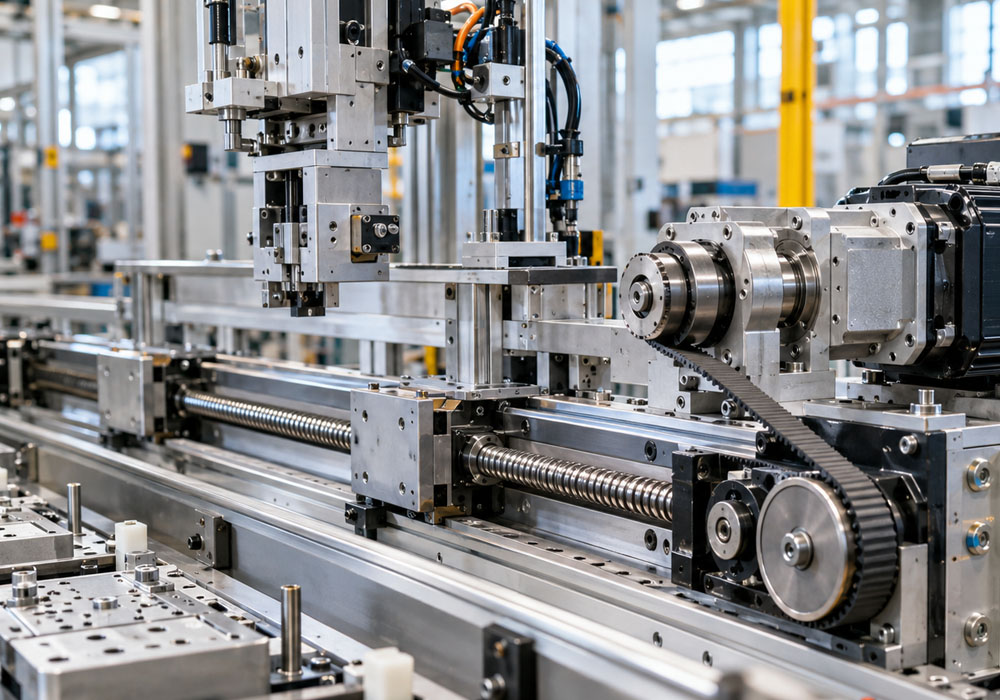
When you’re responsible for selecting a motion system for industrial equipment, the stakes are high. The wrong choice can lead to costly downtime, reduced productivity, and premature equipment failure. Motion systems form the backbone of modern manufacturing, automation, and material handling operations, so understanding how to evaluate your options is essential for long-term success. This article walks you through the key factors that should guide your decision when choosing a motion system for your industrial machinery.
Understanding Your Application Requirements
Before comparing specific motion systems, you need a clear picture of what your machinery must accomplish. Start by defining the type of movement required: linear motion along a single axis, rotational motion, or multi-axis coordinated movement. Consider the distance the motion system must travel, the speed at which it needs to operate, and how frequently it will cycle throughout the day. For example, a packaging line requiring rapid, repetitive horizontal movements has vastly different needs than a heavy press that performs slower, high-force operations. Document the load weight that the system must move or support, including both the primary payload and any additional forces generated during operation. Understanding these baseline requirements prevents you from over-specifying or under-specifying your system.
Evaluating Precision and Accuracy Needs
Different applications demand different levels of positional accuracy and repeatability. A system assembling precision watch components requires far tighter tolerances than one positioning large sheet metal blanks. Precision refers to how closely the motion system can achieve a specified position, while repeatability indicates whether it can return to that same position consistently over many cycles. Industrial machinery used in semiconductor manufacturing or medical device production typically requires accuracy within microns, whereas general material handling might tolerate accuracy within millimeters. The cost of achieving higher precision increases significantly, so matching your system’s precision capability to your actual application needs prevents unnecessary expense. Consider what level of precision your quality standards demand and what downstream processes depend on that accuracy.
Assessing Load Capacity and Force Requirements
Motion systems must reliably handle the forces and weights placed on them without premature wear or failure. Calculate the maximum load your system will encounter, accounting for the weight of the payload itself plus any dynamic forces generated by acceleration, deceleration, or external impacts. Many industrial applications involve not just vertical weight but also horizontal forces, rotational forces, or side loads that complicate the calculation. For instance, a horizontal conveyor moving heavy boxes experiences consistent weight loading, while a robotic arm lifting the same boxes experiences additional inertial forces during acceleration that affect system selection. Review manufacturer specifications carefully to ensure the selected system provides adequate safety margins beyond your calculated maximum load. Undersizing a motion system leads to failure and safety risks, while oversizing creates unnecessary cost and space requirements.
Considering Environmental and Operational Factors
The environment where your motion system operates significantly impacts which solutions will perform reliably over time. Machinery operating in extreme temperatures, wet conditions, dusty environments, or corrosive atmospheres requires systems designed to withstand those specific challenges. A motion system in a food processing facility faces constant washdown and humidity, requiring sealed bearings and stainless steel components, whereas one in a clean manufacturing environment might use standard components. High-speed operations generate heat that can affect system performance and component lifespan, while low-speed, high-torque applications stress components differently. Think about maintenance accessibility and whether technicians can easily service the system during scheduled maintenance windows. Some environments may require specialized lubrication, protective covers, or regular inspections to ensure continued reliability and safety.
Comparing Motion System Technologies
Several fundamental technologies power industrial motion systems, each with distinct advantages and limitations. Hydraulic systems excel at generating large forces in compact spaces and work well in harsh environments, making them common in heavy machinery and construction equipment. Pneumatic systems offer simplicity and low cost but typically provide less precision and efficiency than other options. Electric motor-driven systems, including stepper motors, servo motors, and brushless DC motors, deliver excellent precision, efficiency, and control, making them well suited for modern automated machinery. Engineers configuring precise single-axis or multi-axis positioning stages within these electric assemblies rely on linear rail guides to ensure smooth, accurate carriage travel under varying load conditions. Your choice among these technologies depends on balancing initial cost, operating cost, maintenance requirements, available space, environmental conditions, and required performance level.
Calculating Total Cost of Ownership
The purchase price of a motion system represents only part of its true cost to your operation. Energy consumption matters significantly, especially for systems that run continuously or frequently throughout each day. Maintenance requirements vary dramatically between technologies, with some requiring regular fluid changes, filter replacements, or component inspections while others need minimal attention. Consider the cost of replacing worn components, potential downtime if the system fails, and the expense of keeping spare parts on hand. A seemingly inexpensive system might cost far more over its lifetime if it requires frequent repairs or consumes excessive energy. Calculate the total cost of ownership over the system’s expected operational life, including all maintenance, energy, and potential replacement costs, rather than focusing solely on the initial purchase price.
Conclusion
Selecting the right motion system for industrial machinery requires careful analysis of your specific application demands, environmental conditions, precision requirements, and budget constraints. By thoroughly understanding your load requirements, accuracy needs, and operating environment, you can narrow your choices to systems genuinely suited to your needs. Compare the available technologies objectively, considering how each performs across your critical requirements rather than defaulting to familiar options. Remember that the lowest-cost option often becomes the most expensive choice when you factor in energy consumption, maintenance, and unexpected failures. Taking time upfront to evaluate these factors systematically protects your operation from costly mistakes and ensures your machinery operates reliably for years to come.