Most home and land projects can wait. You can repaint in spring, replace a deck in summer, or swap out light fixtures whenever the mood strikes. But a handful of jobs don’t work that way. They have a real seasonal constraint built into the physics of the work, not just a scheduling preference.
Two of those jobs come due at the same time of year: clearing a wooded lot and remodeling an interior room you can’t live without for long. Fall and early winter line them both up. Here’s why that window matters, and how to use it well.
Why Fall and Early Winter Change the Math on Land Clearing
Clearing a lot in July and clearing it in November are two different jobs, even on the same piece of ground. The difference isn’t the crew or the equipment. It’s the conditions.
Dormant vegetation makes cutting cleaner.
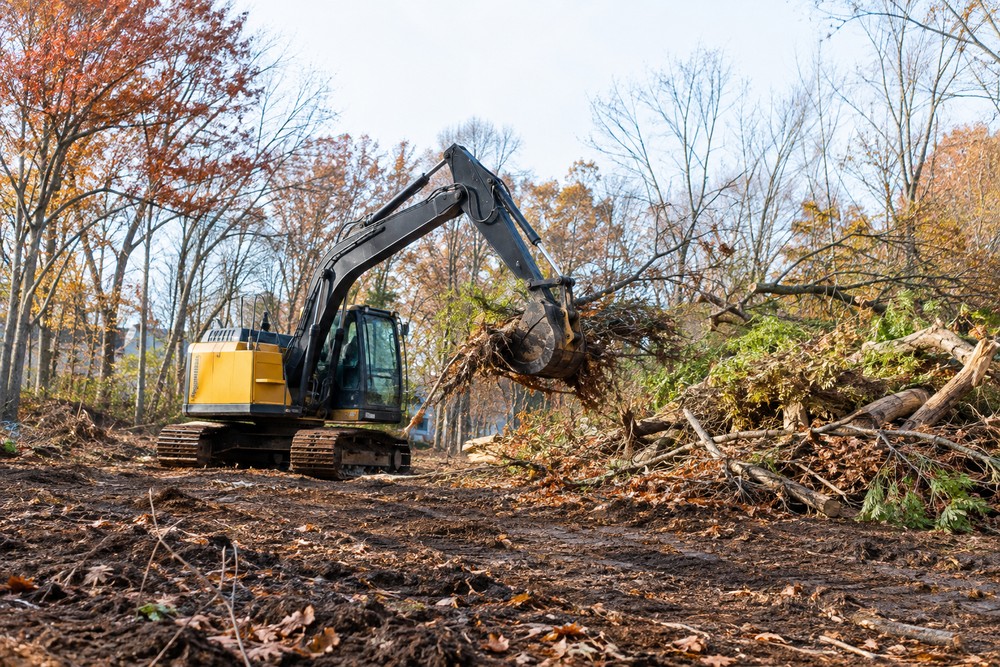
Once trees drop their leaves and underbrush goes dormant, you’re working with less living mass. Sap flow slows, growth stops, and what’s left is structure, not foliage. That translates into a few practical advantages:
- Less green debris to haul. A dormant canopy produces far less bulk than a summer one, so disposal and chipping go faster.
- Lower disease and pest risk. Cutting hardwoods like oaks in the dormant season reduces the chance of attracting certain beetles and spreading pathogens that spread through fresh wounds in warm weather.
- Easier replanting decisions. With the lot cleared in dormancy, you can plan spring planting on a blank slate instead of fighting active regrowth.
Firmer ground supports heavy equipment.
Summer ground in this region is often soft, and wet soil and heavy machines are a bad combination. Equipment sinks, ruts form, and you can damage the soil structure more than the clearing itself.
Cooler months bring firmer, drier ground, and the occasional hard frost firms it up even more. That means:
- Skid steers, mulchers, and excavators get better traction.
- You leave fewer deep ruts behind to repair later.
- Crews can reach parts of the lot that would be a mud problem in warmer, wetter stretches.
Better sightlines once the leaves are down
This one is simple but underrated. When the canopy is bare, you can actually see the lot. Property lines, drainage patterns, dead or hazardous trees, and the real spacing between trunks all become visible.
That visibility helps you make smarter choices about what to keep and what to remove, instead of guessing through a wall of green. Homeowners who walk the property with a crew in November almost always make better decisions than those who tried the same walk in June.
If you’re planning a project like this, talk early with a company that handles land clearing services in Northern Virginia, because the best fall windows book up quickly. Good crews plan their heavy-equipment schedules weeks in advance.
Mistakes to avoid when clearing in the cold months
- Waiting until the ground freezes solid everywhere. A light frost helps; a deep freeze can make stump removal harder and delay any grading you wanted done afterward.
- Skipping the permit and boundary check. Cold weather doesn’t exempt you from local tree and land-disturbance rules. Confirm them before any saw starts.
- Ignoring erosion control. A freshly cleared slope can wash out over winter. Plan for ground cover or silt controls before the rain and snowmelt arrive.
Why the Same Stretch Is Right for One Specific Interior Job
While crews are outside taking advantage of the cold, it’s also pushing you indoors. That’s where the second seasonal project lives.
Not every interior remodel belongs in winter. Kitchens, open-concept living areas, and anything that disrupts the whole house are hard to absorb when everyone is stuck inside. But one room is different.
A bathroom is the rare room a household can lose for a few weeks.
A bathroom remodel is contained. If your home has a second bathroom, you can take one offline without derailing daily life the way a kitchen teardown would. The work happens in a small footprint, the dust stays behind one door, and the disruption has a clear finish line.
That makes the cold months a sensible time to do it:
- You’re indoors anyway, so you don’t have to give up the outdoor season to supervise the work.
- Contractors often have more availability between the fall rush and the spring boom.
- Material lead times are easier to absorb when you’re not racing a summer deadline.
For households weighing this, a well-run bathroom remodeling project in Arlington, VA can be scheduled, demoed, and finished within the same quiet stretch of winter, before spring projects compete for everyone’s attention.
What the timeline actually looks like: demo to finish
Homeowners often imagine a bathroom remodel as a weekend job. A full remodel is closer to three to six weeks, depending on scope and how many trades are involved. A realistic sequence looks like this:
- Design and ordering (before demo). Select and order fixtures, tile, and vanities early, because they drive the whole schedule.
- Demolition (1–3 days). Old fixtures, tile, and sometimes drywall come out.
- Rough-in work (3–7 days). Plumbing and electrical are moved or updated. Inspections may be required here.
- Waterproofing and substrate (2–4 days). This step protects everything you can’t see later and should never be rushed.
- Tile and surfaces (4–7 days). Tile is set and allowed to cure; grout follows.
- Fixtures and finishes (3–5 days). Install the vanity, toilet, lighting, mirrors, and hardware.
- Punch list and final details (1–2 days): caulking, touch-ups, and a final walkthrough.
The single biggest cause of delay isn’t the labor. It’s materials arriving late or mid-project changes. Lock in your selections before demo day, and the rest tends to move on schedule.
Tips for a smoother bathroom project
- Over-order tile by about 10%. Cuts, breakage, and future repairs make the extra box worth it.
- Decide on the unglamorous stuff early. Exhaust fan size, outlet placement, and niche location are easy to forget and expensive to change late.
- Keep a working bathroom plan. Confirm which bathroom stays usable, and for how long, before the crew arrives.
- Budget a contingency. Set aside 10–15% for surprises hiding behind old walls, especially in older homes.
How to Line Up Both Projects Without Overlap
If you’re tackling land outside and a bathroom inside in the same season, a little sequencing keeps them from colliding:
- Start the land work first. It depends on weather and ground conditions you can’t control, so schedule it first.
- Book the interior work to follow. Once the heavy outdoor project is underway or wrapping up, the contained indoor job can run in parallel or right after.
- Keep one point of contact for scheduling. Even with separate crews, knowing who’s on-site which week prevents driveway and access conflicts.
The Takeaway
Most projects forgive you for waiting. These two don’t reward it. Clearing a lot is cleaner, firmer underfoot, and easier to plan when the vegetation is dormant and the leaves are down. A bathroom remodel is one of the few interior jobs a household can actually absorb during cold months, with a timeline short enough to finish before spring.
Use the window while it’s open. Plan the outdoor work around the ground, plan the indoor work around your household, and let the season do part of the job for you.