The Unique Air Quality Challenges for Coastal Homes
Living in a home near the coast offers unique charm and breathtaking views. However, this beautiful environment also presents distinct challenges for indoor air quality and the efficiency of your HVAC system. High humidity, salty air, and the constant threat of mold and allergens can severely impact the air you breathe and the longevity of your heating and cooling equipment. Choosing the right air filter is not just about trapping dust; it’s about protecting your health, enhancing comfort, and safeguarding your investment. This comprehensive guide will explore the specific air quality issues coastal homes face, recommend the most effective air filter types and MERV ratings, and provide essential maintenance tips to ensure your home remains a healthy, comfortable sanctuary year-round.
Coastal living, while idyllic, introduces a distinct set of environmental factors that significantly affect indoor air quality and HVAC system performance. The air near the ocean is a complex mix, and understanding these unique challenges is the first step toward effective filtration.
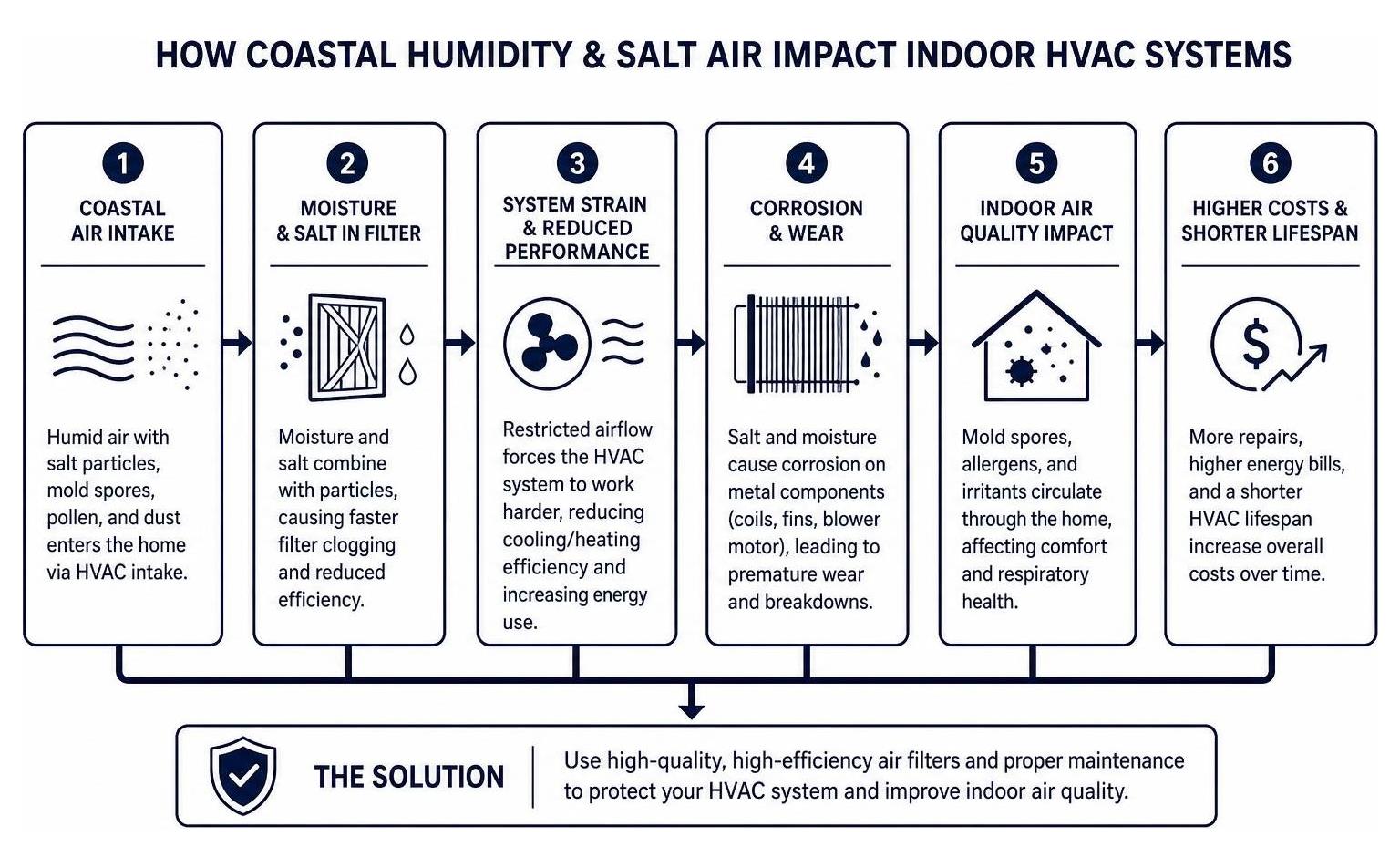
One of the most pervasive issues is high humidity. The constant moisture in the air creates an ideal breeding ground for mold and mildew, both of which can release spores that circulate through your home. These airborne spores are significant allergens and can contribute to respiratory issues. Beyond just mold, high humidity can also make your home feel muggy and uncomfortable, forcing your HVAC system to work harder to achieve desired temperatures.
Salt spray is another major concern. Tiny particles of salt are carried inland by ocean breezes, infiltrating homes and HVAC systems. This salt can be corrosive, leading to premature wear and tear on metal components within your heating and cooling unit. It also contributes to rapid filter clogging, as salt particles combine with dust and moisture to create a sticky, dense layer on filter media.
Windborne pollen from coastal flora can be abundant, especially during spring and summer. For allergy sufferers, this means a constant influx of irritants. Additionally, storm debris can introduce a variety of pollutants into the air, from fine dust and sand to organic matter, further straining air filters.
Specific to regions like San Diego, marine inversions can trap pollutants close to the ground, leading to elevated levels of ozone pollution. Ozone is a corrosive gas that can damage lung tissue over prolonged exposure, making effective indoor air filtration even more critical.
Finally, we must consider general indoor pollutants. Even in coastal homes, everyday activities like cooking, cleaning, and having pets contribute to indoor air pollution. In fact, Americans spend about 90 percent of their time indoors, where the concentration of pollutants can be even worse than outside. Combining these common indoor pollutants with the unique coastal challenges creates a demanding environment for any air filtration system.
Selecting the Best Air Filter for Coastal Climates
When living near the coast, your choice of HVAC air filter needs to go beyond basic dust capture. We need filters that can withstand humidity, trap fine particles like salt and mold spores, and maintain efficient airflow.
Let’s explore the main types of HVAC air filters suitable for coastal climates:
- Pleated Synthetic Filters: These are often a strong choice for coastal homes. Made from synthetic fibers, they offer a larger surface area than traditional fiberglass filters, allowing them to trap a wider range of particles including pollen, mold spores, and fine dust. They strike a good balance between filtration efficiency and airflow, making them suitable for most residential HVAC systems.
- Electrostatic Media Filters: These filters use static electricity to attract and hold particles. Some are disposable, while others are washable. Washable electrostatic filters can be cost-effective long-term, but in humid coastal environments, they require frequent and thorough cleaning (often monthly) and complete drying to prevent mold growth on the filter itself.
- HEPA Filtration (HEPA-style or True HEPA): True HEPA filters are the gold standard, capturing up to 99.97% of dust, pollen, mold, and even bacteria down to 0.3 microns. While highly effective, true HEPA filters are generally too dense for standard residential HVAC systems, as they can severely restrict airflow and strain your equipment. HEPA-style filters offer significant improvements over standard pleated filters without the extreme airflow restriction of true HEPA.
- Activated Carbon Filters: These are excellent for odor control. Coastal homes can sometimes experience unique odors from the ocean or higher humidity. Activated carbon excels at absorbing gases and volatile organic compounds (VOCs), making it a great addition, often layered with a pleated filter, to combat smells.
- UV Air Purifiers: These are not filters in the traditional sense, but they complement filtration by using ultraviolet light to neutralize mold spores, bacteria, and viruses as air passes through. They don’t remove particles, but they are highly effective at preventing microbial growth within the HVAC system, which is crucial in humid coastal areas.
For optimal performance in humid, salty coastal environments, we look for filters with specific features:
- Moisture Resistance: Filters designed to resist moisture absorption are less likely to become a breeding ground for mold and mildew.
- Anti-Microbial Treatments: Some filters come with factory-applied anti-microbial coatings that actively inhibit the growth of mold and bacteria on the filter media.
- Low Pressure Drop: This refers to how much resistance the filter creates to airflow. A low pressure drop is vital to prevent your HVAC system from overworking, which can lead to higher energy bills and premature equipment failure. Even with excellent filtration, we need to ensure the air can move freely.
Understanding these options helps us select the most effective solution for your home. For more localized insights into maintaining your system in a coastal environment, consider learning about specific recommendations for San Diego coastal AC filters.
Finding the Ideal MERV Rating for Coastal HVAC Systems
The Minimum Efficiency Reporting Value (MERV) rating indicates how effectively an air filter captures particles of different sizes. While a higher MERV rating means better filtration, it also means greater resistance to airflow. Finding the right balance is crucial for coastal homes.
- MERV 8: This rating provides a good baseline for general household dust, pollen, and some mold spores. It offers decent filtration without significantly impacting HVAC system airflow. For many coastal homes, especially those without severe allergy concerns, a MERV 8 filter can be a solid choice.
- MERV 11: This is often considered the sweet spot for coastal climates. MERV 11 filters are effective at capturing smaller particles, including pet dander, mold spores, and fine dust, which are prevalent in humid and salty environments. They offer significantly improved air quality compared to MERV 8 without causing excessive airflow resistancein most modern HVAC systems.
- MERV 13: For homes with severe allergies, asthma sufferers, or those seeking the highest level of residential filtration, a MERV 13 filter can be beneficial. These filters capture even finer particles, including bacteria and some viruses. However, before installing a MERV 13 filter, consult with an HVAC professional to ensure your system can handle the increased static pressurewithout experiencing system strain. Older or less powerful systems may struggle with the reduced airflow, leading to higher energy consumption and potential equipment damage.
The goal is to optimize filtration efficiency without compromising HVAC airflow. Filters with a MERV rating of 8 to 13 typically strike this balance for coastal climates. An HVAC professional can assess your specific system and indoor air quality needs to recommend the ideal MERV rating for your home.
Maintenance and Replacement Schedules in Humid Environments
The unique conditions of coastal living demand a more diligent approach to air filter maintenance than inland homes. The combination of high humidity and salt particles leads to rapid clogging and reduced filter lifespan.
We recommend more frequent 30-day inspections of your air filters. This allows us to catch early signs of salt accumulation and moisture-related buildup before it significantly impacts airflow. While many filters are rated for 90 days, this is often insufficient for coastal areas. Due to the accelerated buildup from salt and moisture, coastal homeowners should typically plan for a 1-to-2 month replacement cycle for disposable filters. Washable filters will also require cleaning at least monthly, ensuring they are completely dry before reinstallation to prevent mold growth.
Proper filter sealing is also critical. Ensure the filter fits snugly within its slot to prevent air from bypassing the filter, carrying unfiltered particles into your system and home.
Beyond just filters, integrating dehumidification strategies can significantly reduce the burden on your air filters and HVAC system. Whole-home dehumidifiers or even portable units in particularly damp areas can help control indoor humidity levels, inhibiting mold growth and making your air filters more effective. Regular maintenance not only ensures cleaner air but also protects your HVAC system from the strain of restricted airflow, which can lead to costly repairs down the line.
When to Seek Professional AC Repair and System Replacements
Even with the best air filters and diligent maintenance, the harsh coastal environment can take its toll on your HVAC system. Knowing when to call in the professionals for AC repair or consider a system replacement is crucial for maintaining comfort and efficiency.
Several issues can indicate that your HVAC system needs professional attention:
- Airflow Restrictions: While often caused by a clogged filter, persistent weak airflow even after changing the filter can point to issues within the ductwork or a problem with the blower motor.
- Compressor Strain: If your system is constantly running but not effectively cooling, it could be a sign of a struggling compressor, often due to restricted airflow or refrigerant problems.
- Evaporator Coil Freezing: This is a common symptom of poor airflow or low refrigerant, both of which can be exacerbated by coastal conditions.
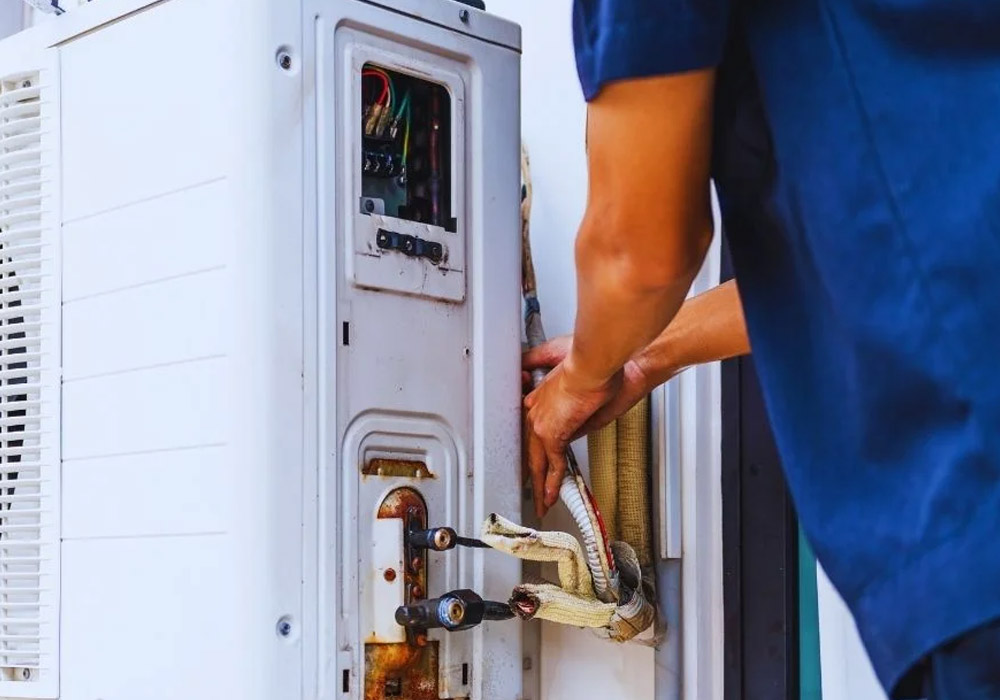
- Coastal Corrosion: The salty air accelerates corrosion on the outdoor condenser unit. Over time, this can degrade components, leading to leaks, electrical issues, and reduced efficiency. Regular professional maintenance can identify and mitigate these issues, but eventually, parts may need replacement.
- Energy Efficiency Loss: If your utility bills are steadily climbing without a change in usage patterns, your system might be losing efficiency due to age, wear, or internal problems.
- System Lifespan: Most HVAC systems have a lifespan of 10-15 years. As systems approach or exceed this age, they become more prone to breakdowns and less energy-efficient.
A professional diagnostic can accurately pinpoint the root cause of these issues, providing you with clear options for repair or replacement.
Warning Signs That Require Immediate AC Repair
Ignoring early warning signs can turn a minor repair into a major breakdown. If you notice any of the following, it’s time to contact an HVAC professional:
- Warm Air: If your AC is blowing warm air instead of cool, it could indicate a refrigerant leak, a faulty compressor, or other serious issues.
- Weak Airflow: Restricted airflow from vents, even after a filter change, suggests a problem with the blower, ducts, or coils.
- Strange Noises: Grinding, squealing, banging, or bubbling sounds coming from your unit are never normal and often signal mechanical problems.
- Frequent Cycling: If your AC turns on and off too frequently, it’s called “short cycling” and can indicate an oversized unit, a refrigerant leak, or an electrical issue.
- High Utility Bills: A sudden or steady increase in your energy bills without a corresponding change in usage often points to an inefficient or struggling system.
- Thermostat Issues: If your thermostat isn’t accurately reflecting the room temperature or isn’t responding to your settings, it could be faulty or indicate a problem with the AC unit itself.
Timely AC repair can prevent further damage, restore comfort, and extend the life of your system.
Choosing Between AC Repair and Complete System Replacement
Deciding whether to repair your existing AC unit or invest in a new one is a common dilemma for coastal homeowners. Several factors should influence this decision:
- System Age: If your system is more than 10-15 years old and experiencing frequent issues, replacement is often the more economical long-term choice. Older units are inherently less efficient than newer models.
- Repair Frequency and Cost: If you’re facing multiple repairs within a short period, or if the cost of a single repair approaches 50% of the cost of a new unit, it’s usually better to replace.
- R-410A Phase-Out: Older AC units use refrigerants like R-22, which is being phased out. If your system uses R-22 and has a refrigerant leak, the cost of recharging can be very high, making replacement with an R-410A or R-32 system more practical.
- Energy-Efficient Upgrades: Modern HVAC systems are significantly more energy-efficient, offering substantial savings on utility bills. Upgrading can provide better comfort with a smaller environmental footprint.
- Alternative Systems: Consider whether a traditional central AC is still the best fit. Heat pumpsoffer both heating and cooling in one efficient unit, ideal for coastal climates with milder winters. Mini-split systems are excellent for zoning and cooling specific areas without extensive ductwork.
A professional HVAC technician can provide a detailed assessment, helping you weigh the costs and benefits of repair versus replacement, ensuring you make an informed decision for your home’s comfort and your budget.
Frequently Asked Questions About Coastal HVAC Care
We often encounter specific questions from homeowners living near the coast. Here are some of the most common inquiries and our expert advice.
How often should I change my air filter if I live right by the beach?
Living right by the beach means your air filter works harder than most. The constant influx of salt, sand, and moisture leads to faster accumulation of debris. We recommend conducting a visual filter inspection monthly. If you see significant discoloration or buildup, it’s time for a change. While many filters suggest a 90-day lifespan, for coastal homes, a 1-to-2 month replacement cycle is often necessary to maintain optimal airflow and indoor air quality. This increased frequency helps prevent salt accumulation and mitigates issues related to high humidity, such as mold growth on the filter media.
What is the best MERV rating to protect my system without restricting airflow?
For coastal homes, balancing superior filtration with adequate airflow is key. We generally recommend a MERV 8 or MERV 11 filter. A MERV 8 filter provides good basic filtration for common pollutants like dust and pollen without significantly impeding airflow. However, for better coastal allergen capture (like mold spores and finer salt particles), a MERV 11 filter is often ideal. It offers enhanced filtration without creating excessive pressure drop that could strain your HVAC system. Always ensure system compatibility with higher MERV ratings, and consult with an HVAC professional if you’re considering MERV 13 or higher.
Can coastal salt air cause my air conditioning system to break down faster?
Yes, absolutely. The corrosive nature of coastal salt air is a significant factor in accelerating wear and tear on HVAC systems, particularly on the outdoor condenser unit. Over time, salt particles can adhere to the condenser and evaporator coil corrosion, leading to rust, reduced efficiency, and eventual component failure. This makes professional maintenance even more critical for coastal homes. Regular cleaning, inspections, and the application of protective coatings can help mitigate the effects of salt spray. Investing in timely AC repair when corrosion-related issues first appear can also prevent more extensive and costly damage down the line.
Conclusion
Ensuring optimal indoor comfort in a coastal home requires a proactive approach to HVAC care. By understanding the unique challenges posed by high humidity, salt air, and specific coastal pollutants, we can make informed decisions about air filtration and system maintenance. Selecting the right air filter with appropriate MERV ratings, coupled with diligent preventive maintenance, is paramount. Not only does this safeguard your family’s health by providing cleaner air, but it also protects your significant investment in your HVAC system, ensuring its longevity and efficient operation for years to come.