A Marine Realm Sculpted by Currents
Strung like a necklace of emeralds across the Indian Ocean, the Maldives is an underwater world where motion creates magic. Warm, clear water sweeps through channels and over reefs, ferrying plankton and nutrients. This flow feeds a web of life that stretches from delicate nudibranchs to whale sharks. With 26 atolls and more than a thousand coral islands, the country offers a vast canvas for divers, painted daily by currents that shape conditions and encounters.
Geography That Fuels Life
The Maldives rises from an ancient underwater mountain chain. Over time, coral reefs grew on these submerged peaks, forming circular lagoons rimmed by reefs and cut by passages known as kandus. These channels act like arteries, pulling water into and out of the atolls. When the tide and monsoon align, plankton blooms pulse through the system. Manta rays gather at cleaning stations and feed in open bays, sharks patrol the edges, and reef fish cluster in kaleidoscopic schools. The landscape beneath is sculptural, with overhangs, pinnacles, caves, and wide plateaus where divers can settle and watch the show.
Reefs, Colors, and Resilience
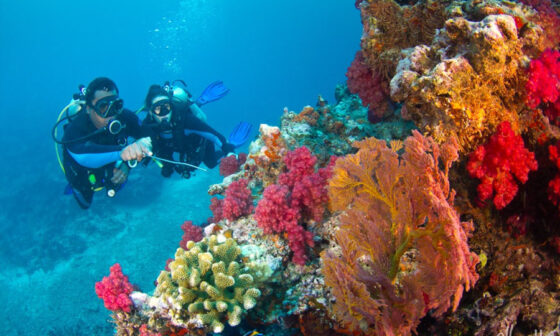
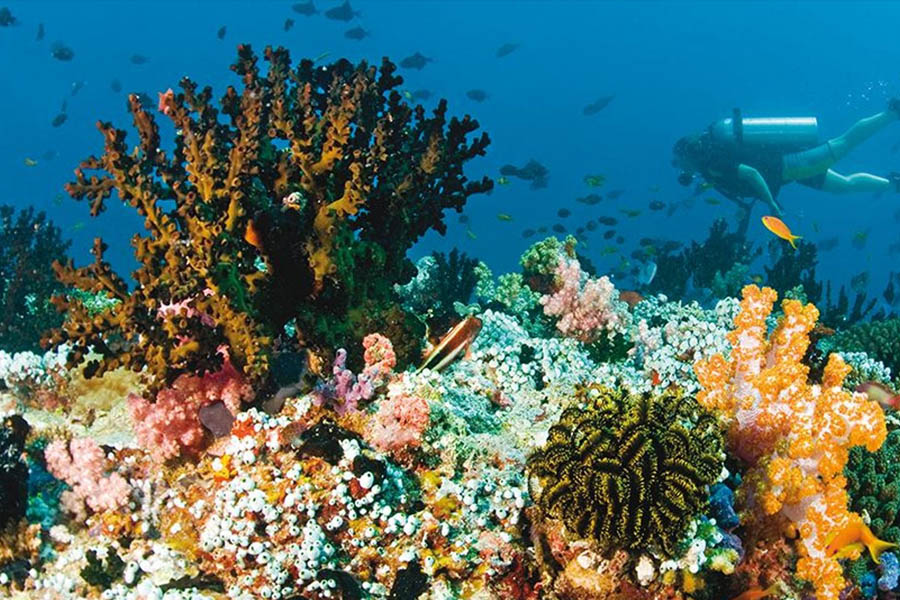
Coral communities in the Maldives span hard and soft varieties, from branching staghorn fields to swaying forests of soft coral. Bleaching events have challenged certain areas, yet many reefs display striking recovery and resilience. On healthy sites, sea fans stretch like lace against blue water. Macro life reveals itself to patient eyes. Leaf scorpionfish blend into coral, ghost pipefish hover in feathery camouflage, shrimps clean the gills of larger fish, and tiny crabs tuck themselves into coral polyps. The closer you look, the wider the world becomes.
Ari Atoll: The Gentle Giants’ Highway
Ari Atoll is famed for reliable whale shark sightings, especially along its southern rim. These filter-feeding giants cruise near the surface, offering encounters that are unhurried and often prolonged. Manta cleaning stations dot the atoll, where rays circle as wrasses and butterflyfish remove parasites. Divers drift past reefs rich with fusiliers, trevally, and reef sharks. For underwater photographers, Ari delivers wide-angle drama and intimate macro scenes in the same day.
Baa Atoll: A Biosphere of Manta Ballets
Designated a UNESCO Biosphere Reserve, Baa Atoll is a natural amphitheater for manta gatherings. During the southwest monsoon, Hanifaru Bay can see hundreds of mantas funneling into tight spirals as they feed on plankton blooms. Diving inside the bay is restricted to protect the ecosystem, but nearby sites provide excellent vantage points to witness mantas underwater. Reef walls here are ornate, and the light filtering through the lagoon can turn every dive into a gentle dream.
Vaavu Atoll: The Channel Capital
Vaavu attracts divers who love speed and spectacle. Fotteyo Kandu is the headline act, a channel that can deliver schools of grey reef sharks, barracuda, tuna, and eagle rays. Currents can be vigorous, making drift dives exhilarating. Guides often position teams on ledges and at corners where pelagics funnel past, a living river of muscle and grace. When conditions soften, the reef gardens in the lagoon reveal abundant life at a slower tempo.
North and South Male Atolls: Access Meets Drama
Close to the capital region, the Male Atolls balance convenience with variety. Expect walls with overhangs, swim-throughs, and cave systems that feel like vaulted cathedrals. Reef fish swarm in layered color, and pelagic visitors pass by with the tide. For travelers pairing resort stays with daily diving, these atolls make it easy to mix leisure with world-class underwater exploration.
When to Go Underwater in the Maldives
Warm water and good visibility make the Maldives a year-round attraction. The northeast monsoon, from December to April, calms waves and boosts visibility. Bright, long dives and crystal blue water make eastern canals great. From May to November, the southwest monsoon increases plankton. Baa and Ari are great big-animal spots because mantas and whale sharks follow food. Even when winds change, an atoll usually provides ideal conditions across the chain.
Liveaboards for Range and Rhythm
Resort-based diving offers comfort and routine, yet liveaboards expand the map. With a boat as your base, you can visit multiple atolls on one journey, pivot to hotspots when marine activity spikes, and log three to four dives daily, including night dives where the reef changes character. Operators such as Spirit Liveaboards craft itineraries that stitch together manta cleaning stations, shark-rich channels, and pristine reef gardens. Onboard, experienced guides read currents and brief entry points, turning complexity into smooth, safe adventures. The community on a liveaboard becomes its own tide, moving from meals to briefings to dives with a shared purpose.
Marine Life Highlights
Pelagic life steals headlines. Manta rays glide like banners on invisible wind, circling cleaning stations with practiced choreography. Whale sharks can appear along reef edges and in open water, their spotted backs easy to track as they feed. Sharks are common, from grey reef and white-tip reef to occasional leopard sharks. Hammerheads are possible in certain deeper locations when conditions align. Rays add flourish. Eagle rays wing across the blue, stingrays rest on sandy patches, and smaller mobulas sweep in formation.
The reefs themselves teem with color and character. Anthias flicker like embers around corals, surgeonfish and butterflyfish sketch patterns against rock, and parrotfish chisel the reef with bright beaks. Macro enthusiasts can hunt for frogfish tucked into crevices, ornate ghost pipefish near soft corals, and a parade of nudibranchs that reward careful observation.
Safe, Responsible Diving
The Maldives emphasizes stewardship. Divers help protect these living structures by practicing neutral buoyancy, keeping hands and fins off coral, and maintaining respectful distance from animals. Reef-safe sunscreen avoids chemical harm. In strong currents, following the guide’s plan on hook-in points, drift routes, and safety stops keeps teams orderly and reduces stress on the environment. On boats and in resorts, minimizing single-use plastics and properly disposing of batteries and gear parts further supports the ecosystem that makes the Maldives extraordinary.
FAQ
Is the Maldives suitable for beginner divers?
Yes. Many lagoons and sheltered reefs provide gentle conditions ideal for training and early dives. Beginners can enjoy shallow coral gardens with vibrant fish while building confidence before tackling channels.
What certification level is recommended for channel dives?
Advanced Open Water or equivalent is recommended, along with recent experience in drift diving. Comfort with negative entries, current management, and controlled ascents makes channel dives safer and more enjoyable.
Can I dive inside Hanifaru Bay?
Diving inside Hanifaru Bay is restricted to protect the site during feeding events. Snorkeling with strict guidelines is typically allowed, and nearby dive sites offer excellent chances to see mantas underwater.
When is the best time to see manta rays and whale sharks?
Mantas are most predictable during the southwest monsoon when plankton blooms peak, especially in Baa Atoll. Whale sharks are often encountered year-round in Ari Atoll, with many sightings along its southern reefs.
Should I choose a resort or a liveaboard?
Resorts suit travelers seeking comfort, flexible schedules, and family amenities. Liveaboards excel for divers who want range, frequent dives, and access to remote sites. Your choice depends on priorities and experience.
Do I need a wetsuit? What thickness is ideal?
Water temperatures usually range from 26 to 30 degrees Celsius. Most divers are comfortable in a 3 mm shorty or full suit. Those prone to getting cold may prefer a 3 to 5 mm full suit, especially on multiple daily dives.
Are night dives available and what can I see?
Yes. Night dives reveal octopus on the hunt, sleeping parrotfish, free-swimming morays, and bioluminescence that turns the water into starlight. Many liveaboards and resorts include night dives when conditions allow.
How do currents affect dive planning?
Currents dictate entry points, depth profiles, and exit strategies. Guides time dives to tides and monsoon direction, choosing sites that are safe and productive. Listening closely to briefings is essential.
What camera gear works well in the Maldives?
A wide-angle setup is excellent for mantas, whale sharks, and big reef scenes. Macro capabilities add value for critter hunting. Strong focus lights and strobes help in caves, overhangs, and night dives.
How can I minimize my environmental impact while diving?
Practice perfect buoyancy, avoid touching marine life, use reef-safe sunscreen, and secure equipment to prevent dragging. Choose operators committed to sustainability and follow local guidelines throughout your trip.