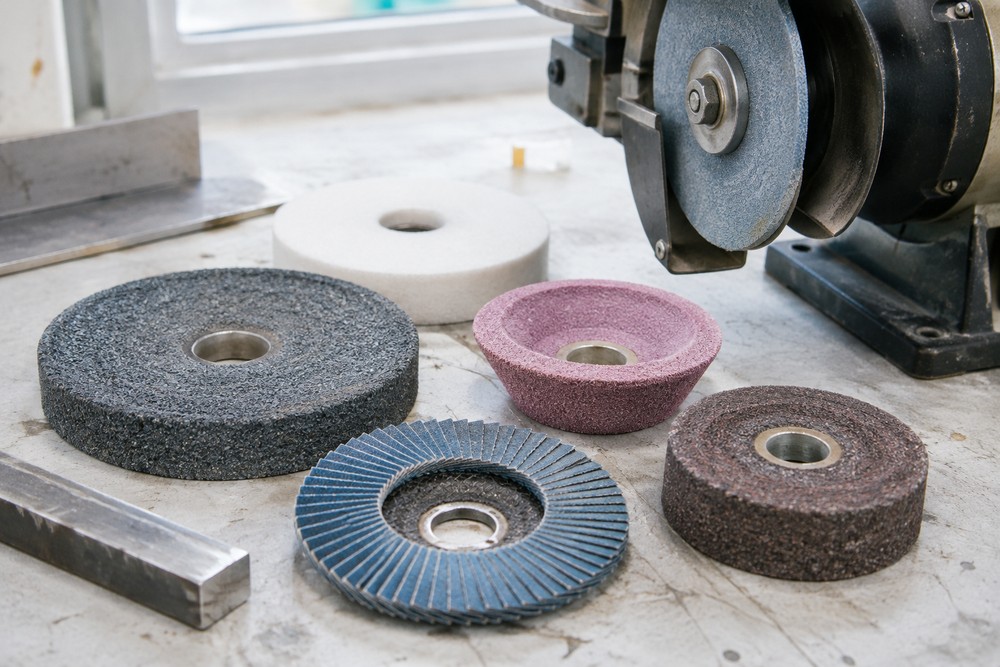
Choosing the right grinding wheel can make a significant difference in the quality, efficiency, and safety of a metalworking project. Whether a fabricator is removing weld seams, smoothing rough edges, or preparing a metal surface for finishing, the abrasive wheel must match the material and the task. Different wheels are designed for different applications, so selecting one based only on size or price can lead to poor results and unnecessary wear. Reviewing available grinding wheels for metalworking is a useful starting point for understanding the options suited to different workshop requirements.
Before purchasing or installing a wheel, metalworkers should consider several important specifications. The following factors can help guide a more informed selection.
1. The Type of Metal Being Worked On
The material being ground is one of the first things to consider. Different metals respond differently to abrasive materials, heat, and grinding pressure. A wheel that performs well on steel may not be the best choice for aluminum or other nonferrous metals.
Aluminum oxide wheels are commonly used for grinding ferrous metals, including many types of steel. Silicon carbide abrasives are often selected for materials such as cast iron and certain nonferrous metals. Other abrasive types, including zirconia alumina and ceramic grain, may be suitable for demanding applications that require efficient material removal.
The material’s hardness, toughness, and tendency to generate heat should all influence the decision. Choosing an abrasive designed for the workpiece can improve grinding performance and help prevent premature wheel wear.
2. Grit Size and Desired Surface Finish
Grit size determines how coarse or fine the abrasive particles are. It directly affects the amount of material removed and the finish left on the workpiece.
Coarser grits generally remove material faster and are useful for tasks such as heavy weld removal, rough shaping, and eliminating significant surface irregularities. However, they can leave deeper grinding marks.
Finer grits are better suited to applications that require a smoother finish or more controlled material removal. They are often used after initial grinding to prepare a surface for polishing, coating, or another finishing process.
The right choice depends on the project’s objective. A task focused on removing excess metal may require a different grit from one intended to create a consistent finish. In some cases, using progressively finer abrasives can produce better results than relying on a single wheel.
3. Wheel Size, Thickness, and Shape
Grinding wheels are available in different diameters, thicknesses, and shapes. These dimensions affect how the wheel fits the grinder and how it contacts the workpiece.
A wheel’s diameter must match the tool’s specifications, while its thickness and shape should suit the intended operation. Thicker grinding wheels are commonly used for heavier grinding applications, while thinner abrasive discs are generally associated with cutting rather than grinding. Using the wrong type of disc for an operation can create serious safety risks.
The wheel’s shape also matters. Depressed-center wheels, for example, are commonly used with angle grinders for grinding and blending applications where the wheel’s profile provides clearance around the mounting area.
Before installation, metalworkers should check the grinder manufacturer’s instructions, the wheel’s intended application, and the required mounting dimensions. A wheel should never be forced onto a spindle or modified to make it fit.
4. Bond Type, Wheel Hardness, and Material Removal Needs
The bond holds the abrasive grains together and influences how the wheel wears during use. Different bond types provide different levels of strength, rigidity, and performance under operating conditions.
A wheel’s grade, often described as its hardness, refers to how firmly the bond holds the abrasive grains rather than how hard the abrasive particles themselves are. Softer-grade wheels release worn grains more readily, exposing fresh cutting edges. Harder-grade wheels retain abrasive grains longer.
The appropriate combination depends on the workpiece and grinding conditions. For example, softer-grade wheels may be useful when grinding harder materials, while harder-grade wheels can be suitable for softer materials that would otherwise wear the wheel quickly.
Metalworkers should also consider the pressure, contact area, and amount of material that needs to be removed. These factors help determine whether a wheel is appropriate for rough grinding, general-purpose work, or finishing.
5. Grinder Compatibility, Operating Speed, and Safety
Even a well-selected grinding wheel can become hazardous if it is incompatible with the equipment. Every wheel has a maximum operating speed, which must be equal to or greater than the grinder’s operating speed. The wheel’s diameter, mounting system, and intended application must also match the tool.
The Occupational Safety and Health Administration provides requirements for abrasive wheels and tools under its abrasive wheel safety standard. These requirements address machine guarding, wheel inspection, mounting, and eye protection. Workers should also follow the manufacturer’s instructions and applicable workplace safety standards.
Before use, the wheel should be inspected for cracks, damage, or other visible defects. Guards should remain properly installed, and operators should wear suitable eye and face protection along with other required personal protective equipment. A damaged wheel should never be used.
Making a Better Grinding Wheel Selection
Selecting the right grinding wheel requires more than choosing an abrasive that fits an angle grinder. The metal being worked on, desired surface finish, wheel dimensions, bond characteristics, and equipment specifications all influence performance.
Metalworking projects also depend on suitable fixtures and cutting tools to maintain accuracy and consistent results. Ovessia’s related guide on cutting tools and fixtures in tensile sample preparation explores how proper tooling and workpiece support contribute to machining quality.
By considering these factors before starting a project, metalworkers can choose abrasives more effectively, reduce avoidable wheel wear, and achieve better results. Most importantly, matching the wheel to the grinder and following appropriate safety procedures helps create a more controlled and reliable working environment.